
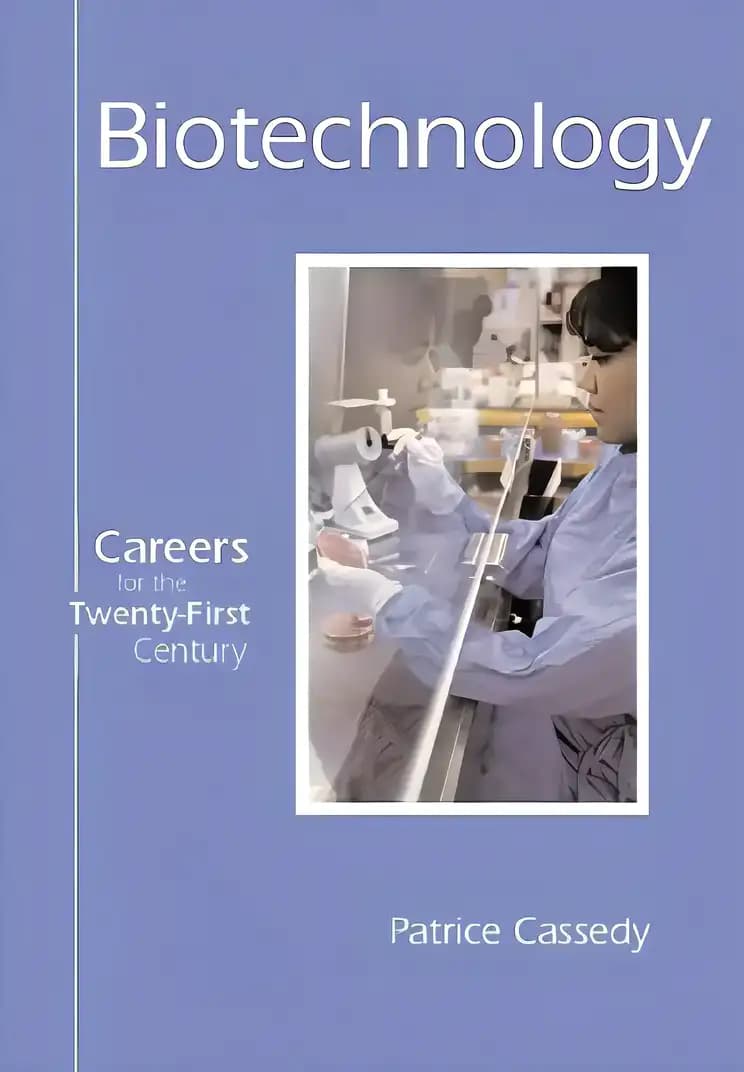
Careers for the Twenty-First Century - Biotechnology
Careers for the twenty-first century Series
What’s inside...
Aided by developments in computer science and the success of the Human Genome Project, biotechnology is expected to shape the 21st century more than any other field. Learn about careers in each stage of the life of a biotechnology project, from research to regulatory approval to manufacturing.
Series reading
Non-Sequential
Age
9-10
Length
96 pages
Text complexity
Discussion points
What excites you about the possibility of a career in biotechnology?
How do you think biotechnology can help solve some of the world’s biggest challenges?
Can you think of any ethical concerns that might arise in the field of biotechnology?
If you could invent something using biotechnology, what would it be and why?
What qualities do you think are important for someone working in biotechnology to have?
Tip: Role play these questions
Begin the conversation by sharing your own thoughts on biotechnology and its impact on our day-to-day lives to make the subject more relatable.
Encourage your child to express their ideas and feelings about the future possibilities of biotechnology, acknowledging their thoughts with positive reinforcement.
Discuss the ethical aspects mentioned in the book to help your child develop critical thinking about the impacts of science on society.
Use examples of biotechnology from the book and relate them to real-world applications to help your child understand the practical implications.
Ask your child to describe the kind of biotechnological projects they dream about, fostering creativity and imagination.
Key lessons
Example Lesson: Importance of Innovation
Explanation: The book portrays characters who are biotechnologists, working on cutting-edge projects. This demonstrates the significance of innovation in science.
Real-World Application: Children can be encouraged to think creatively and solve problems, which can be applied in school projects or in daily life challenges.
Example Lesson: Teamwork and Collaboration
Explanation: Biotechnology projects often require a team of scientists with diverse skills. The book shows how collaboration leads to successful outcomes.
Real-World Application: This can teach children the importance of working with others to achieve common goals, whether in sports, school group projects, or family activities.
Example Lesson: Ethical Decision Making
Explanation: The characters in the book frequently face ethical dilemmas about the use of technology in biology. These scenarios help children understand the complexities of making ethical decisions.
Real-World Application: Children learn to consider the consequences of their actions and make thoughtful decisions in their interactions with others.
Example Lesson: Persistence in the Face of Challenges
Explanation: The book highlights the challenges faced by scientists in biotechnology and how they persist through failures to make breakthroughs.
Real-World Application: This can inspire children to persist in their efforts whether in academics, learning a new skill, or in personal goals, helping them develop resilience.