
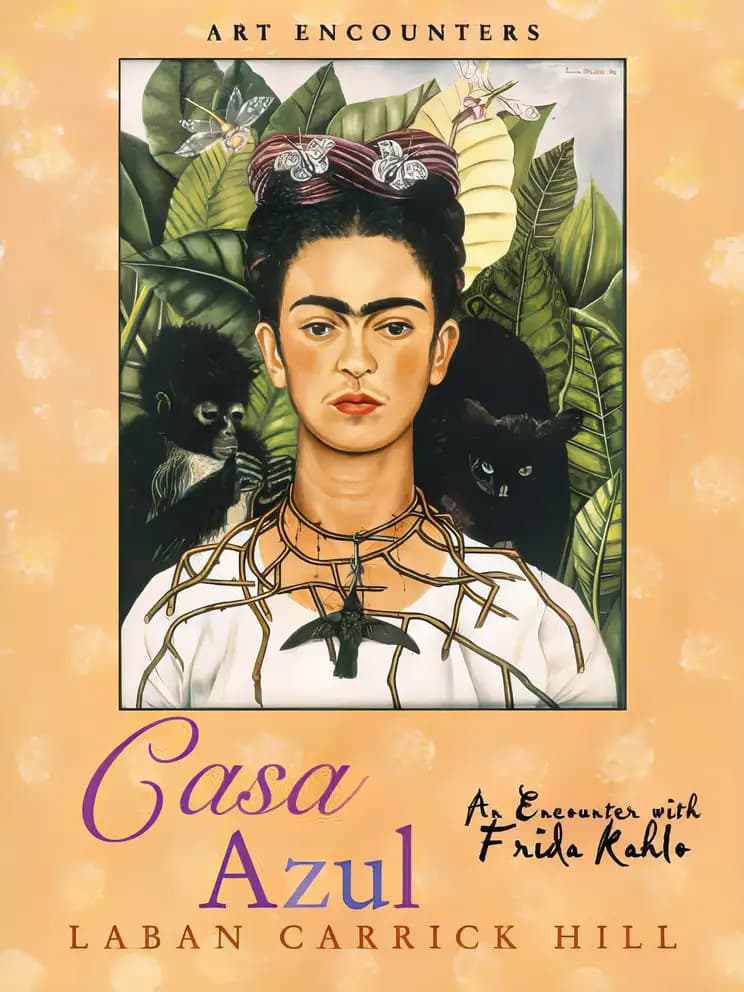
Casa Azul: An Encounter with Frida Kahlo (Art Encounters)
#2 in Art Encounters Series
on Goodreads (35)
What’s inside...
Frida Kahlo's work comes to life—literally—in this magical realist novel, the latest addition to Watson-Guptill's acclaimed Art Encounters series. The story alternates between Kahlo's home in Mexico City, Casa Azul, and the journey of a teenage girl and her young brother, lost in the city. At the mystical Casa Azul, everything with a face talks—including Kahlo's pet monkey, her cat, and portraits on the wall. Over the course of the book, the cover painting, Self-Portrait with Thorn Necklace and Hummingbird, transforms from a nightmarish vision of death into a life-affirming masterpiece. This dramatic story offers a vivid reimagining of the life and work of Frida Kahlo, a woman as well known for her amazing life as for her amazing art. Laban Hill is a National Book Award Finalist and recipient of the Parents Choice Gold Award. Frida Kahlo's art and her blazingly flamboyant style continue to be popular among young people today, making her perpetually contemporary. The novel also ties into school curriculums in art and social studies.
Discussion points
What feelings did you experience while reading about Frida Kahlo's life and her art?
How do you think Frida Kahlo expressed her emotions through her paintings?
What challenges did Frida face and how did she overcome them?
Why do you think Frida Kahlo is considered an important artist?
If you could ask Frida Kahlo any question, what would it be?
Tip: Role play these questions
Encourage your child to imagine they are an artist like Frida. Ask them to describe what kind of art they would create and why.
Discuss the importance of expressing oneself and how art can be a powerful tool for sharing personal stories and emotions.
Relate Frida's persistence in overcoming personal challenges to situations your child may face, highlighting resilience and determination.
Explore the cultural aspects of Frida’s life, discussing how her heritage influenced her artwork and identity.
Create a small art project inspired by Frida Kahlo’s work to deepen the connection with her story and art style.
Key lessons
Example Lesson: Resilience in the face of adversity
Explanation: The story portrays Frida Kahlo's ability to create incredible art despite her physical challenges and emotional hardships.
Real-World Application: This teaches children the value of perseverance and finding creative outlets for self-expression even during difficult times.
Example Lesson: Cultural appreciation
Explanation: Frida's deep connection with her Mexican heritage is vividly depicted through her art and lifestyle in the book.
Real-World Application: Children learn the importance of embracing and respecting diverse cultures, prompting them to explore and appreciate their own heritage and that of others.
Example Lesson: The power of self-expression through art
Explanation: Frida used her art to express her innermost thoughts and feelings, effectively communicating complex emotions.
Real-World Application: Encourages children to use art as a healthy emotional outlet, helping them to articulate feelings and thoughts they might find difficult to express verbally.
Example Lesson: Empowerment of women
Explanation: The book highlights Frida Kahlo as a strong, influential woman who challenged societal norms and succeeded in a male-dominated art world.
Real-World Application: Inspires young girls and boys to appreciate and support gender equality, recognizing the potential in every individual, regardless of gender.
Example Lesson: Importance of self-identity
Explanation: Frida's art often included self-portraits that celebrated her identity and her struggles.
Real-World Application: Teaches children the significance of self-acceptance and the courage to portray their true selves confidently.