
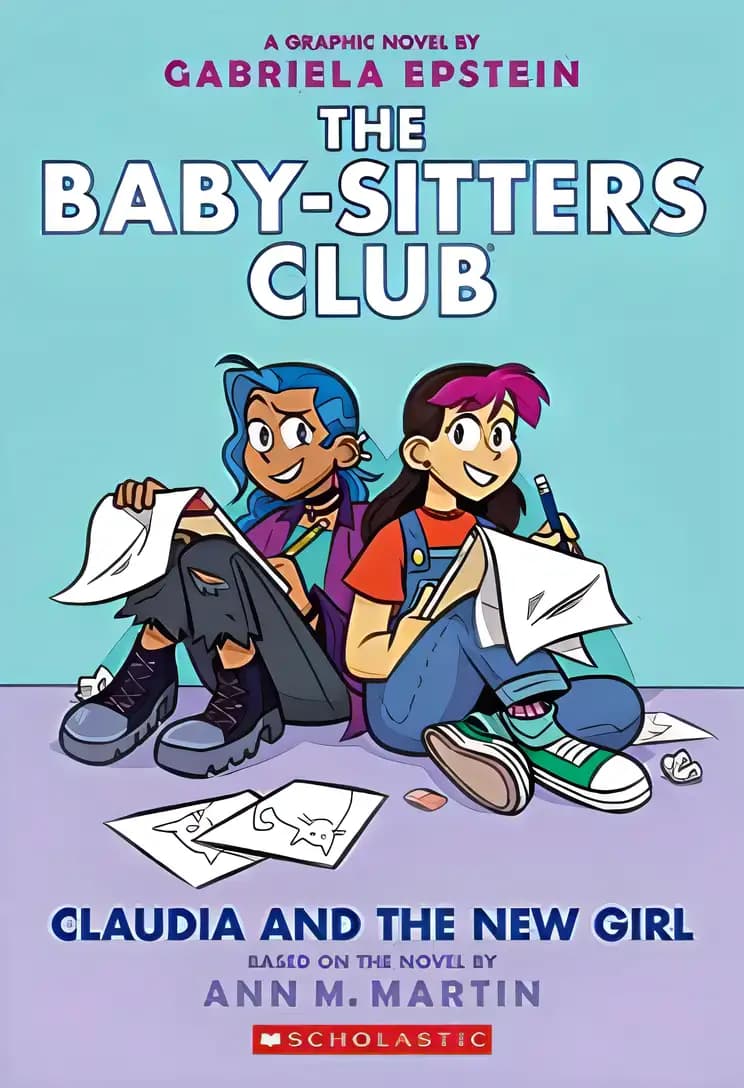
Claudia and the New Girl
#9 of 131 in The Baby-Sitters Club Series
on Goodreads (7,708)
What’s inside...
Claudia has always been known as the most creative and artistic kid at Stoneybrook Middle School, but her confidence is shaken when a new student, Ashley Wyeth, arrives and displays superior art skills. Ashley wears hippie clothes, has multiple earrings, and quickly becomes the most fantastic artist Claudia has ever met. As Claudia gets closer to Ashley and starts missing Baby-Sitters Club meetings, she faces a tough decision: should she pursue her artistic passion with Ashley, or stay loyal to The Baby-Sitters Club? A brand-new Baby-sitters Club graphic novel adapted by newcomer Gabriela Epstein explores themes of friendship, rivalry, and self-expression.
Character compass
Claudia Kishi
Stacey Mcgill
Kristy Thomas
Mary Anne Spier
Dawn Schafer
Ashley Wyeth
Discussion points
How do you think Claudia felt when she met the new girl? Have you ever felt the same way meeting someone new?
What do you think makes a good friend? Do Claudia and the new girl show these qualities?
Why is it important to balance friendships and personal interests?
How did the characters change by the end of the story? What do you think caused these changes?
What would you have done differently if you were in Claudia's situation?
Tip: Role play these questions
Encourage your child to express their thoughts and feelings about meeting new people and making friends, relating it to Claudia’s experiences.
Discuss the importance of maintaining old friendships while exploring new ones, drawing parallels from the book.
Highlight how Claudia’s interests in art help her connect with others and ask your child about interests they have that might help them make new friends.
Key lessons
Example Lesson: The importance of inclusivity and openness
Explanation: In the story, Claudia learns to embrace the new girl, Ashley, despite initial differences in interests and personalities. They learn from each other and form a unique bond.
Real-World Application: Children are encouraged to welcome new classmates and peers with an open mind, helping them build diverse friendships and learn from others' perspectives.
Example Lesson: Maintaining friendships amid change
Explanation: Claudia faces challenges as she tries to balance her old friendships with her new friendship with Ashley. She learns the importance of communication and understanding in maintaining her relationships.
Real-World Application: This lesson can teach children how to manage their relationships as they grow and their social circles expand, ensuring they communicate effectively and cherish their friendships.
Example Lesson: Value of self-expression through art
Explanation: Ashley, being an artist, influences Claudia to express herself through her artistic talents. This helps Claudia discover new aspects of her identity.
Real-World Application: Children learn the importance of exploring and nurturing their talents, which can be a medium for self-expression and personal growth.
Example Lesson: Dealing with jealousy
Explanation: Claudia experiences jealousy when her best friend, Stacy, also becomes close to Ashley. She learns to handle her feelings positively without harming her friendships.
Real-World Application: This teaches children to acknowledge their emotions, like jealousy, and manage them in constructive ways, promoting emotional intelligence.
Example Lesson: Accepting differences
Explanation: Claudia initially struggles with Ashley's different style and interests but learns to appreciate and accept these differences as strengths rather than barriers.
Real-World Application: Encourages children to appreciate and respect differences among their peers, fostering a more inclusive and supportive environment.