
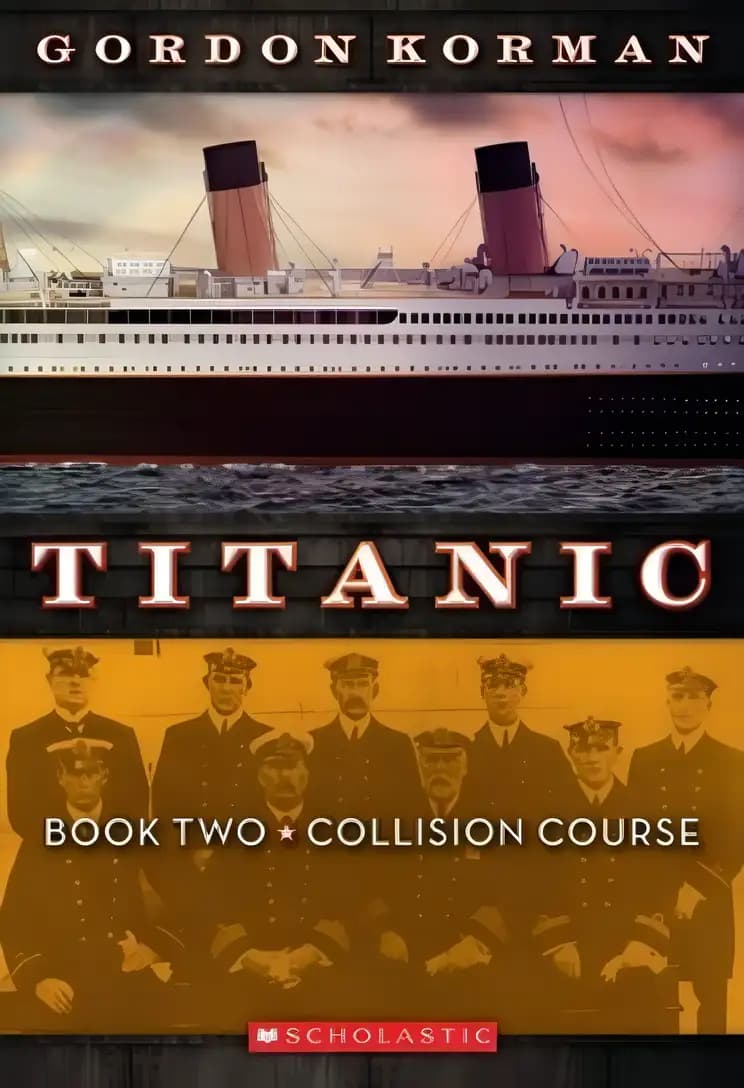
Collision Course (Titanic #2)
#2 of 3 in Titanic Series
on Goodreads (1,897)
What’s inside...
The Titanic embarks on its fateful voyage, carrying both luxury and danger within its walls. Mysteries unravel as a potential killer lurks onboard, a legacy is at risk, and a crucial truth awaits discovery. The lives of Paddy, Sophie, Juliana, and Alfie become inseparably linked as they navigate both secrecy and revelation. Their journey takes a dramatic turn when an iceberg emerges, setting the stage for a climactic resolution. This is a thrilling adventure by bestselling author Gordon Korman on the famously doomed ship.
Character compass
Paddy Burns
Juliana Glamm
Sophie Bronson
Alfie Huggins
Discussion points
How do the characters' decisions impact the unfolding events aboard the Titanic? What would you have done differently if you were in their shoes?
What role does courage play in the story? Can you identify a moment where a character had to be brave?
How does the setting of the Titanic influence the story? What unique challenges does it present to the characters?
What lessons about teamwork and leadership can we learn from the characters' experiences?
How do the different perspectives of the characters add depth to the story? Which character’s viewpoint resonated with you the most and why?
Tip: Role play these questions
Encourage your child to put themselves in the shoes of the characters, imagining their thoughts and feelings in the dire situations aboard the Titanic. Use pauses after each question to give your child time to think deeply. Highlight the historical context of the Titanic, enriching the discussion with facts about the era to make the setting more relatable and vivid. Commend bravery and teamwork shown by the characters, tying them to real-life values and ethics. Support your child in expressing their opinions and thoughts about the book’s themes, fostering a safe space for open dialogue.
Key lessons
Example Lesson: Responsibility
Explanation: In 'Collision Course,' characters face challenges that require them to take responsibility for their actions in difficult situations. This is demonstrated through characters like Paddy, who must make tough decisions when confronted with moral dilemmas.
Real-World Application: Children can apply this by learning to own their choices and understanding the consequences of their actions, whether it's in their interactions with friends or in their academic responsibilities.
Example Lesson: Courage and Resilience
Explanation: The protagonists show courage in the face of the Titanic’s disaster, highlighting their resilience. This theme is woven through their determination to survive and help others despite the odds.
Real-World Application: This can inspire children to be brave and resilient in challenging situations, whether it's standing up for a friend, confronting a personal fear, or persevering through a difficult task.
Example Lesson: Empathy and Compassion
Explanation: Throughout the book, characters display empathy by understanding and sharing the feelings of others, leading them to act compassionately during the chaos aboard the Titanic.
Real-World Application: Children learn the importance of considering others' feelings and situations, encouraging them to extend kindness and support to peers and family members.
Example Lesson: Teamwork
Explanation: The characters must often work together to overcome obstacles on the sinking ship, highlighting the importance of teamwork.
Real-World Application: This teaches children the value of collaboration and how combining efforts with others can achieve goals that seem insurmountable alone.
Example Lesson: History and Cultural Awareness
Explanation: Set against the historical backdrop of the Titanic, the book provides an opportunity to learn about early 20th-century history and the socio-cultural conditions of the time.
Real-World Application: Children can gain an appreciation for history and its impact on the present, encouraging them to explore and respect diverse cultures and historical narratives.