
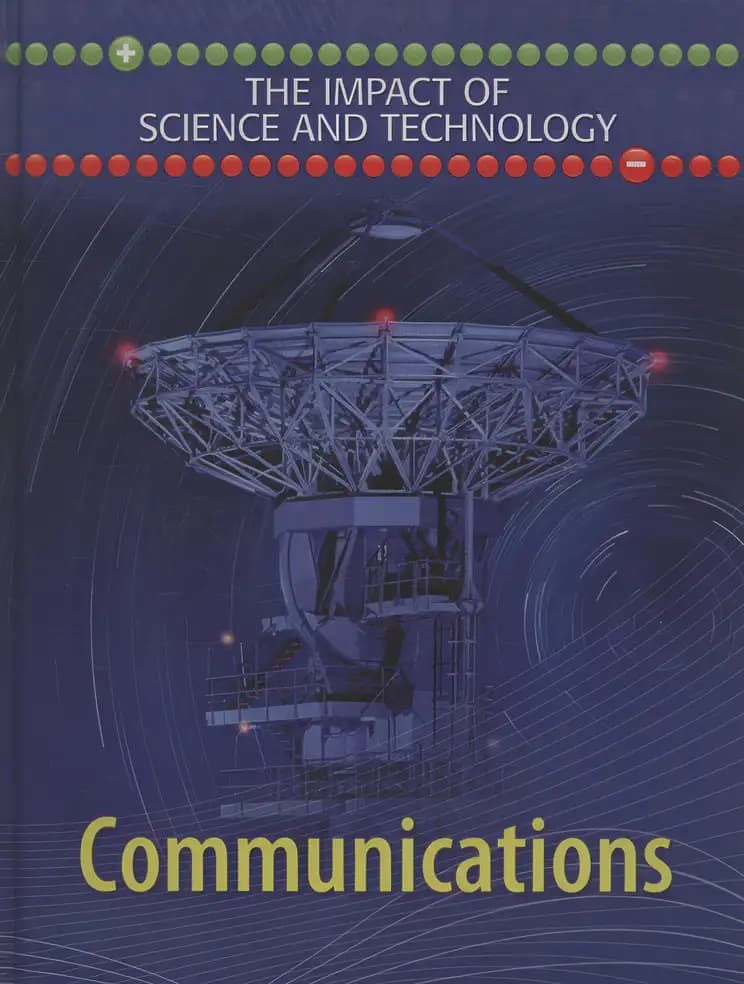
Communications
Pros and Cons Series
What’s inside...
This series explores how science and technology have revolutionized our lives, in both positive and negative aspects, affecting the environment, society, health, and the economy. It delves into the history of telecommunications, from ancient methods like smoke signals to modern satellites, and assesses the development and impact of mass communications such as print, broadcast media, radio, television, and the internet. Additionally, it examines the crucial role of cell phones and computers in linking the world and discusses the potential future advancements in telecommunications, weighing the advantages and disadvantages of these technologies in transforming society and the global landscape.
Series reading
Non-Sequential
Age
9-12
Length
64 pages
Text complexity
Discussion points
What are some ways you like to communicate with your friends and family?
Can you think of a time when you found it hard to communicate? What happened?
How do different characters in the book communicate? Do they all do it the same way?
Why is it important to listen as well as talk when we communicate?
How can we use communication to solve problems?
Tip: Role play these questions
Encourage your child to think about how they communicate every day, and relate it back to the examples in the book.
Use real-life scenarios to discuss communication issues. Ask your child how they would handle a similar situation.
While discussing the book, ensure to actively listen to your child’s ideas and thoughts to model effective communication.
Point out non-verbal forms of communication in the book and ask your child to demonstrate some non-verbal communications they use.
After reading, encourage your child to draw or write a story about different ways people can communicate.
Key lessons
Example Lesson: Importance of clear communication
Explanation: The book highlights various scenarios where characters learn the value of expressing themselves clearly and effectively.
Real-World Application: Children can apply this lesson by practicing to express their thoughts and needs clearly, helping them in school and interpersonal relationships.
Example Lesson: Understanding non-verbal cues
Explanation: Characters in the book often communicate through gestures and facial expressions, teaching readers to notice and interpret non-verbal signals.
Real-World Application: This can help children be more empathetic and responsive to the feelings of others around them, enhancing their social interactions.
Example Lesson: Active listening skills
Explanation: Throughout the story, characters show growth by listening actively to each other, which resolves conflicts and strengthens relationships.
Real-World Application: Children learn to listen attentively to instructions and peers, which is crucial in educational settings and friendships.
Example Lesson: The power of asking questions
Explanation: The book encourages characters to ask questions when they do not understand, promoting a culture of inquiry and learning.
Real-World Application: Kids are encouraged to be curious and seek clarity in their learning process, which fosters a deeper understanding and confidence in tackling new challenges.