
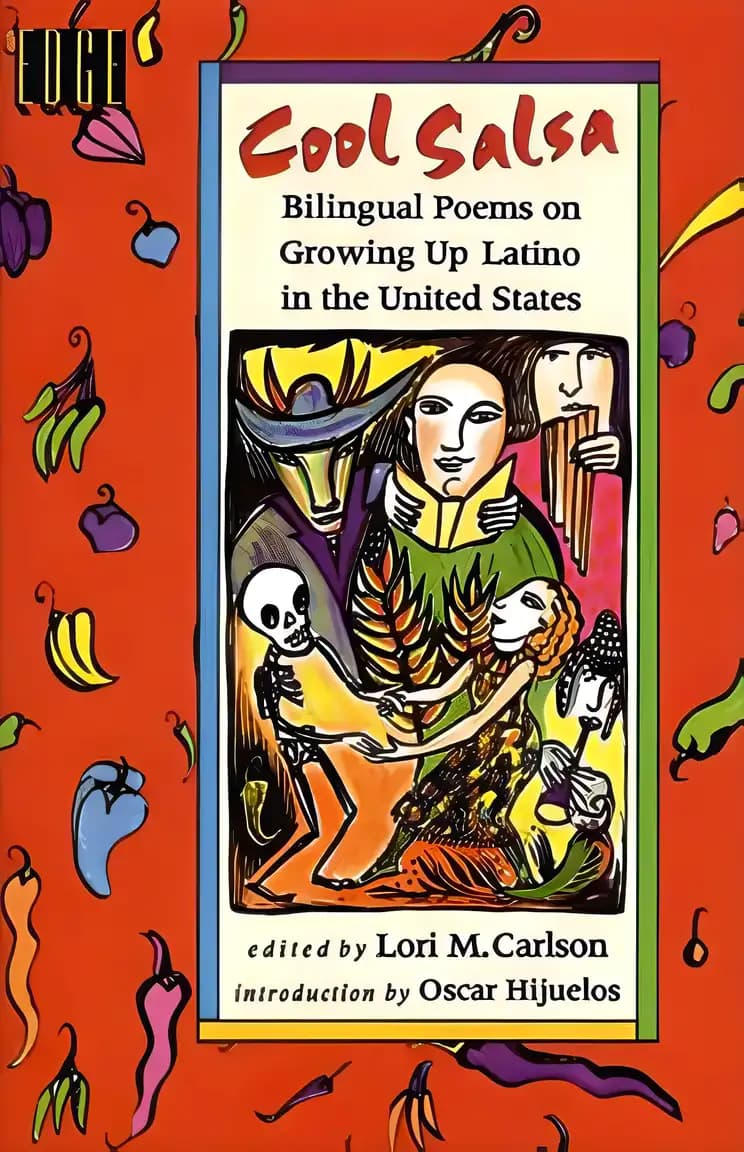
Cool Salsa: Bilingual Poems on Growing Up Hispanic in the United States
[An Edge Book] Series
on Goodreads (467)
What’s inside...
Cool Salsa is a collection of poems that delve into various themes and moods prominent in Hispanic-American teenage life. The poems explore the dual identity and cultural experiences of growing up Latino in America, which includes speaking two languages, embodying two lives, and understanding two cultures. The anthology, edited by Lori M. Carlson and featuring an introduction by Oscar Hijuelos, includes works by poets like Sandra Cisneros, Martín Espada, Gary Soto, and Ed Vega. Poems touch on family, parties, insults, memories, and the linguistic challenges between Spanish and English. The collection captures the essence of Latino life from various locations across America and presents the poems in both their original language and in translation.
Series reading
Non-Sequential
Age
8-12
Length
124 pages
Text complexity
Discussion points
How do the poems in 'Cool Salsa' help you understand the experiences of growing up Hispanic in the United States?
What feelings or thoughts arose as you read through the bilingual poems?
Can you identify any similarities or differences between your own experiences and those described in the book?
What does the use of two languages in the poems tell you about the culture and identity of the characters?
How might the stories in 'Cool Salsa' change or enhance the way you think about your own cultural background or those of others?
Tip: Role play these questions
Before starting the book, discuss with your child what they already know about Hispanic culture and their expectations from the book.
Encourage your child to express their thoughts about each poem, focusing on emotions, language, and cultural references.
Compare and contrast your own cultural experiences with those depicted in the book to foster a deeper understanding and connection.
Use the bilingual aspect of the poems to explore the beauty and complexity of language, discussing how each language contributes to the story's meaning.
After reading, encourage your child to create their own poem that captures their personal cultural experience, using insights gained from 'Cool Salsa'.
Key lessons
Example Lesson: Cultural Appreciation
Explanation: Through vibrant bilingual poems, this book celebrates the rich Latino culture and heritage. It offers insights into the Hispanic experience in the United States, showcasing both the struggles and triumphs.
Real-World Application: Children can develop respect and appreciation for diverse cultures, understanding the importance of inclusivity and empathy towards people from different backgrounds in their daily interactions.
Example Lesson: Identity and Self-Acceptance
Explanation: The poems explore themes of identity and growing up between two cultures, encouraging young readers to reflect on their own identity.
Real-World Application: This lesson helps children embrace their unique qualities and backgrounds, boosting their self-confidence and encouraging them to be proud of who they are, no matter the setting.
Example Lesson: Language Skills
Explanation: Presenting poems in both English and Spanish, 'Cool Salsa' enhances bilingual language development and comprehension.
Real-World Application: Children can improve their language abilities and cognitive flexibility, making it easier for them to learn additional languages and switch between them effectively in their academic and personal lives.
Example Lesson: Resilience and Determination
Explanation: Many poems depict young individuals overcoming challenges and barriers, teaching resilience.
Real-World Application: This can inspire children to persevere through their own challenges, whether they are related to school, home, or their social lives, fostering a strong, resilient mindset.
Example Lesson: Expression Through Poetry
Explanation: The book exemplifies how poetry can be a powerful form of self-expression and healing.
Real-World Application: Encourages children to use creative writing and poetry as outlets for expressing their feelings and thoughts, which can be particularly useful during emotionally challenging times or as a leisure activity to enhance their creative skills.