
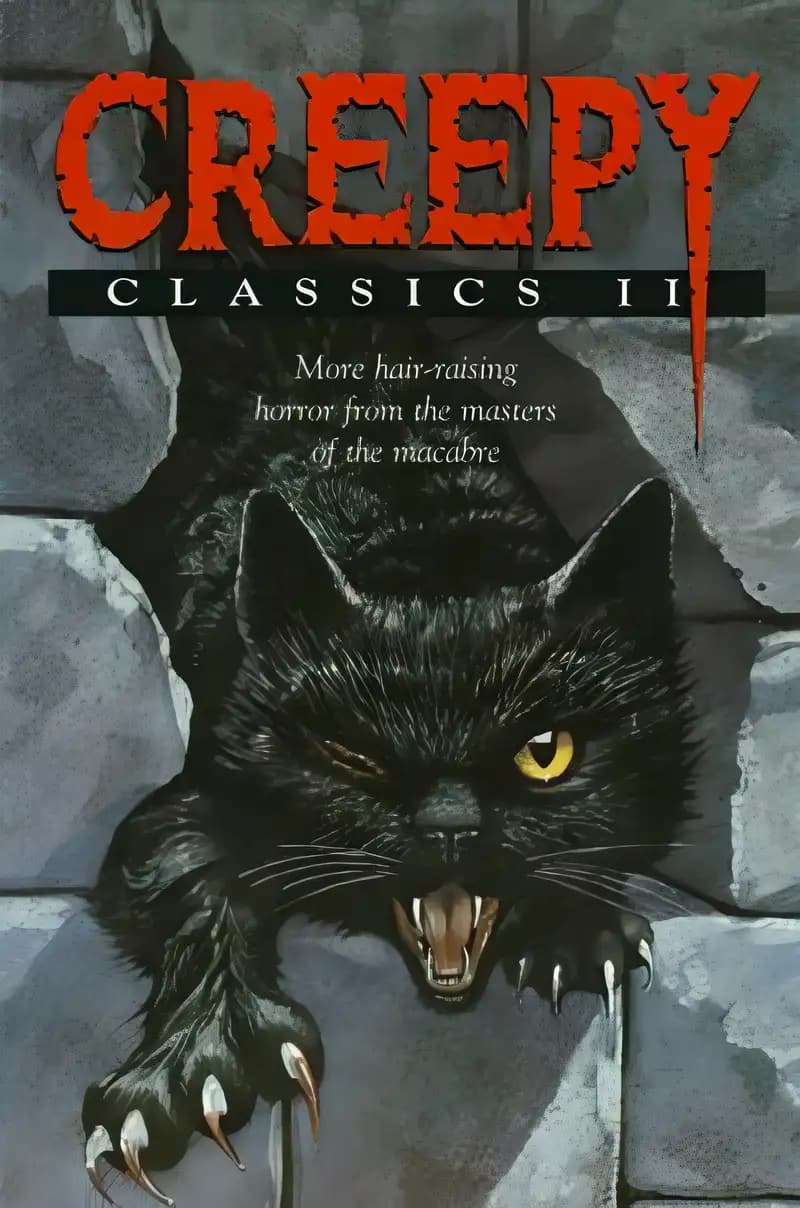
Creepy Classics II: More Hair-Raising Horror from the Masters of the Macabre
#2 in Creepy Classics Series
What’s inside...
This collection contains classic short stories from some of the greatest horror writers of all time, including Edgar Allan Poe, Ralph Adams Cram, E.F. Benson, and Sir Arthur Conan Doyle. In addition to the stories, Stuart provides informative introductions about each author and an informative glossary to enhance the reading experience.
Discussion points
How did the characters in the story react to their fears, and what can we learn from them?
Which story in the book was your favorite and why?
If you could change one part of any story, what would it be and why?
Do you think the settings of the stories affect how scary they are? How might the story change if it happened somewhere else?
What is something brave you would've done if you were in any of the stories?
Tip: Role play these questions
Encourage your child to express their feelings about the stories. Acknowledge their fears and reinforce that it's okay to feel scared.
Compare and contrast different stories in the book to discuss similarities and differences in themes or character reactions.
Ask your child to imagine alternative endings to their favorite story, enhancing their creativity and problem-solving skills.
Discuss the historical and cultural context of the stories to add depth to your child’s understanding and appreciation of classic literature.
Relate the stories to personal experiences or current events to make the themes more relatable and grounding.
Key lessons
Example Lesson: Courage in the face of fear
Explanation: The protagonists in the stories confront various supernatural challenges and through these encounters, they learn to overcome their fears.
Real-World Application: Children can learn the importance of facing their fears and understanding that overcoming challenging situations builds resilience.
Example Lesson: The consequences of actions
Explanation: Several stories in the anthology deal with characters making choices, often under duress, and facing the consequences of those choices.
Real-World Application: This can help children understand the concept of cause and effect, and encourage them to think about the potential outcomes before making decisions.
Example Lesson: Empathy and understanding
Explanation: Characters in the stories often encounter misunderstood creatures or find themselves misunderstood. The resolution often involves understanding and empathy.
Real-World Application: This teaches children the value of looking beyond appearances and practicing empathy towards others, irrespective of their differences.
Example Lesson: The power of teamwork
Explanation: Many of the stories conclude with characters collaborating to overcome a supernatural threat, showcasing the effectiveness of working together.
Real-World Application: This lesson emphasizes the importance of cooperation and how collective efforts can achieve what might seem impossible for an individual.
Example Lesson: The importance of curiosity and knowledge
Explanation: Characters often use knowledge and research to understand the supernatural phenomena and find ways to deal with it.
Real-World Application: Encourages children to seek knowledge and be curious about the world around them, highlighting how education can empower them to solve problems.