
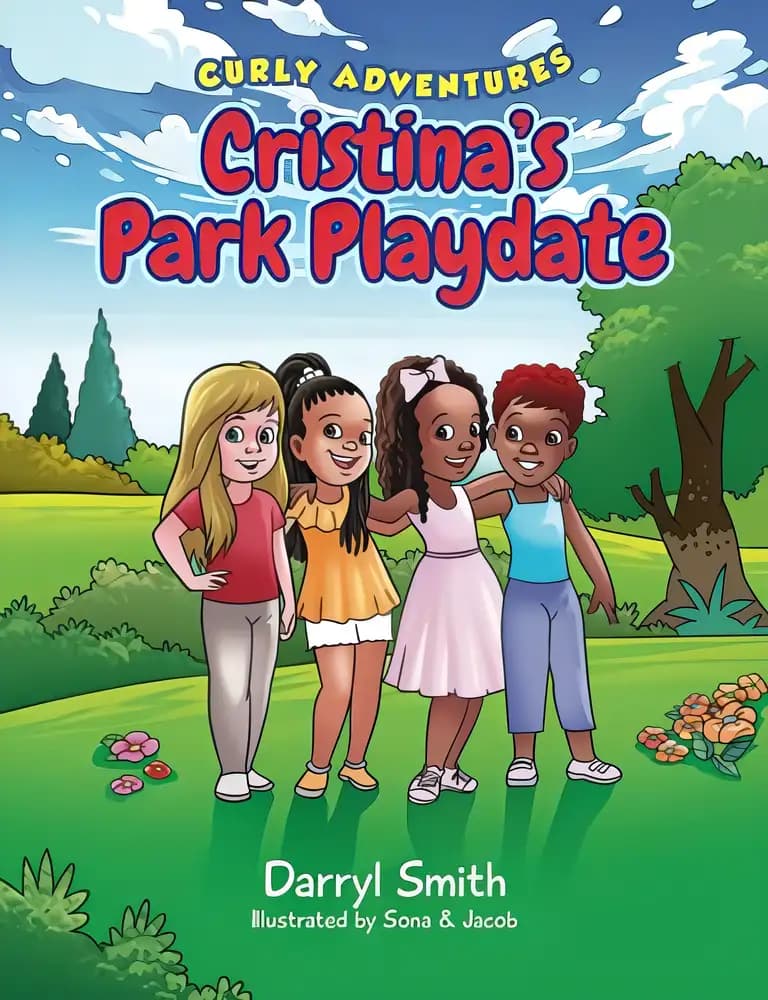
Cristina's Park Playdate
What’s inside...
Cristina learned that true friendship is about loving and accepting each other, no matter how different we are. Through her adventures with Piper, Patriana, and Mia, she discovered that our unique qualities make us special and that celebrating our differences makes our friendships even more amazing. The story encourages children to embrace diversity, appreciate their own unique qualities, and have lots of fun making friends with different hairstyles.
Age
2-18
Length
24 pages
Text complexity
Discussion points
How did Cristina feel when she first arrived at the park and how did her feelings change throughout the playdate?
What are some ways Cristina made new friends? Can you think of a time you made a new friend and what you did?
Why do you think sharing toys is important in the story? How do you feel when you share your toys?
What games would you like to play if you were at the park with Cristina?
If you could add another character to the playdate, who would it be and what would they do?
Tip: Role play these questions
Start by asking your child how they felt about the story and which character they liked the most. It helps personalize the discussion.
Use the questions to help your child connect with the experiences of the characters, making the story more relatable and meaningful.
Encourage your child to imagine alternate scenarios or endings to the story, fostering their creativity and problem-solving skills.
As you discuss the theme of friendship, share a personal story of your own friendships and the joy it brings to enrich the conversation.
Highlight the importance of empathy by discussing how each character might have felt during different parts of the playdate.
Key lessons
Example Lesson: The importance of sharing
Explanation: In 'Cristina's Park Playdate,' Cristina learns to share her toys with her new friends at the park, leading to a more enjoyable playtime for everyone.
Real-World Application: Children can apply this lesson by sharing their belongings with peers at school or with siblings at home, fostering better relationships and cooperative play.
Example Lesson: Developing social skills
Explanation: Throughout the book, Cristina navigates meeting new peers and learns the value of introductions, polite conversation, and playing cooperatively.
Real-World Application: Kids can utilize these social skills in their interactions at school, during extracurricular activities, or in neighborhood gatherings, helping them build and maintain friendships.
Example Lesson: Respecting differences
Explanation: Cristina encounters friends from various backgrounds at the park, and learns to embrace and respect the differences among her new friends.
Real-World Application: This lesson helps children appreciate diversity and practice inclusion with classmates and others in their community, promoting an understanding and respectful environment.
Example Lesson: Problem-solving
Explanation: When a disagreement arises over a game, Cristina and her friends work together to find a solution that makes everyone happy.
Real-World Application: Children can mirror this problem-solving approach during disputes or challenges in school or group settings, leading to peaceful resolutions and improved critical thinking skills.