
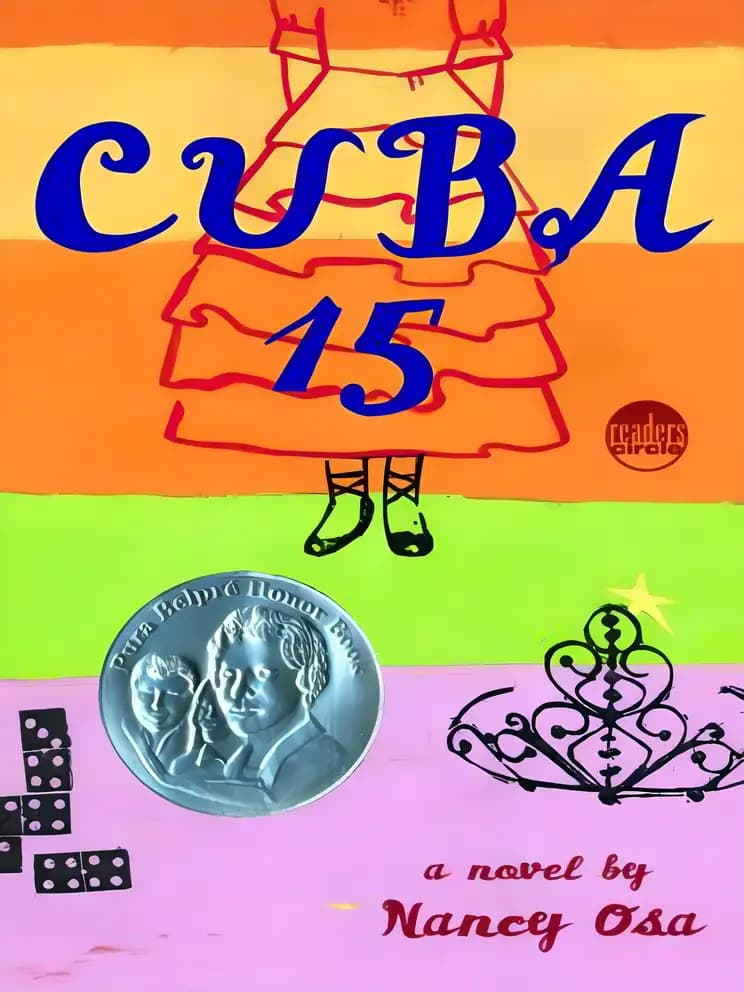
Cuba 15 (Random House Reader's Circle)
Readers Circle Series
on Goodreads (1,212)
What’s inside...
Violet Paz has just turned 15, a pivotal birthday in the eyes of her Cuban grandmother. Fifteen is the age when a girl enters womanhood, traditionally celebrating the occasion with a quinceañero. But while Violet is half Cuban, she’s also half Polish, and more importantly, she feels 100% American. Except for her zany family’s passion for playing dominoes, smoking cigars, and dancing to Latin music, Violet knows little about Cuban culture, nada about quinces, and only tidbits about the history of Cuba. So when Violet begrudgingly accepts Abuela’s plans for a quinceañero–and as she begins to ask questions about her Cuban roots–cultures and feelings collide. The mere mention of Cuba and Fidel Castro elicits her grandparents'sadness and her father’s anger. Only Violet’s aunt Luz remains open-minded. With so many divergent views, it’s not easy to know what to believe. All Violet knows is that she’s got to form her own opinions, even if this jolts her family into unwanted confrontations. After all, a quince girl is supposed to embrace responsibility–and to Violet that includes understanding the Cuban heritage that binds her to a homeland she’s never seen. This is Nancy Osa’s first novel.
Series reading
Non-Sequential
Age
12-15
Length
304 pages
Text complexity
Character compass
Violet Paz
Leda
Abuela
Mrs. Paz
Manny Paz
Discussion points
How do you think Violet Paz felt about her culture and family traditions at the beginning and end of the book, and what changed?
What role do you think friends and family play in shaping our identity, based on Violet’s experiences?
How does Violet balance her American lifestyle with her Cuban heritage, and what can we learn from her struggles and triumphs?
What parts of your own heritage are important to you, and how would you like to celebrate them?
If you were in Violet’s place, how would you handle the pressures and expectations from your family during important celebrations?
Tip: Role play these questions
Encourage your child to express their thoughts on cultural identity and heritage, drawing parallels to their own life.
Ask open-ended questions to facilitate deeper thinking and connection to the book’s themes of self-discovery and cultural integration.
Discuss the importance of family traditions and cultural celebrations, inviting your child to share what makes their heritage special to them.
Highlight moments in the book where Violet interacts with her family and friends, discussing how these relationships influence her understanding of her culture.
Use Violet’s story as a gateway to explore and share your family’s cultural practices and the significance behind them.
Key lessons
Example Lesson: Cultural appreciation and identity
Explanation: In 'Cuba 15', the protagonist, Violet Paz, embarks on a journey of self-discovery as she plans her quinceañera, exploring her Cuban heritage and family traditions. This exploration helps her connect deeply with her cultural roots.
Real-World Application: Children can learn to acknowledge and respect their own family traditions and heritage, forging a strong sense of identity and self-esteem through appreciation of their cultural background.
Example Lesson: Importance of family bonds
Explanation: Throughout the book, Violet learns the value of family as she engages with her relatives in the planning of her celebration, realizing that their support is crucial in her life.
Real-World Application: This lesson will teach children to value and nurture their relationships with family members, understanding that these bonds provide support and shape their personal growth.
Example Lesson: Adapting to change
Explanation: As she navigates through her elaborate quinceañera preparations, Violet encounters various changes and learns to adapt, which reflects her transition from childhood to young adulthood.
Real-World Application: Children can learn that change is a natural part of life and developing adaptability can help them face new challenges with resilience and confidence.
Example Lesson: Self-expression and confidence
Explanation: Violet's involvement in decision making for her quinceañera, from choosing themes to expressing her preferences, showcases her growing confidence and ability to assert herself.
Real-World Application: This encourages children to express themselves and make decisions confidently, fostering independence and self-assuredness in their daily interactions.