
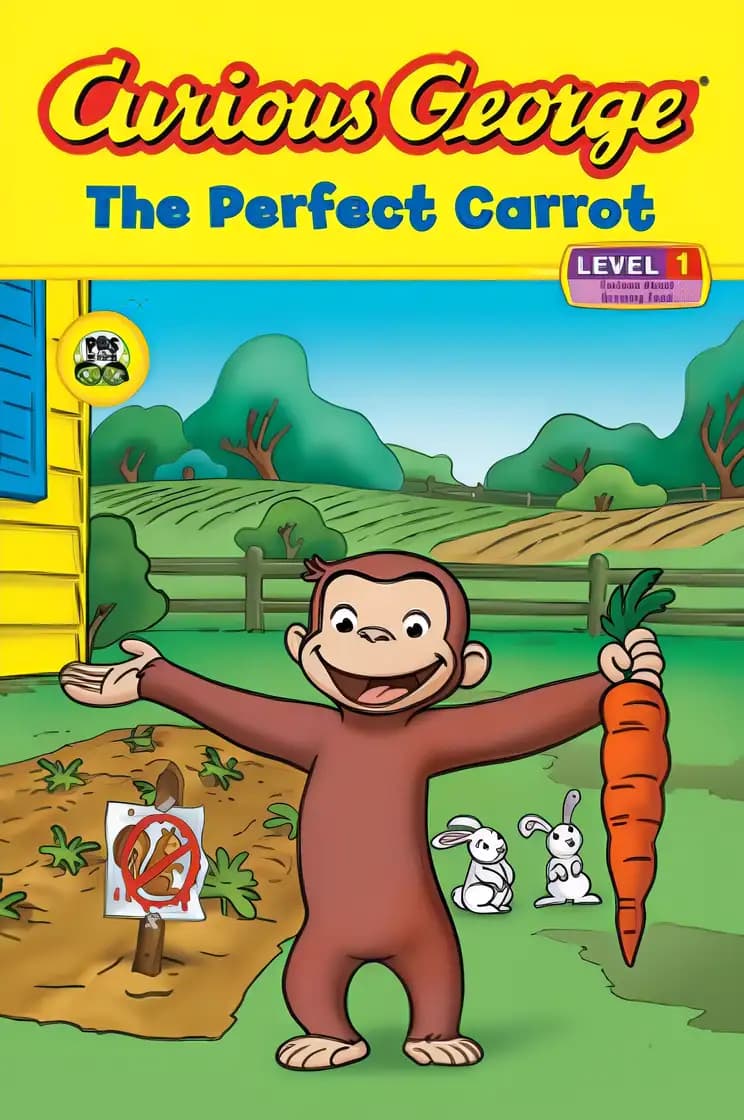
Curious George: The Perfect Carrot (Curious George TV)
Curious George New Adventures Series
on Goodreads (89)
What’s inside...
With the help of the man with the yellow hat, Curious George plants and grows carrots in a little garden plot of his own. When his carrots are finally ready to be pulled from the ground, George decides that his prize carrot is too perfect to eat. But when George stumbles upon his friend Bill's pet bunnies lost and hungry, he doesn't hesitate to share his carrot to help save the day. George's food-growing adventure has an environmentally friendly theme and includes fun facts about locally grown foods and a delicious recipe for carrot muffins.
Series reading
Non-Sequential
Age
4-7
Length
24 pages
Text complexity
Character compass
Curious George
The Man With The Yellow Hat
Discussion points
What do you think made the carrot 'perfect' in George’s eyes?
How did Curious George show he cared for his friends and the garden?
What would you do if you found a special carrot like George?
Why is it important to share with others, as George learned in the story?
Can you think of a time when you helped someone and how it made you feel?
Tip: Role play these questions
Encourage your child to imagine themselves in George’s shoes, asking how they would feel and react in similar situations.
Discuss the importance of teamwork and sharing, relating it to your child's daily experiences with friends or family.
Use expressive reading to make Curious George’s adventures more vivid and engaging for your child.
After reading, spend time with your child planting a seed or caring for a plant, relating it back to George’s gardening.
Ask your child to draw their 'perfect carrot' and describe what makes it special, fostering creativity and personal connection to the story.
Key lessons
Example Lesson: Persistence
Explanation: In the story, Curious George's dedication to gardening teaches children the importance of persistence. Despite challenges, George continues to tend to his garden.
Real-World Application: Children learn that perseverance in their tasks, from homework to household chores, can lead to rewarding outcomes.
Example Lesson: Responsibility
Explanation: George is tasked with caring for his carrot plant, demonstrating the responsibilities involved in nurturing something over time.
Real-World Application: Kids can apply this by taking care of a pet or maintaining their own small garden, learning the value of consistent care and attention.
Example Lesson: Healthy Eating
Explanation: The book promotes the benefits of growing and eating one's own vegetables, showcasing a healthy lifestyle.
Real-World Application: This can encourage children to choose healthy snacks like carrots instead of sweets, fostering better eating habits.
Example Lesson: Curiosity and Learning
Explanation: Curious George's enthusiasm for learning about gardening underlines how curiosity can lead to gaining new knowledge and skills.
Real-World Application: Children are encouraged to explore and learn about the world around them, whether it's a new hobby, subject at school, or understanding nature.
Example Lesson: Problem Solving
Explanation: When George faces the problem of pests in the garden, he must come up with a solution to protect his carrots, illustrating effective problem solving.
Real-World Application: Children learn to think critically and develop solutions when they encounter problems, enhancing their decision-making skills.