
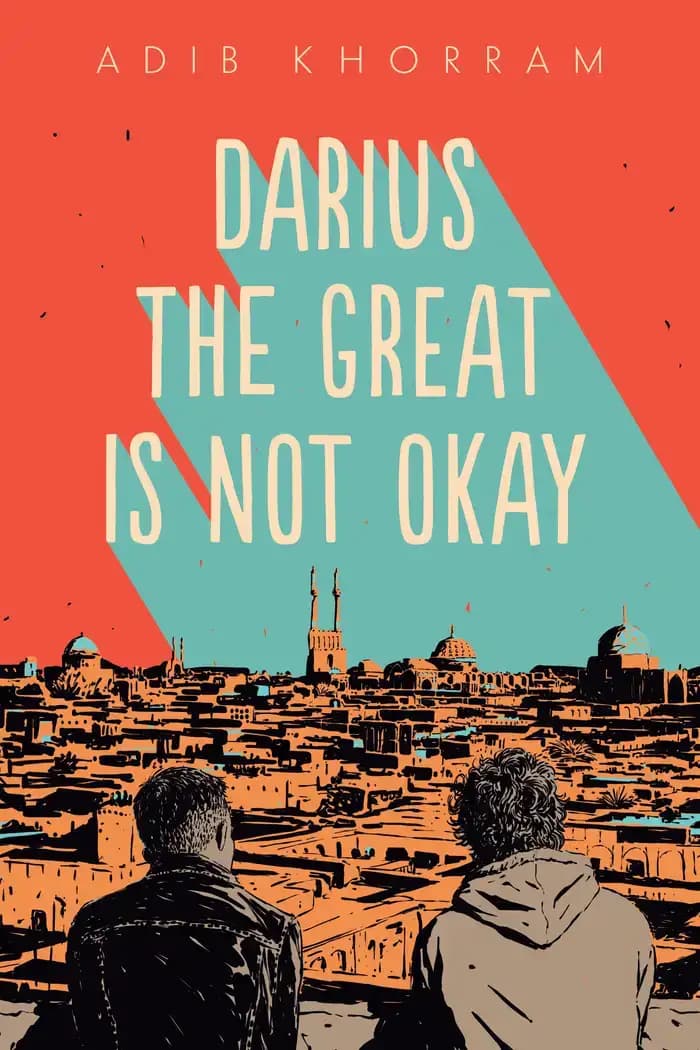
Darius the Great Is Not Okay
#1 in Darius the Great Series
on Goodreads (34,731)
What’s inside...
Darius doesn't think he'll ever be enough, in America or in Iran.
Darius Kellner speaks better Klingon than Farsi, and he knows more about Hobbit social cues than Persian ones. He's about to take his first-ever trip to Iran, and it's pretty overwhelming—especially when he's also dealing with clinical depression, a disapproving dad, and a chronically anemic social life. In Iran, he gets to know his ailing but still formidable grandfather, his loving grandmother, and the rest of his mom's family for the first time. And he meets Sohrab, the boy next door who changes everything.
Sohrab makes sure people speak English so Darius can understand what's going on. He gets Darius an Iranian National Football Team jersey that makes him feel like a True Persian for the first time. And he understands that sometimes, best friends don't have to talk. Darius has never had a true friend before, but now he's spending his days with Sohrab playing soccer, eating rosewater ice cream, and sitting together for hours in their special place, a rooftop overlooking the Yazdi skyline.
Sohrab calls him Darioush—the original Persian version of his name—and Darius has never felt more like himself than he does now that he's Darioush to Sohrab. When it's time to go home to America, he'll have to find a way to be Darioush on his own.
Why read this book
- Explores themes of identity and cultural connection.
- Addresses mental health with sensitivity and insight.
- Encourages empathy and understanding.
- Supports emotional and social development.
Character compass
Darius Kellner
Laleh Kellner
Sohrab
Babou
Stephen Kellner
Mamou
Shirin Kellner
Discussion points
How does Darius's experience with his identity and cultural heritage relate to your own feelings about where you belong?
What role do friendships play in the book, and how can they impact a person's mental health?
Discuss how Darius’s journey through depression is portrayed. What can we learn from his experiences?
Why do you think understanding family history and traditions is important for Darius and for us?
Tip: Role play these questions
Create a comfortable and open environment where your child feels safe to express their thoughts and feelings.
Before discussing, summarize the main parts of the book to refresh their memory and ensure they grasp the critical themes.
Relate discussions to personal experiences or current events to make the themes more relevant and engaging.
Encourage your child to ask questions and express opinions, showing that their perspective is valued.
Key lessons
Example Lesson: Understanding and Accepting Diversity
Explanation: The book explores Darius's journey as he navigates his dual cultural heritage, allowing young readers to understand the importance of embracing different cultural backgrounds.
Real-World Application: Children can learn to appreciate and respect peers from diverse backgrounds, fostering inclusivity in their everyday interactions.
Example Lesson: Dealing with Mental Health
Explanation: Darius's struggles with depression are portrayed with sensitivity, giving insight into mental health issues.
Real-World Application: This can help children recognize emotions and encourage them to discuss their mental health with adults, promoting early emotional support.
Example Lesson: The Value of Friendship
Explanation: The story highlights how friendships can provide support and understanding during challenging times, as seen in Darius's relationship with Sohrab.
Real-World Application: Children learn the importance of building supportive friendships, which can provide emotional stability and joy.
Example Lesson: Self-acceptance and Identity
Explanation: Throughout the book, Darius grapples with self-acceptance, eventually gaining a deeper understanding and appreciation of his own identity.
Real-World Application: This lesson encourages children to embrace their unique traits and backgrounds, boosting self-esteem and personal growth.
Example Lesson: Importance of Family Connections
Explanation: Darius's trip to Iran and interactions with his grandparents underscore the importance of familial bonds and heritage.
Real-World Application: Children are encouraged to connect with and appreciate their family histories and relationships, enriching their sense of belonging and identity.