
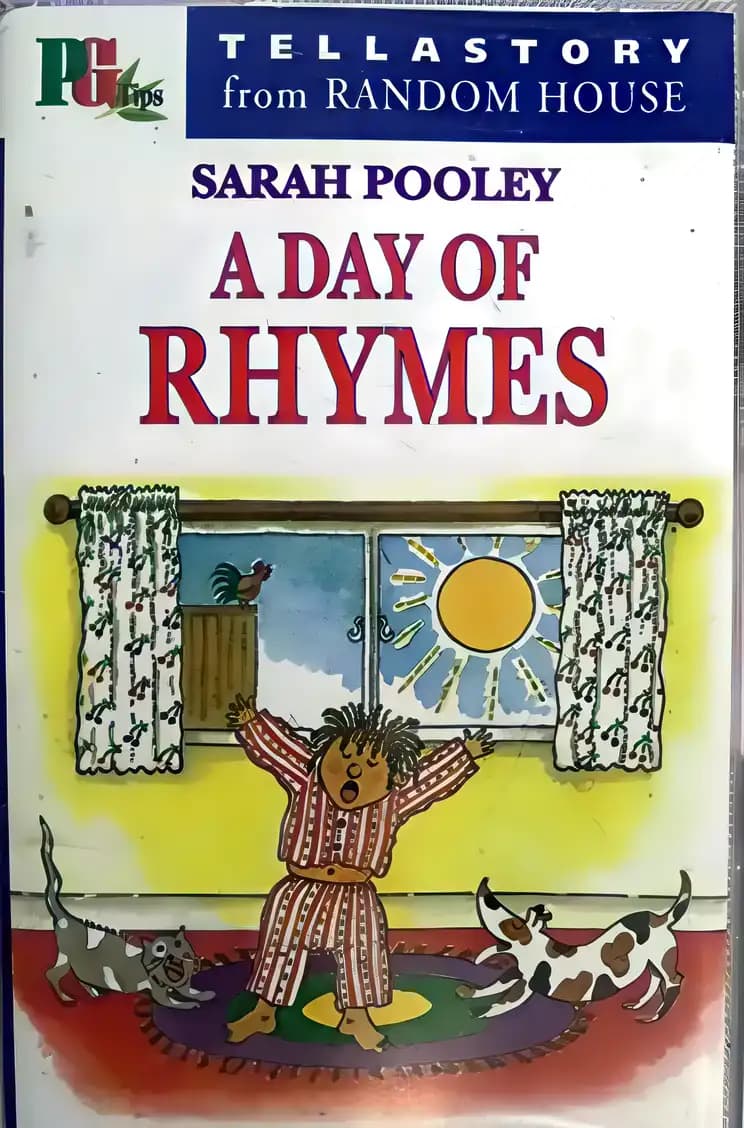
Day of Rhymes
on Goodreads (9)
What’s inside...
A compilation of traditional rhymes that reflect the various activities in a child's daily routine such as waking up, eating breakfast, playing games, and getting ready for bed. The collection includes both Mother Goose and other familiar nursery rhymes and songs, and it also features a cassette with children singing the rhymes. This book received the Best Book for Babies Award in 1988, highlighting its appeal and relevance to young readers.
Age
7-9
Length
144 pages
Text complexity
Discussion points
What was your favorite rhyme in the book and why did it stand out to you?
How do you feel when you hear rhymes and rhythms? Does it make the story more fun?
Can you think of your own rhyme for your favorite animal or object?
What do you think the writer wanted us to feel or learn from these rhymes?
If you could add a rhyme to the story, what would it be about?
Tip: Role play these questions
Read aloud together and emphasize the rhyming words. This not only makes it fun but also helps in recognizing phonetic patterns.
Pause after reading a rhyme and ask your child to guess the next rhyming word, turning it into a playful and interactive learning session.
Discuss the illustrations related to each rhyme, asking your child how they think the pictures relate to the words.
Create a rhyme together with your child about a common daily routine or a favorite family memory, which can help personalize the experience.
After reading, ask your child to draw their favorite scene or character from the book, and describe it in a rhyming couplet.
Key lessons
Example Lesson: The importance of sharing
Explanation: Throughout 'Day of Rhymes,' characters share their belongings and ideas amicably, illustrating the joy and mutual benefits of generosity.
Real-World Application: Children can apply this lesson by sharing toys, snacks, or books with their peers, fostering a cooperative and friendly environment at school or at the playground.
Example Lesson: Respecting differences
Explanation: The book celebrates diversity by featuring characters with various backgrounds and personalities working together harmoniously.
Real-World Application: Kids can learn to embrace and respect their friends’ and classmates’ differences, which can help in building a more inclusive community.
Example Lesson: The value of creativity
Explanation: Characters in the story use their imagination to solve problems and create fun games, highlighting the significance of creative thinking.
Real-World Application: This encourages children to use their imagination in daily activities, possibly leading to innovative solutions to challenges or creative expressions through arts and crafts.
Example Lesson: Persistence pays off
Explanation: When characters encounter challenges, they persevere until they succeed, teaching children the importance of not giving up easily.
Real-World Application: Children can be encouraged to keep trying in their academic studies, sports, or learning new skills despite initial difficulties.
Example Lesson: The power of words
Explanation: The story demonstrates how words can be both fun and impactful, underlining the importance of using kind and positive language.
Real-World Application: This can help children understand the impact of their words and to choose words that are kind and encouraging while communicating with others.