
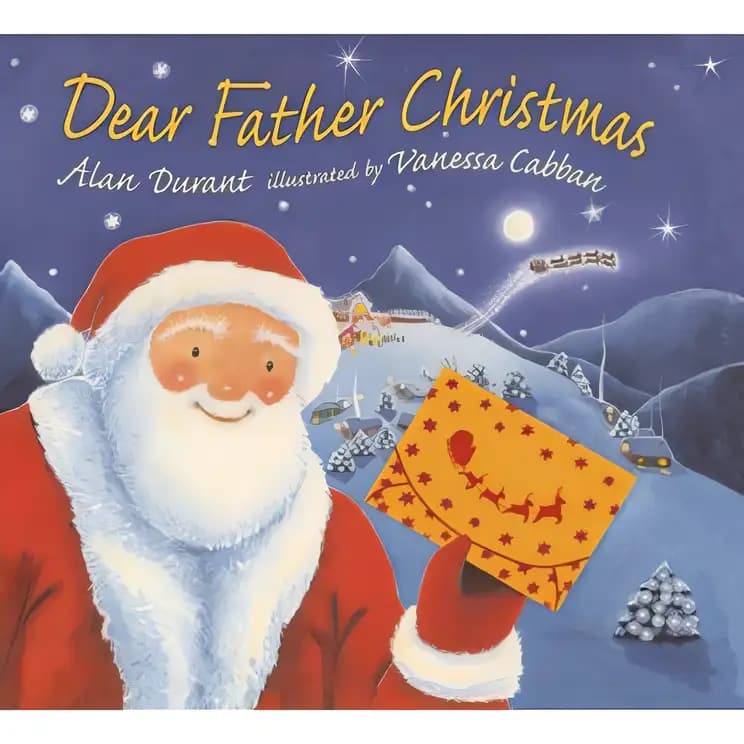
Dear Father Christmas
on Goodreads (82)
What’s inside...
It's December and Holly sees a man who looks like Father Christmas. She writes to Father Christmas to find out if it is really him, and they become festive pen pals. Holly learns about the magic of elves, reindeer, and life in Lapland, and receives a special Christmas surprise. The book includes detachable letters, a calendar, a tree decoration, a joke book, and a shimmery lenticular surprise. It is a sequel to Dear Tooth Fairy, which sold out its first print-run in twelve weeks and was shortlisted for the Red House Children's Book Award.
Age
3-7
Length
32 pages
Text complexity
Discussion points
What would you write in a letter to Father Christmas if you could send one today?
How do you think the girl felt while waiting for Father Christmas's reply?
What are some of the ways the girl showed kindness and generosity in her letters?
Why is it important to give and not just receive during the holiday season?
If you could give a gift to anyone, who would it be and what would you give them?
Tip: Role play these questions
Take turns reading the letters in the book with your child to make it interactive.
Encourage your child to think about what they would say in their own letters to Father Christmas, fostering creativity and personal connection to the story.
Discuss the feelings and emotions of the characters at different points in the book, helping your child develop empathy and understanding.
Use the theme of giving to start a conversation about generosity and kindness in everyday life, extending the book’s lessons beyond its pages.
Create a small activity where your child can write or draw a gift they would like to give to someone special, linking the story to a tangible action.
Key lessons
Example Lesson: The importance of patience
Explanation: In 'Dear Father Christmas', the child protagonist waits patiently for Christmas to arrive, showing the value of patience through her letters to Father Christmas.
Real-World Application: Children can learn to manage their expectations and wait calmly for special occasions or results, cultivating patience in daily routines.
Example Lesson: Expressing gratitude
Explanation: The protagonist expresses thankfulness for previous Christmas gifts in her letters, teaching children to be grateful and recognize the efforts of others.
Real-World Application: Children can practice writing thank-you notes or verbally expressing gratitude to friends and family, fostering an appreciative attitude towards the kindness of others.
Example Lesson: Effective communication
Explanation: The protagonist communicates her wishes and thoughts clearly in her letters to Father Christmas, demonstrating the importance of expressing oneself clearly and politely.
Real-World Application: Children can be encouraged to articulate their needs and thoughts clearly in interactions, enhancing their communication skills and building stronger relationships.
Example Lesson: Understanding the joy of giving
Explanation: The book showcases the joy the protagonist receives not just from getting gifts, but also from the act of thinking and writing about good deeds, illustrating the fulfilment that comes from giving.
Real-World Application: Children can be involved in activities like choosing and wrapping gifts for family members, to experience the happiness derived from thoughtful giving.
Example Lesson: Empathy and kindness
Explanation: Throughout her letters, the protagonist thinks about what others might need or enjoy, promoting empathy and the importance of considering other people's feelings and circumstances.
Real-World Application: Parents can encourage children to think about their peers' feelings and situations, and perform acts of kindness, nurturing a caring and empathetic approach towards others.