
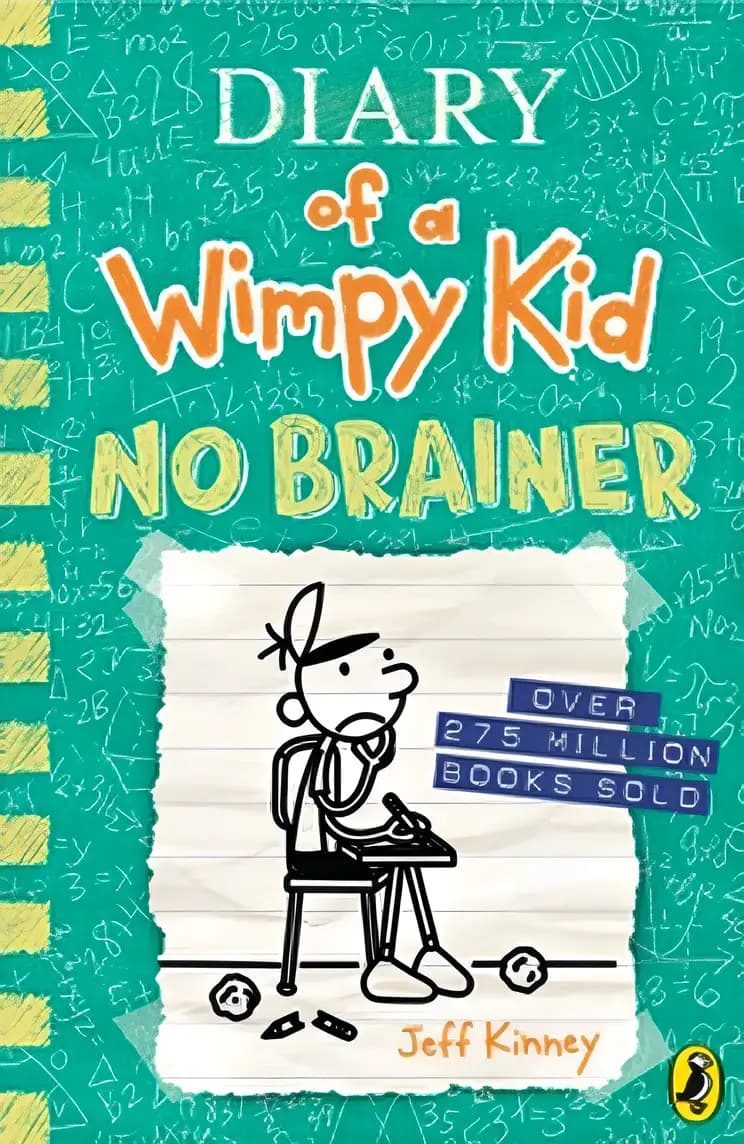
Diary of a Wimpy Kid: No Brainer (Book 18)
#18 of 19 in The Diary of a Wimpy Kid Series
on Goodreads (9,805)
What’s inside...
In 'Diary of a Wimpy Kid: No Brainer', Greg Heffley faces a new set of challenges as he navigates the complex world of middle school. With a focus on the importance of making smart choices, Greg learns that what may seem like a no-brainer decision can sometimes lead to unexpected consequences. In book 18 of the series, when the town threatens to close Greg's crumbling middle school, he initially isn't too concerned. However, realizing that this would mean attending a different school than his best friend, Rowley Jefferson, Greg changes his tune. Now, it's up to him and his classmates to save their school before it's closed for good.
Character compass
Greg Heffley
Rowley Jefferson
Discussion points
How do you think Greg feels when he faces new challenges in the story, and can you relate to his experiences?
What are some ways Greg tries to solve his problems? Do you think these are good strategies, or would you have handled them differently?
Which character in the book do you admire the most and why?
What lessons do you think Greg learned by the end of the book? Have you learned similar lessons in your own life?
If you could give Greg one piece of advice, what would it be and why?
Tip: Role play these questions
Encourage your child to express their thoughts and feelings about the book’s scenarios, relating them to their own experiences. Use open-ended questions to foster deeper understanding and critical thinking. Highlight the importance of facing challenges bravely, like Greg, and discuss the outcomes of various choices he makes. Emphasize empathy by discussing how different characters might feel in various situations. Lastly, enjoy the shared reading experience, using humor and relatable situations from the book to bond with your child.
Key lessons
Example Lesson: Responsibility
Explanation: In 'Diary of a Wimpy Kid: No Brainer', the protagonist Greg Heffley faces situations that teach him about the importance of taking responsibility for his actions.
Real-World Application: Children can learn to own their actions, understand the consequences, and make more conscientious decisions in their daily activities, such as homework and chores.
Example Lesson: Problem Solving
Explanation: Throughout the book, Greg encounters various challenges and learns to navigate through them using creative solutions.
Real-World Application: This teaches children to think critically and creatively when faced with obstacles, enhancing their ability to solve problems both in school and in social scenarios.
Example Lesson: Resilience
Explanation: Greg faces setbacks and learns to persist despite difficulties, which illustrates the value of resilience.
Real-World Application: Kids are encouraged to keep trying and not give up in the face of failure, whether it's dealing with a tough math problem or learning a new sport.
Example Lesson: Empathy
Explanation: Interactions between characters in the story highlight the importance of understanding and sharing the feelings of others.
Real-World Application: This can help children develop stronger relationships by being considerate of their friends’ and family members’ emotions.
Example Lesson: Integrity
Explanation: Greg is often faced with choices that test his honesty and principles.
Real-World Application: This lesson teaches children the importance of choosing to do the right thing, even when it's difficult, fostering a sense of morality and ethics.