
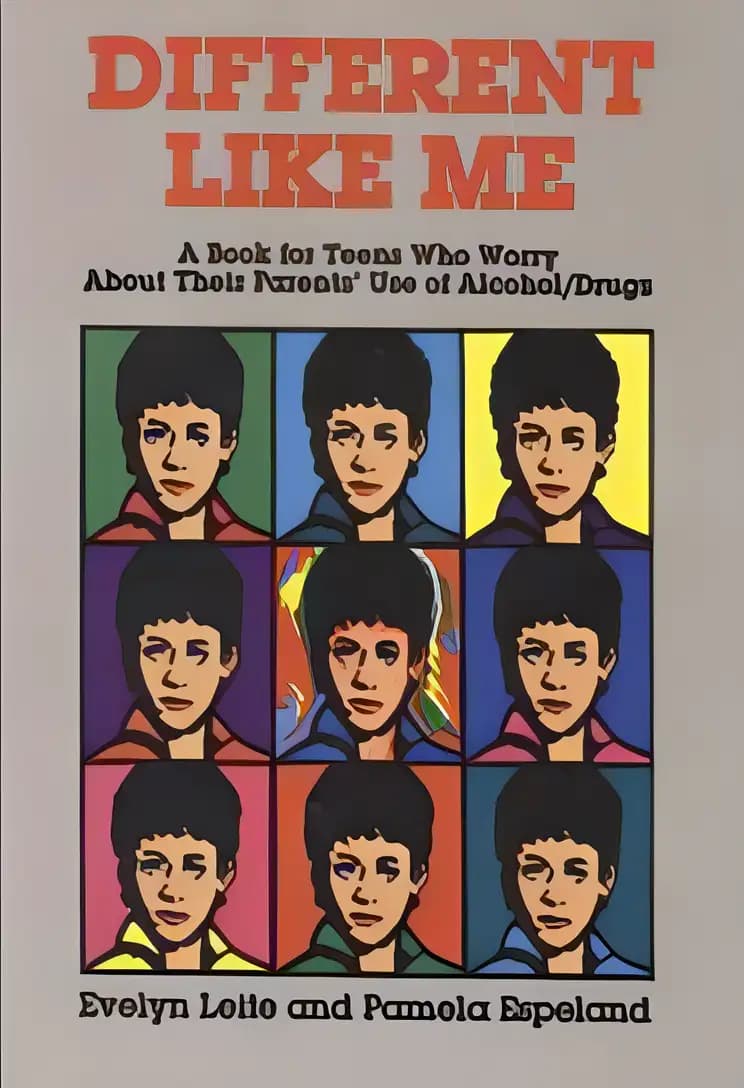
Different Like Me: A Book for Teens Who Worry About Their Parent's Use of Alcohol/Drugs
on Goodreads (7)
What’s inside...
Different Like Me: A Book for Teens Who Worry About Their Parent's Use of Alcohol/Drugs by Evelyn Leite provides compassionate guidance for teenagers coping with a parent's substance abuse. It offers a safe space for teens to express their feelings, learn about addiction, and realize they are not alone. The book includes practical advice on coping strategies, setting boundaries, and seeking support, while emphasizing the importance of self-care and understanding the complexities of their parent's addiction. This resource aims to empower teens to navigate their emotional challenges and make positive choices for their future. There are at least eight million youngsters under the age of 18 growing up in homes where one or both parents abuse alcohol or drugs. This book shows teenagers how to identify and deal with their feelings, and gives guidance on finding help for themselves and their parents.
Age
12-13
Length
120 pages
Text complexity
Discussion points
How did you feel about the different stories shared in the book?
Can you relate to any of the feelings or situations described by the teens in the book?
What are some ways the characters handled their challenges that you found helpful or inspiring?
Why do you think it is important to talk about the issue of parents using alcohol or drugs?
How do you think support from friends or adults can help someone in a situation similar to those described in the book?
Tip: Role play these questions
Begin the conversation by sharing your own thoughts on the book’s theme, showing vulnerability and openness.
Ensure a safe and non-judgmental space for your child to express their feelings and thoughts.
Encourage your child to think about the different coping mechanisms shown in the book and discuss their effectiveness together.
Reinforce the idea that seeking help and talking about problems is a sign of strength, not weakness.
Link discussions to real-life examples or situations, if possible, to make the conversation more relatable.
Key lessons
Example Lesson: Understanding addiction as an illness
Explanation: The book portrays the parents’ struggles with substance abuse in a compassionate light, emphasizing that addiction is a disease, not a choice or moral failing.
Real-World Application: Children can develop empathy towards those who suffer from addiction, promoting a kinder, more informed standpoint when encountering similar situations in their community or family.
Example Lesson: Coping with complex emotions
Explanation: Through the protagonist's journey, the book explores ways to handle feelings of fear, confusion, and isolation associated with a parent's addiction.
Real-World Application: Kids learn strategies to process and express their emotions healthily, aiding them to face personal adversities with resilience.
Example Lesson: Seeking support
Explanation: The narrative encourages reaching out to trusted adults, counselors, or support groups as the protagonist seeks help.
Real-World Application: Children are taught the importance of asking for help during tough times, illustrating that seeking support is a strength, not a weakness.
Example Lesson: Maintaining hope and positivity
Explanation: Despite the challenges presented by their parent’s addiction, the characters in the book strive for a positive outlook and work towards a better future.
Real-World Application: This lesson encourages children to remain hopeful and proactive about their future, regardless of the hardships they may currently face.
Example Lesson: Personal growth through adversity
Explanation: The book shows how the protagonist grows and matures as they navigate the trials associated with their parent’s addiction.
Real-World Application: It teaches children that personal challenges can lead to growth and development, helping them understand the value of overcoming obstacles in life.