
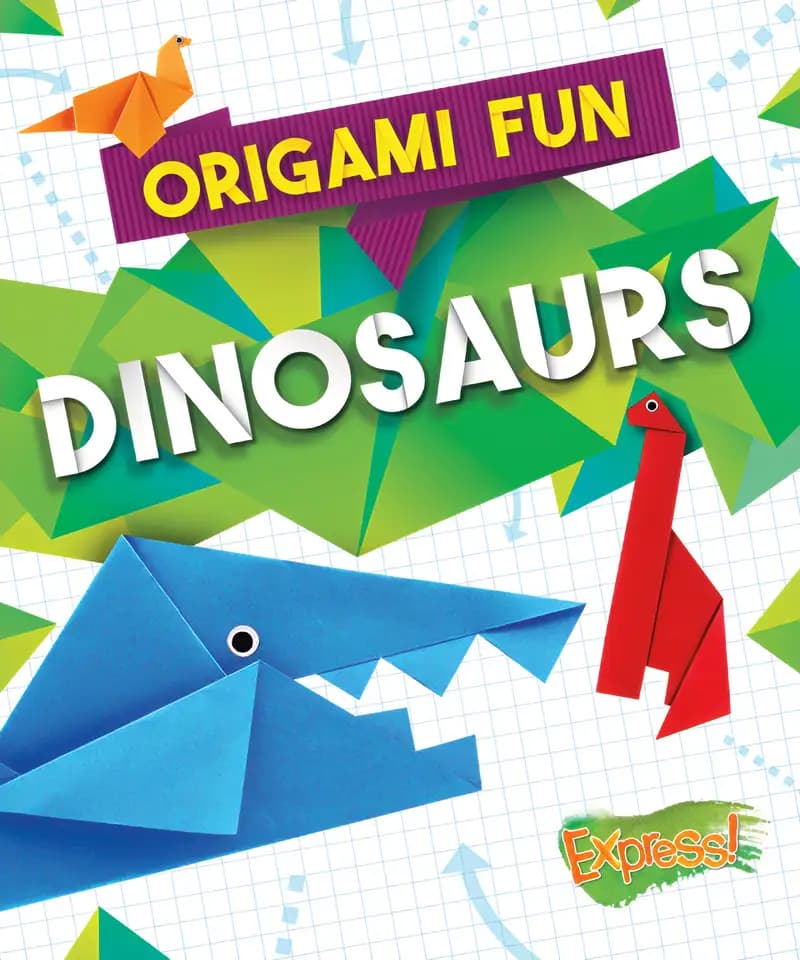
Dinosaurs
Express! Origami fun Series
on Goodreads (2)
What’s inside...
In nature, extinction is an irreversible process. Animal species that die off cannot be brought back to life. This origami how-to, however, gives young dinosaur lovers the opportunity to resurrect a stegosaurus, a triceratops, and more with paper. Making each species is as easy as 1-2-3.
Series reading
Non-Sequential
Age
8-12
Length
24 pages
Text complexity
Discussion points
What do you think it would be like to live in the time of dinosaurs?
Which dinosaur in the book is your favorite and why?
How do you think dinosaurs communicated with each other?
Can you imagine how the world looked during the age of dinosaurs based on the illustrations?
What do you think we can learn from studying dinosaurs?
Tip: Role play these questions
Use expressive voice tones while discussing each dinosaur to make the conversation lively and engaging.
Relate the dinosaurs to animals today; for example, compare the size of a Brachiosaurus to a bus!
Encourage your child's imagination by asking them to draw their favorite scene or dinosaur from the book.
Discuss the colors and environments in the illustrations to help your child understand the habitat of dinosaurs.
After reading, visit a museum with dinosaur exhibits if possible, or explore online for virtual tours to deepen the connection with the book's content.
Key lessons
Example Lesson: Understanding Extinction and Environmental Impact
Explanation: Robyn Hardyman's 'Dinosaurs' explores the concept of extinction and the environmental factors that contribute to it, using the example of dinosaurs to explain these complex ideas.
Real-World Application: Children can apply this knowledge by developing an awareness of their environmental impact and understanding the importance of conservation efforts in preventing species loss.
Example Lesson: The Value of Teamwork
Explanation: The book demonstrates how different dinosaurs, despite their varied sizes and strengths, needed to collaborate to survive in prehistoric ecosystems, emphasizing teamwork.
Real-World Application: Kids can learn to work cooperatively in group settings, such as in school projects or sports, appreciating everyone's unique contributions.
Example Lesson: Curiosity and Learning
Explanation: ‘Dinosaurs’ encourages a sense of wonder and curiosity about the natural world, as the book delves into the lives of these ancient creatures.
Real-World Application: This can inspire children to explore and ask questions about the world around them, fostering a lifelong love of learning.
Example Lesson: Adaptability
Explanation: The book shows how dinosaurs adapted to their environments, which helps children understand the importance of adaptability.
Real-World Application: Children can learn to adjust to new situations or changes in their lives, such as moving to a new school or dealing with changes in family dynamics.