
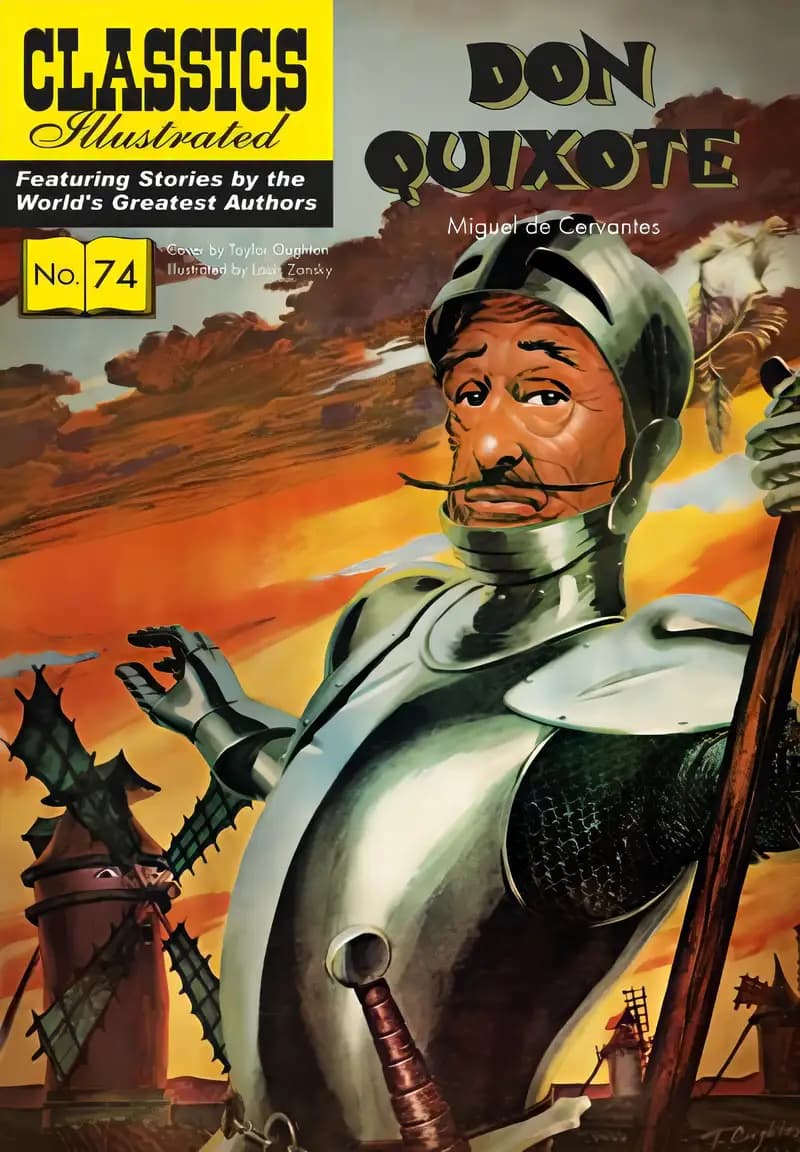
Don Quixote
#74 in Classics illustrated Series
What’s inside...
Fully illustrated comic-strip version provides excellent introduction to this classic work of literature. Cervantes' great classic of the comedic adventures of a noble man who decides to become a knight to revive chivalry and serve his nation. Classics Illustrated tells this wonderful tale in colorful comic strip form, offering an excellent introduction for younger readers. This edition also includes theme discussions and study questions, which can be used both in the classroom and at home to further engage the reader in the story. The Classics Illustrated comic book series began in 1941 with its first issue, Alexandre Dumas’s The Three Musketeers, and has since included over 200 classic tales released around the world. This new Paperback Replica edition is part of a continuing effort to make Classics Illustrated available to all, be they young readers just beginning their journeys into the great world of classic literature, or collectors who have fond memories of this much loved comic book series.
Character compass
Don Quixote De La Mancha
Master NicoláS
Sancho Panza
Pedro Perez
Discussion points
Why do you think Don Quixote decided to become a knight and go on adventures?
How does Don Quixote's view of the world differ from other characters in the story?
What does the story tell us about the importance of dreams and imagination?
Can you think of a time when you believed in something as strongly as Don Quixote believes in his knighthood?
How do the people around Don Quixote respond to his actions and beliefs?
Tip: Role play these questions
Use expressions and voice changes to reflect the emotions and adventures in the story to make the reading experience more lively and engaging.
After reading a chapter, ask your child to summarize what happened in their own words, encouraging them to express their understanding and perspective.
Connect the themes of the book to real-life situations, asking your child how they would react in similar scenarios, fostering empathy and critical thinking.
Encourage your child to imagine their own adventures, just like Don Quixote, perhaps even creating drawings or stories that expand on their ideas.
Discuss the difference between reality and imagination with your child to help them understand the nuances in Don Quixote’s adventures.
Key lessons
Example Lesson: The importance of perseverance
Explanation: Don Quixote demonstrates unyielding commitment as he embarks on quests to achieve noble goals, regardless of numerous setbacks.
Real-World Application: Children learn to persist in their own goals, whether in school or in personal endeavors, fostering resilience and determination.
Example Lesson: Value of compassion
Explanation: Throughout the story, Don Quixote shows compassion and empathy to people from different walks of life, regardless of his own misadventures.
Real-World Application: Encourages children to be considerate and empathetic towards others, teaching them the importance of kindness in every social interaction.
Example Lesson: Imagination's role in problem-solving
Explanation: Don Quixote’s adventures, though at times misguided, highlight how imagination can be a powerful tool in approaching life’s challenges.
Real-World Application: Kids are inspired to use creativity and imagination to solve problems and think outside the box.
Example Lesson: The consequences of idealism
Explanation: The book portrays how excessive idealism, as seen in Don Quixote's actions, can sometimes lead to practical difficulties.
Real-World Application: Teaches children the balance between idealism and realism, helping them make practical decisions.
Example Lesson: Learning from mistakes
Explanation: Don Quixote often learns from the outcomes of his quests, which help him adapt and grow.
Real-World Application: Children can see the importance of learning from their errors and viewing failures as opportunities for growth and learning.