
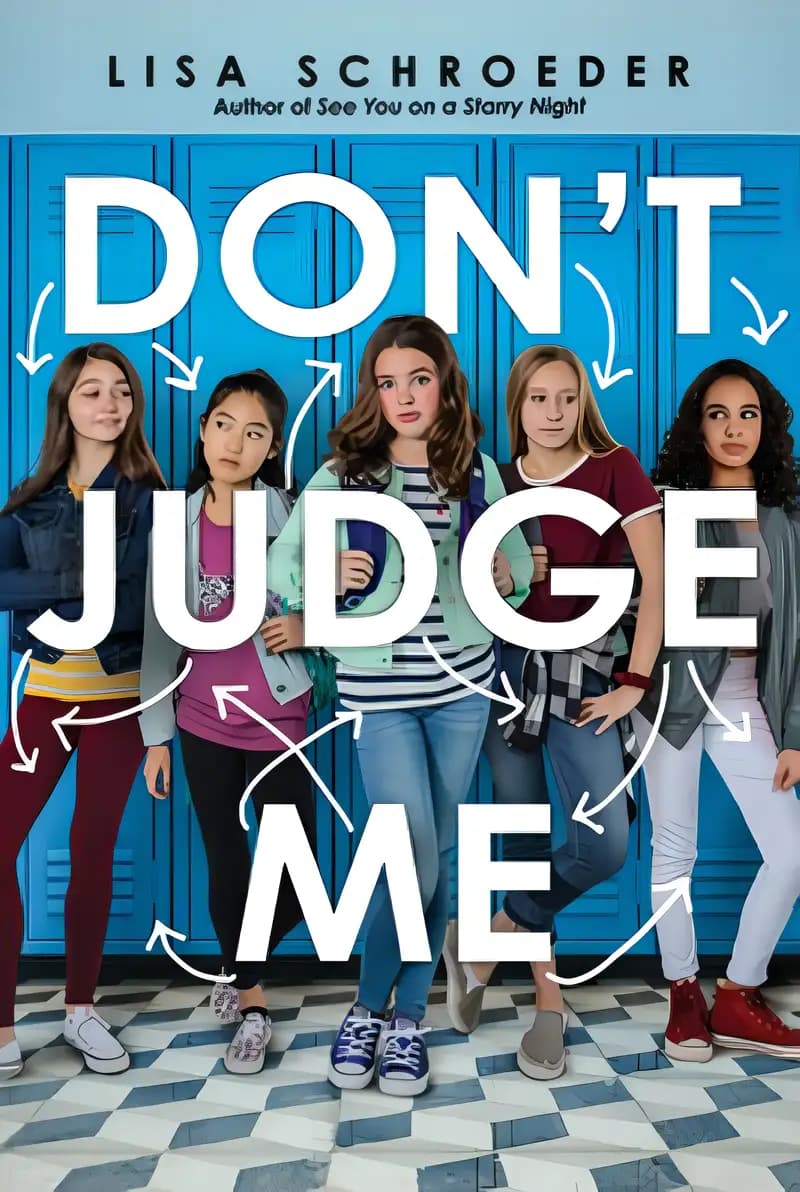
Don't Judge Me
on Goodreads (140)
What’s inside...
Hazel is a middle schooler who prefers to keep a low profile, spending her time in the library with her best friend, writing secret haikus, and taking care of her rescue tortoise. However, when she discovers a list that rates the girls at her school based on their looks—created by her best friend's older brother—Hazel realizes she can't stay silent. Despite her initial reluctance, Hazel decides to take a stand, understanding that her actions might create a huge wave, possibly even a tsunami. With courage and the support of others, Hazel strives to make a difference and challenge the status quo. Inspired by true events, Lisa Schroeder's novel emphasizes the importance of trust, self-worth, and the power of speaking up.
Age
8-12
Length
256 pages
Text complexity
Discussion points
What do you think is the main message of 'Don't Judge Me'?
How did the characters in the book change or grow from the beginning to the end?
Can you think of a time when you felt judged, like the characters in the story?
Why is it important to understand everyone's unique story before making judgments?
How can we apply the lessons from this book in our daily lives?
Tip: Role play these questions
Start by sharing your own experiences related to the theme of the book to make the conversation relatable. Encourage your child to express their feelings and thoughts openly without fear of judgment. Use examples from the book to guide the discussion and relate them to real-life scenarios. Highlight the importance of empathy and understanding others. Praise your child for their insights and contributions to the discussion to foster a positive dialogue environment.
Key lessons
Example Lesson: Understanding the impact of assumptions
Explanation: In 'Don't Judge Me,' the protagonist faces judgment based on a past mistake, teaching readers about the consequences of making assumptions about others.
Real-World Application: Children can use this lesson to practice empathy and withhold judgment, promoting a more inclusive and understanding environment among peers.
Example Lesson: Value of forgiveness
Explanation: The story highlights how the protagonist learns to forgive those who have judged her, illustrating the healing power of forgiveness.
Real-World Application: This encourages children to forgive others, helping them to mend friendships and foster positive interactions in school and at play.
Example Lesson: Importance of speaking up
Explanation: The book showcases the protagonist standing up against unfair treatment, demonstrating the importance of self-advocacy.
Real-World Application: Children can learn to express their feelings and stand up for themselves and others in situations of unfairness or discomfort.
Example Lesson: Personal growth through challenges
Explanation: Throughout the book, the protagonist grows and learns from her experiences, showing that challenges can lead to personal development.
Real-World Application: This can help children understand that facing difficulties is a part of life that can lead to growth and improved character.