
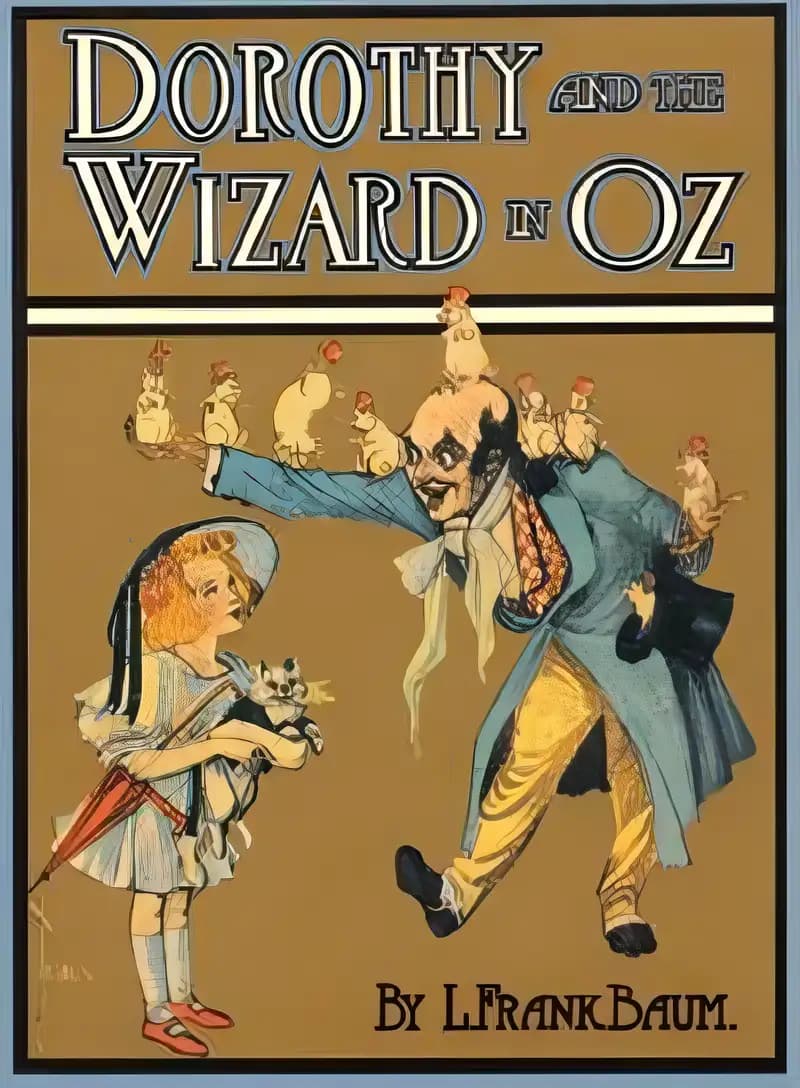
Dorothy and the Wizard in Oz
#4 of 14 in Oz Books Series
illustrations by
What’s inside...
Lyman Frank Baum penned fourteen novels in his famous Oz chronology. The fourth, Dorothy and the Wizard in Oz, was published in 1908 and introduced readers to Dorothy Gale's second cousin, Zeb, as well as to Eureka the cat, and Jim the Cab-horse. This volume of Original Oz Stories is formatted not only for ease of reading, but to emulate the textual structure of that original publication. A nice illustrated edition of another classic in our Wizard of Oz Collection. SeaWolf Press also has a color version of this book. Each book in the collection contains the text, illustrations, and cover from the first or early edition. Use Amazon's Lookinside feature to compare this edition with others. You'll be impressed by the differences. SeaWolf Press also publishes this same title in black and white. This version includes all 66 original illustrations by John R. Neill, an introduction by the author, and a beautiful front and back cover from the original 1908 first edition. The Wizard comes back to Oz to stay, with Dorothy via a California earthquake. In this book we meet Dorothy's two good friends who we are sorry did not remain in Oz—Jim the cabhorse, and Zeb, Dorothy's young cousin, who works on a ranch as a hired boy.
Character compass
Dorothy Gale
Oscar Diggs (The Wizard)
Eureka
Jim The Cab-Horse
Zeb Hugson
Discussion points
How do you think Dorothy felt when she reunited with the Wizard in Oz, and why?
What did you learn about courage and friendship from the adventures Dorothy and her friends had?
How did the challenges Dorothy faced change her by the end of the story?
If you could have any magical power like the characters in the book, what would it be and why?
What lessons can we learn from the Wizard's role in helping Dorothy and her friends?
Tip: Role play these questions
Encourage your child to think deeply about the characters and their actions by asking them to relate their own experiences to those of Dorothy and her friends. Discuss the morals and lessons presented in the story and how they can apply those lessons in their daily life. Use the rich and whimsical imagery of Oz to spark creative thinking and imaginative play. Lastly, foster empathy by discussing the different emotions the characters experience throughout the book.
Key lessons
Example Lesson: Courage and determination
Explanation: Throughout their adventures in the land of Oz, Dorothy and her companions face various challenges and dangers. Despite the fears and obstacles, they demonstrate courage and determination to achieve their goals.
Real-World Application: Children can learn to face their own challenges with bravery and persistence, understanding that obstacles are a part of life and can be overcome with determination.
Example Lesson: Importance of friendship and teamwork
Explanation: Dorothy, the Wizard, and other characters work together to navigate through difficulties. Their success often hinges on their ability to cooperate and support one another.
Real-World Application: Children can understand the value of building strong relationships and collaborating with others to solve problems, both in school and in their personal lives.
Example Lesson: Creativity and problem-solving
Explanation: The characters frequently use their wits and creativity to confront unexpected situations, devising innovative solutions to the problems they face.
Real-World Application: This encourages children to use their imagination and critical thinking skills in daily scenarios and reminds them that sometimes unconventional thinking is needed to resolve issues.
Example Lesson: Adaptability and resilience
Explanation: As Dorothy and her friends travel through different environments, they adapt to new challenges and bounce back from setbacks, showing resilience.
Real-World Application: This teaches children the importance of adapting to new situations and recovering from disappointments, which is a crucial skill in school and as they grow.