
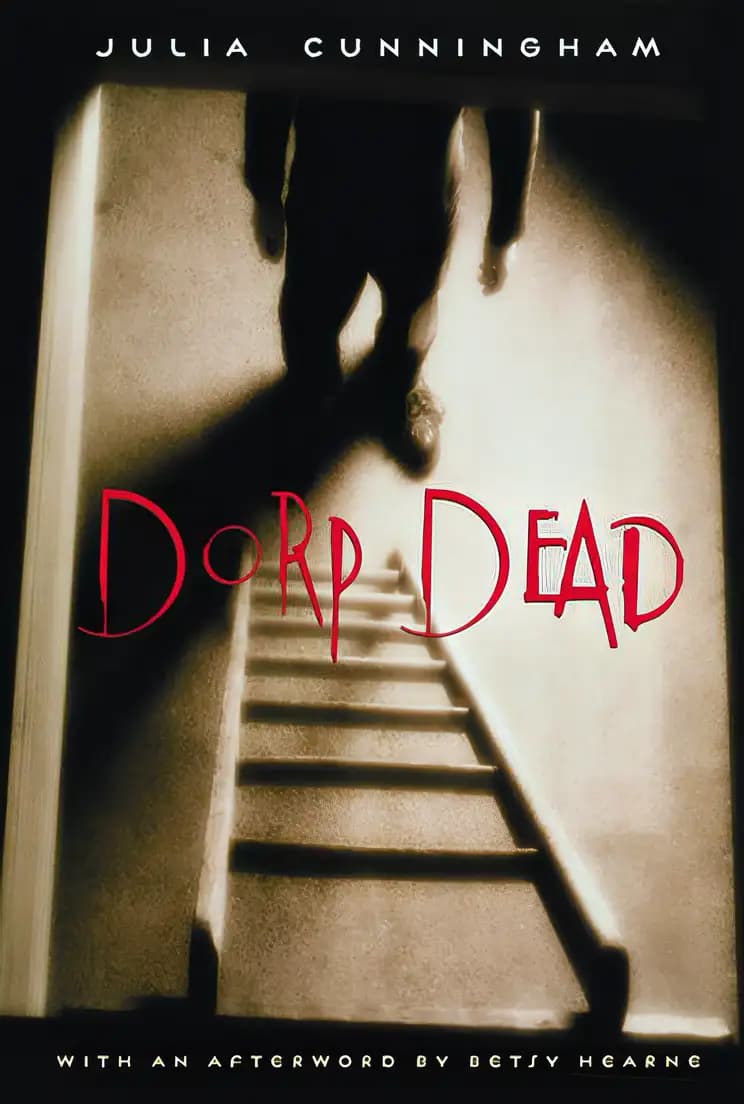
Dorp Dead
What’s inside...
As an orphan, a young man confronts his own demons and the mistreatment by others as he navigates the path to self-discovery in this coming-of-age novel, 'The Flight of the Sparrow,' first published in 1965 by Julia Cunningham. This ground-breaking work, which has been out of print in paperback for a decade, is now reissued for a new generation. It includes an afterword by Betsy Hearne, a critic and professor of children’s literature. Critics praise the novel for its spine-tingling horror and its ability to be as engaging and memorable as visual media, making it an enthralling read recognized by both the ALA and the Children’s Spring Book Festival. When a lonely boy leaves an orphanage to be apprenticed to a laddermaker only to find out that he is a virtual prisoner, he seeks escape with the one affectionate creature in his life, the dog Mash.
Age
9-10
Length
112 pages
Text complexity
Character compass
Gilly Ground
Mr. Kambani
Discussion points
How did Gilly's situation make you feel and why do you think he acted the way he did?
What do you think about Mr. Kobalt’s behavior throughout the story?
Can you imagine what it would be like to live in Gilly’s world? How would you handle his challenges?
What is the importance of trust and how did it play a role in Gilly's journey?
What did you learn about facing difficult situations from this book?
Tip: Role play these questions
Start the conversation by sharing your own thoughts on the book, and encourage your child to express their feelings and perspectives. Validate their emotions and thoughts to create a comfortable environment for an open discussion. Highlight the moral dilemmas and decisions made by the characters to delve deeper into the child’s understanding of right and wrong. Use real-life analogies to help the child relate to Gilly's experiences and decisions.
Key lessons
Example Lesson: Resilience in adversity
Explanation: In 'Dorp Dead', the protagonist Gilly faces numerous challenges after being sent to live with a caretaker, Mr. Kobalt, who is unkind and neglectful. Despite this, Gilly shows remarkable resilience and perseverance.
Real-World Application: Children can learn the importance of persisting through difficult situations and overcoming obstacles, helping them develop a strong and resilient character in real-life struggles.
Example Lesson: Empathy and kindness
Explanation: Through Gilly's interactions with his disabled brother, the story encapsulates the themes of empathy and kindness. Gilly's compassion towards his brother who is unable to speak, highlights the significance of understanding and caring for others who are different.
Real-World Application: This lesson encourages children to be considerate and supportive towards their peers, especially those who may have disabilities or difficulties, fostering an inclusive environment.
Example Lesson: Importance of seeking help
Explanation: Gilly's journey also underscores the importance of seeking help in dire situations. When Gilly reaches out to Miss Vicks, he finds a supportive adult who provides the assistance he needs to improve his circumstance.
Real-World Application: This teaches children the significance of asking for help when needed, and that it's okay to rely on trustworthy adults, such as teachers or family members, for support and guidance.
Example Lesson: Standing up for what is right
Explanation: Gilly's determination to protect his brother from harm and to challenge Mr. Kobalt's injustices demonstrate the moral fortitude required to stand up for what is right, regardless of the personal risks involved.
Real-World Application: Children can learn the value of integrity and the importance of standing up for themselves and others, particularly in situations where someone might be treated unfairly.