
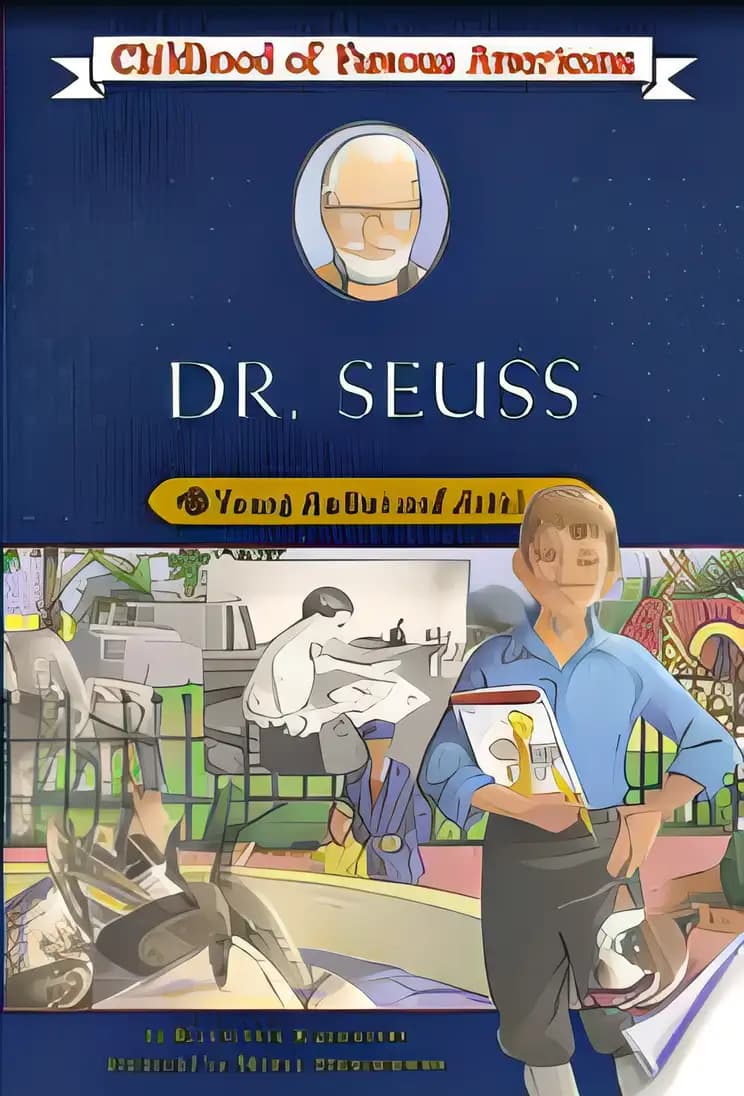
Dr. Seuss: Young Author and Artist (Childhood of Famous Americans)
Childhood of Famous Americans (Pb) Series
What’s inside...
One of the most popular series ever published for young Americans, these classics have been praised alike by parents, teachers, and librarians. With these lively, inspiring, fictionalized biographies -- easily read by children of eight and up -- today's youngster is swept right into history. FOR USE IN SCHOOLS AND LIBRARIES ONLY. A childhood biography of one of the most beloved authors and illustrators of all time.
Series reading
Non-Sequential
Age
8-12
Length
192 pages
Text complexity
Character compass
Theodor Seuss Geisel
Discussion points
What qualities do you think made Dr. Seuss a successful author and artist from a young age?
How do you think his experiences as a child influenced the stories he wrote?
Can you think of a time when you created something unique like Dr. Seuss did with his art and stories?
What challenges do you think Dr. Seuss faced when he was young, and how did he overcome them?
If you could talk to a young Dr. Seuss, what advice or encouragement would you give him?
Tip: Role play these questions
Encourage your child to relate their own experiences to those of Dr. Seuss. Ask them to think about how their hobbies or interests could potentially shape their future, just like Dr. Seuss. Highlight the importance of perseverance and creativity, drawing parallels to Dr. Seuss' early challenges and achievements. Lastly, use this opportunity to foster a deeper appreciation for literature and artistic expression, discussing how these elements are valuable in personal development.
Key lessons
Example Lesson: Perseverance in the face of challenges
Explanation: The book chronicles Dr. Seuss's early struggles with publishing and his determination to succeed.
Real-World Application: Children learn the importance of persistence and not giving up when facing difficulties in school or other endeavors.
Example Lesson: Creative expression is valuable
Explanation: Dr. Seuss’s journey highlights his unique artistic and literary style, encouraging him to stand out.
Real-World Application: Encourages children to explore and value their own creativity in writing, drawing, or other forms of expression.
Example Lesson: Learning from criticism
Explanation: Dr. Seuss faced criticism but used it constructively to improve his work.
Real-World Application: Teaches children to view criticism as a tool for self-improvement rather than a discouragement.
Example Lesson: Developing a unique voice
Explanation: The book shows how Dr. Seuss cultivated a distinctive voice that resonated with readers.
Real-World Application: Motivates children to find and trust their own voice when engaging in creative endeavors or expressing themselves.
Example Lesson: The impact of dedication
Explanation: Dr. Seuss dedicated significant effort to refining his craft, which led to his success.
Real-World Application: Illustrates to children that dedication and hard work can lead to achieving one's goals in academics or personal projects.