
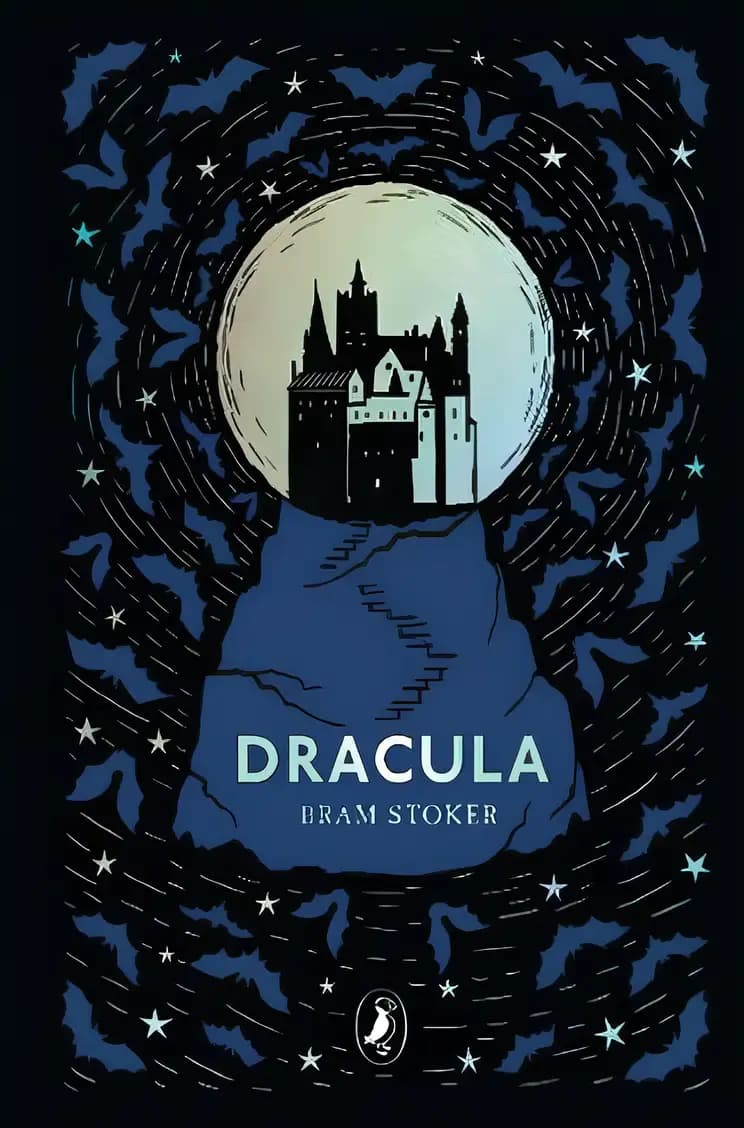
Dracula
on Goodreads (1,376)
What’s inside...
Dracula is a classic gothic horror novel that tells the story of Count Dracula's attempt to move from Transylvania to England in order to spread the undead curse, and of the battle between Dracula and a small group of people led by Professor Abraham Van Helsing. A stunningly beautiful clothbound hardback edition of one of the most famous Gothic horror stories in the world. Jonathan Harker travels to Castle Dracula to meet Count Dracula. Warned by locals not to go, especially on St George's Day when evil prevails, Jonathan proceeds for business. At the castle, his nightmare begins as Dracula casts a spell on his beloved wife Meena and others. The mission is clear: Dracula must be destroyed.
Age
11-12
Length
613 pages
Text complexity
Character compass
Jonathan Harker
Lucy Westenra
Mina Murray (later Mina Harker)
Quincey Morris
Arthur Holmwood (Lord Godalming)
Dr. John Seward
Renfield
Professor Abraham Van Helsing
Count Dracula
John Seward
Quincey P. Morris
Arthur Holmwood
R.M. Renfield
Peter Hawkins
Mr. Swales
Andrew Woodhouse
John Paxton
John Rawlings
George Canon
J. M. Caffyn
Samuel F. Billington
Petrofsky
Olgaren
Sister Agatha
Bersicker
Mrs. Tom
Patrick Hennessey
Arminus
Lord Godalming
Rufus Smith
Petrof Skinsky
Abraham Van Helsing
Mr. Carter
Mina Harker
Dracula
Discussion points
What do you think motivates Dracula's actions throughout the story?
How do the characters in the book show courage and teamwork?
In what ways do the settings affect the mood of the story?
What lessons can we learn about facing our fears from the book?
How do the different characters in the story change by the end?
Tip: Role play these questions
To effectively engage your child in a meaningful conversation about 'Dracula,' try to relate the themes of the book to real-life situations. Discuss the concept of bravery and ask your child about times they felt they had to be brave. Encourage them to express their feelings about the book’s atmosphere and what emotions it stirred in them. Use examples from the story to talk about teamwork and ask your child about times they had to work with others to achieve a goal. This not only enhances their understanding of the book but also builds their empathy and social skills.
Key lessons
Example Lesson: Courage in the face of adversity
Explanation: The character Jonathan Harker shows immense bravery while dealing with the terrifying Count Dracula and the unknown horrors in his castle.
Real-World Application: Children can learn to face their own fears and challenges with bravery, whether it's trying new activities or standing up for what's right.
Example Lesson: The importance of perseverance
Explanation: Despite numerous setbacks, the group of characters led by Van Helsing continues to pursue Dracula, showing determination and perseverance.
Real-World Application: This can inspire children to persist in their efforts, whether in completing a difficult school project or in mastering a new skill.
Example Lesson: The value of teamwork
Explanation: The characters in the story, including Lucy and Mina, come together, combining their individual strengths to overcome their common enemy.
Real-World Application: This can help children understand the importance of working together and valuing each person's unique contributions in group settings such as school projects or sports.
Example Lesson: Intellectual curiosity and learning
Explanation: Dr. Seward keeps detailed diaries and recordings, highlighting the importance of observation and study.
Real-World Application: This encourages children to be curious, ask questions, and actively engage in learning to better understand the world around them.
Example Lesson: The consequences of yielding to temptation
Explanation: Characters like Lucy are tempted by Dracula's power, leading to disastrous consequences.
Real-World Application: This can teach children about the importance of making wise decisions and considering the long-term effects of their actions.