
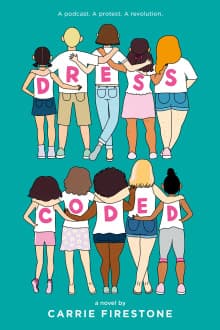
Dress Coded
on Goodreads (6,492)
What’s inside...
The text highlights instances of inequality and unfair treatment faced by individuals in different scenarios. Olivia was yelled at for wearing a tank top, Liza was dress coded while Molly was not despite wearing the same outfit, Jessica was given an F for missing a quiz due to being pulled over by the principal, and other unspecified impossible situations are alluded to.
Age
11-13
Length
320 pages
Text complexity
Character compass
Molly Frost
Olivia
Danny Frost
Discussion points
How did Molly's experiences with the dress code make you feel, and why do you think it affected her the way it did?
What are some ways Molly and her friends could address their concerns about the dress code with school authorities?
How do the interactions between students and school staff in the book reflect real-life scenarios?
What role do friendship and support play in helping Molly and her friends navigate their challenges?
If you were in Molly's situation, what would you have done differently, and why?
Tip: Role play these questions
Relate the story to your child’s own school experiences by asking if they’ve observed or encountered similar situations.
Discuss the importance of rules, but also the importance of fairness and how to advocate for change in a respectful manner.
Encourage your child to express their feelings and thoughts about the book’s events, fostering an open dialogue about empathy and understanding.
Highlight the impact of support systems, such as friends and understanding adults, and ask your child about who they can turn to when facing challenges.
Use examples from the book to discuss resilience and the importance of standing up for what one believes in, even when it is difficult.
Key lessons
Example Lesson: Standing up against unfair rules
Explanation: In 'Dress Coded,' the protagonist challenges the school's strict and unfair dress code, advocating for fairness and equality.
Real-World Application: Children can learn to recognize and question unreasonable rules or treatments in their schools or communities, promoting a sense of justice and advocacy.
Example Lesson: Empowerment through collective action
Explanation: The story demonstrates how students come together to support the cause, showing the strength in numbers and shared voices.
Real-World Application: This teaches children the importance of teamwork and how collective efforts can drive change, encouraging them to collaborate with peers to address issues they care about.
Example Lesson: The impact of speaking out
Explanation: As the characters in 'Dress Coded' speak out against the dress code, they inspire change and influence decision-makers.
Real-World Application: This can inspire children to use their voice effectively, understanding that speaking out can lead to positive changes and that their opinions matter.
Example Lesson: Building resilience in the face of adversity
Explanation: Throughout the book, the protagonist faces obstacles but continues to strive for what she believes is right, demonstrating perseverance.
Real-World Application: Children learn the value of resilience and the importance of persisting through challenges to achieve their goals, relevant in overcoming personal or academic obstacles.
Example Lesson: Empathy and understanding different perspectives
Explanation: The book explores various viewpoints around the dress code issue, teaching readers to consider multiple sides of a story.
Real-World Application: This lesson encourages children to practice empathy, helping them to understand and respect different perspectives and experiences in their daily interactions.