
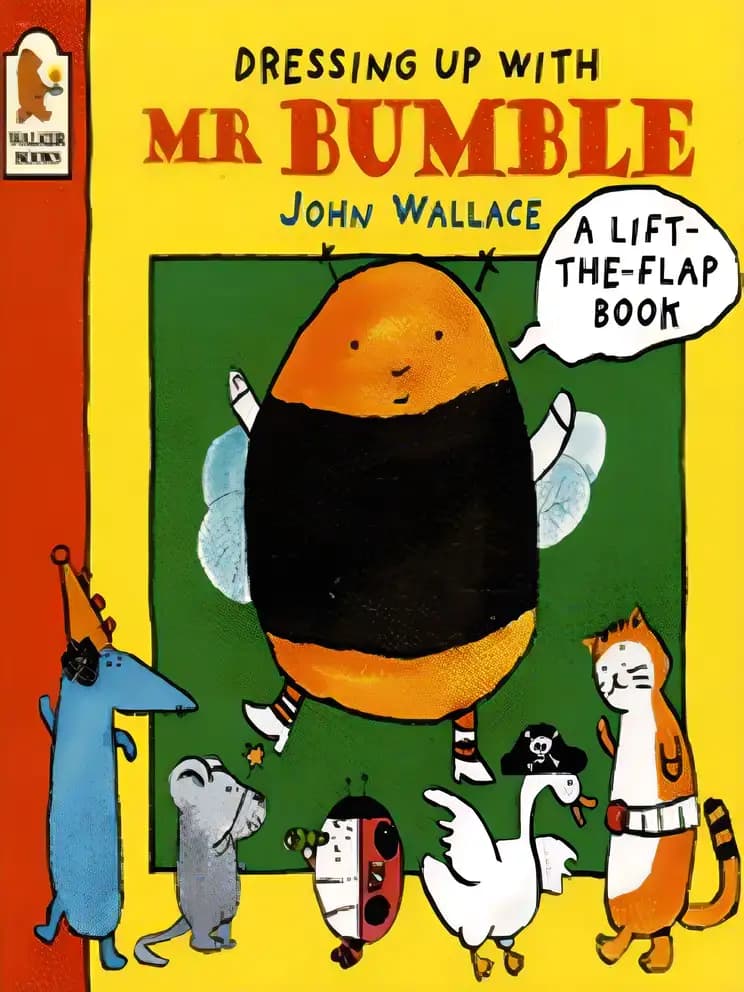
Dressing Up with Mr Bumble
What’s inside...
Mr Bumble and his friends, Goose, Cat, Mole, Mouse, and Ladybird are dressing for a party and the reader is encouraged to guess which character chose each costume. The book ends with a neat surprise; If you’ve ever gained twenty pounds using the same diet that helped your friend lose weight, this book will explain why and guide you on what steps could work best for you.
Age
2-4
Length
24 pages
Text complexity
Discussion points
How did Mr. Bumble feel when he tried on different outfits? Can you describe a time you felt the same?
What do you think is the most fun part about dressing up?
Why is it important to help friends like Mr. Bumble did in the story?
Which outfit would you choose if you were in the story, and why?
How do you think the story would change if Mr. Bumble couldn’t find any costumes to dress up in?
Tip: Role play these questions
Before reading, ask your child to predict what the book might be about based on the cover and title.
While reading, pause to discuss Mr. Bumble’s feelings and choices. Relate these to your child's own experiences with dressing up or helping friends.
Encourage your child to imagine their own ending or additional adventures involving Mr. Bumble and his friends.
After reading, discuss the importance of empathy and creativity, highlighting how Mr. Bumble demonstrates both.
Use expressive voices for different characters to make the reading session more interactive and enjoyable.
Key lessons
Example Lesson: Creativity and Self-Expression
Explanation: In 'Dressing Up with Mr Bumble,' children learn the joy of creativity as they see Mr Bumble try on different costumes. His playful and imaginative spirit encourages stepping into various roles, fostering creativity.
Real-World Application: Children can apply this lesson by engaging in pretend play and dressing up, which supports their creative growth and helps them express different aspects of their personalities.
Example Lesson: Confidence
Explanation: As Mr Bumble dresses up, he displays confidence in every new outfit, showing that it's fun and exciting to try new things. This aspect of the book promotes self-esteem.
Real-World Application: Kids can be encouraged to try new activities or wear clothes that make them feel good, boosting their confidence in real life.
Example Lesson: Understanding and Acceptance
Explanation: Mr Bumble, by experimenting with various outfits, shows that it's okay to be different and that each role has its unique value. It conveys a message of acceptance and understanding.
Real-World Application: This lesson can help children appreciate diversity and be open to others who might look or dress differently than they do.
Example Lesson: Empathy
Explanation: By assuming different roles, Mr Bumble indirectly teaches empathy. Children see through his experiences that understanding various perspectives is insightful and rewarding.
Real-World Application: This can encourage children to consider others' feelings and viewpoints, improving their social interactions and emotional intelligence.