
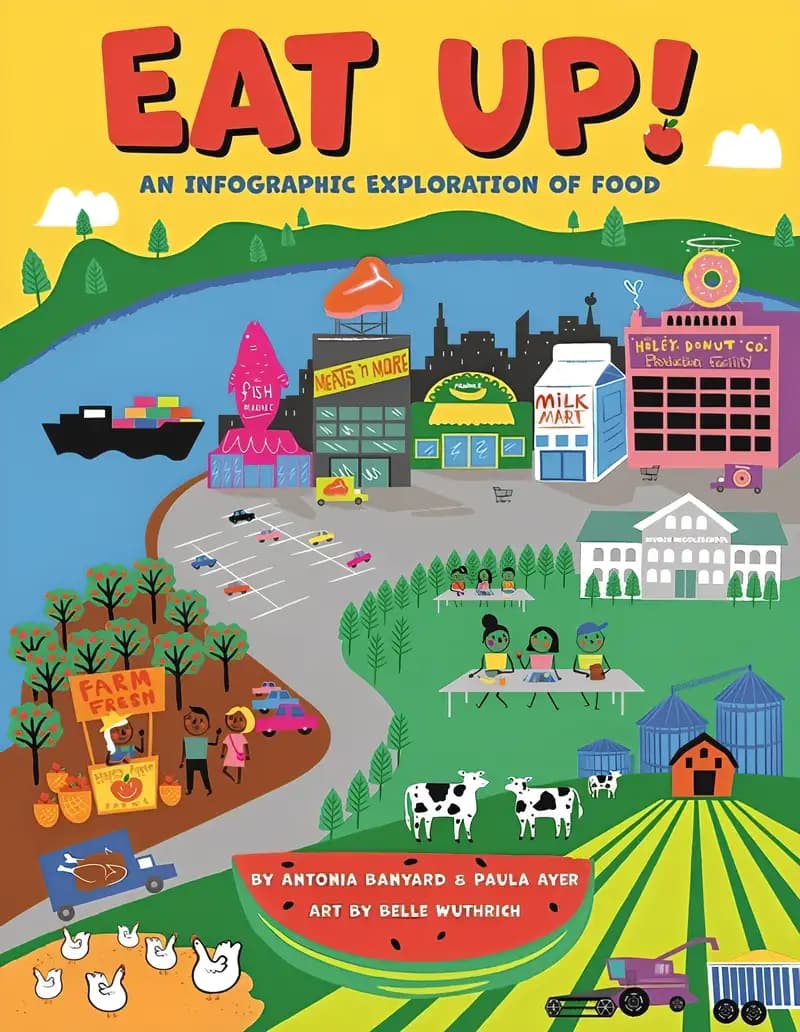
Eat Up!: An Infographic Exploration of Food (A Visual Exploration)
A Visual Exploration Series
What’s inside...
Written for middle-grade readers, Eat Up! offers a colorful infographic exploration of numerous surprising and intriguing facts about food. Presented in accessible graphics and clear explanations, the book covers a range of food-related topics such as food production, origin, advertising, and environment and labor concerns. It answers various questions—from where our meat comes from to what genetically-modified crops are, and more. Alongside exploring serious issues such as farming pollution and child labor, the book also delves into lighter tidbits about taste and extreme foods. The engaging content, complete with vibrant illustrations, dynamic diagrams, and concise text chunks, makes this book ideal for reluctant or struggling readers.
Series reading
Non-Sequential
Age
9-12
Length
72 pages
Text complexity
Discussion points
What new fact did you learn about food from this book?
Why do you think it's important to know where our food comes from?
How can we make healthier food choices based on what we learned?
Can you think of a way to share what you've learned about food with a friend?
What was the most surprising thing you discovered in this book?
Tip: Role play these questions
As you explore 'Eat Up!' together, use visuals in the book to spark deeper conversations. Point to the infographics and ask your child to describe what they see before diving into the questions. Relate topics to your child's favorite foods to make the discussion more personal and engaging. Lastly, emphasize the importance of a balanced diet and how food affects our bodies, encouraging your child to think critically about their food choices.
Key lessons
Example Lesson: Understanding Food Sources
Explanation: The book delves into where different foods originate, helping children comprehend how food reaches their plates from various sources like farms, oceans, and gardens.
Real-World Application: Children can develop a greater appreciation for the food they consume daily and might become more curious about the origins of their meals when shopping or eating.
Example Lesson: Importance of Balanced Diet
Explanation: Through captivating infographics, the book illustrates the components of a balanced diet and the role each nutrient plays in their body.
Real-World Application: This knowledge empowers children to make healthier food choices and understand why a variety of foods are necessary for their growth and health.
Example Lesson: Cultural Diversity in Food
Explanation: Eat Up! exposes readers to a range of global cuisines, highlighting how different cultures approach food and meals.
Real-World Application: Children learn to respect and appreciate the diversity of food habits around the world, which can enhance their social awareness and adaptability when encountering different culinary traditions.
Example Lesson: Environmental Impact of Food Choices
Explanation: The book engages children with information on how different food choices can impact the environment, discussing elements like carbon footprint and sustainability.
Real-World Application: Children can begin to understand the environmental consequences of their eating habits and may be encouraged to make more environmentally friendly choices.