
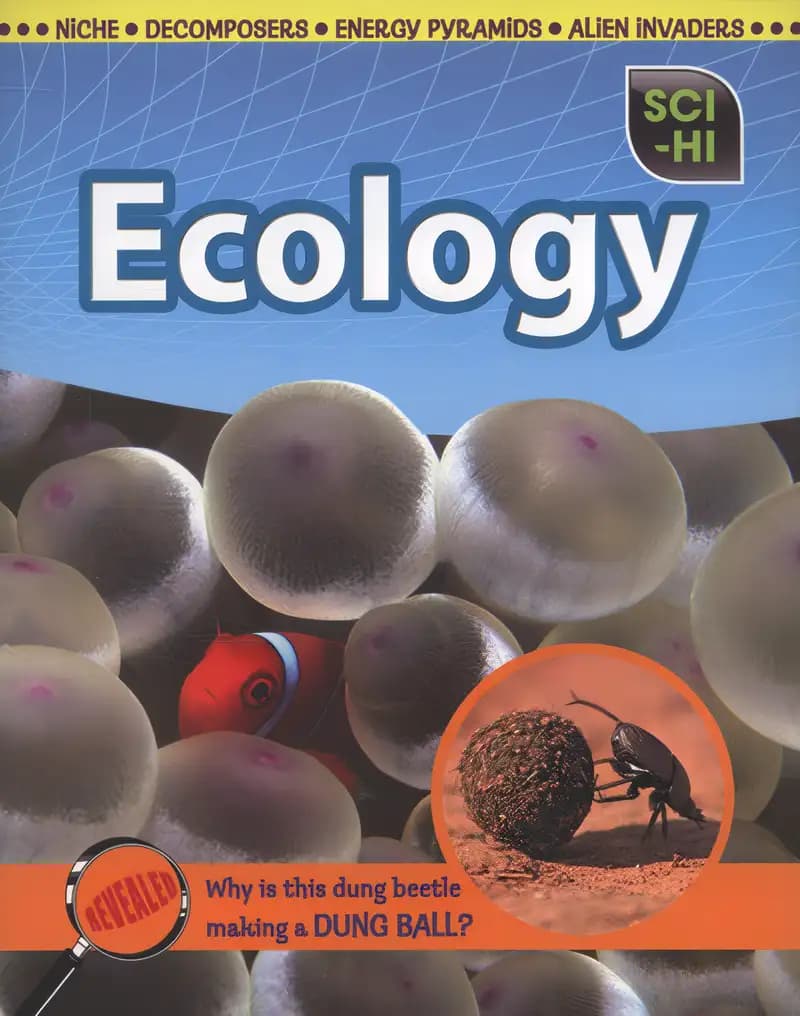
Ecology
Sci-hi Series
What’s inside...
Sci-Hi is a comprehensive and visually stimulating science series designed to appeal to teenagers with its magazine-like approach. It breaks down complex scientific concepts into digestible chunks, with clear introductions and summaries, and includes interactive elements such as photos, quizzes, charts, and graphs to enhance readability. The book 'Ecology' within the series explores the intricate relationships within ecosystems, examining how different species and environmental factors interact and impact each other. It delves into questions such as the effects of competition for food and the impacts of natural disasters on ecosystems, making it an engaging and informative read for students looking to deepen their understanding of ecological interactions.
Series reading
Non-Sequential
Age
9-10
Length
48 pages
Text complexity
Discussion points
What are some ways we can help protect our planet, like the characters in the book?
Why do you think biodiversity is important for the earth?
How do you feel when you see areas with lots of trees and plants compared to places without?
What are some differences between renewable and non-renewable resources, and why should we care?
Can you think of an example where humans and animals share the environment peacefully?
Tip: Role play these questions
Encourage your child to express their thoughts and ideas freely, without fear of being incorrect. Highlight the importance of respecting nature, as shown in the book. Connect the themes of the book to real-world scenarios that your child encounters to make the discussion more relatable. Use examples from the book to talk about small, daily actions your family can take to contribute to environmental protection. Praise your child's insights and curiosity, fostering a deep, ongoing interest in ecology.
Key lessons
Example Lesson: Interdependence of ecosystems
Explanation: Through various explorations of habitats, 'Ecology' demonstrates how plants, animals, and environments are interconnected, impacting each other’s survival.
Real-World Application: Children can apply this knowledge by understanding the importance of every species and taking actions like recycling and conserving water to protect these ecosystems.
Example Lesson: Biodiversity’s value
Explanation: The book highlights the variety of life in different ecosystems and how this diversity contributes to the stability and resilience of our environment.
Real-World Application: Kids can learn to appreciate and celebrate different species and habitats, promoting activities that preserve biodiversity such as planting native gardens.
Example Lesson: Conservation and sustainable practices
Explanation: Donna Latham discusses the impact of human activities on ecosystems and the importance of sustainable living to preserve the environment.
Real-World Application: Children can be encouraged to practice sustainability by engaging in simple daily activities such as turning off lights when not in use and reducing plastic usage.
Example Lesson: The role of individual actions in environmental health
Explanation: The book empowers readers by showing how individual choices and actions can either harm or help the environment.
Real-World Application: This lesson teaches children that their actions, like disposing of waste properly and using environmentally friendly products, make a difference in the world.
Example Lesson: Science as a tool for solving ecological problems
Explanation: Exploring scientific methods and research, the book shows how science is used to understand and solve ecological issues.
Real-World Application: Children are encouraged to use critical thinking and problem-solving skills, perhaps by participating in science fairs or projects focused on environmental conservation.