
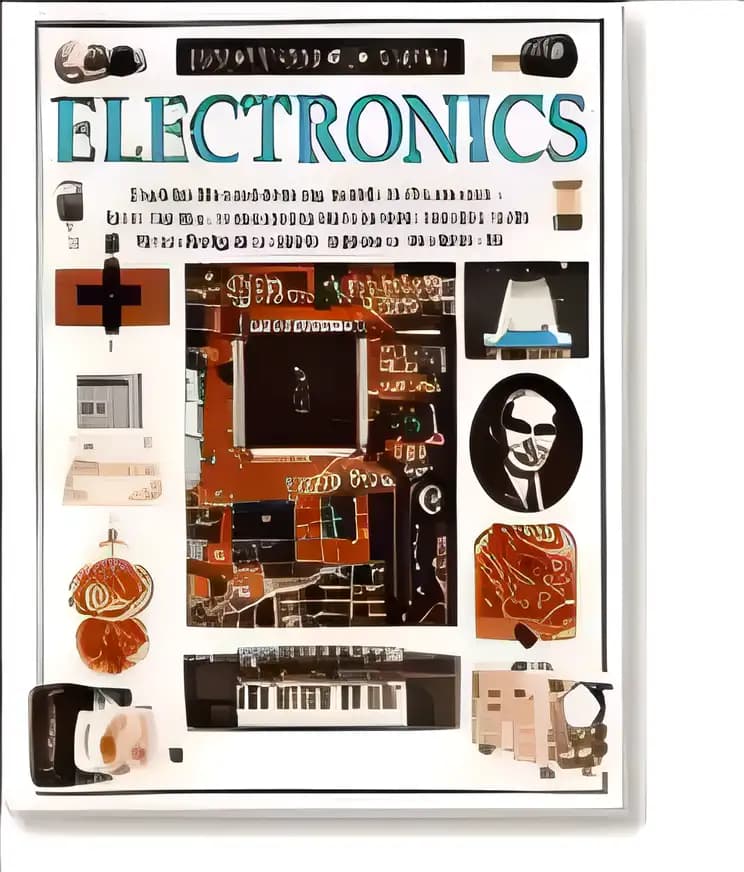
Electronics
Eyewitness Science Series
on Goodreads (16)
What’s inside...
Traces the history, discoveries, and devices of the science of electronics. How do tiny components control complex tasks? How has electronics changed our lives? Find out the answers to these and other questions in this new look at electronics.
Series reading
Non-Sequential
Age
12-18
Length
64 pages
Text complexity
Discussion points
What is one electronic device that fascinates you and why?
How do you think learning about electronics can help us solve everyday problems?
Imagine you could invent a new electronic gadget. What would it do and how could it help people?
Which electronics do you use daily and what would you change about them if you could?
How do you think electronics will change in the future? What kind of devices do you think we'll be using?
Tip: Role play these questions
Before reading, ask your child what they already know about electronics. This sets a foundation and personal connection to the book's content.
Pause at interesting sections to discuss how electronics feature in your child’s daily life, helping them see the real-world relevance.
Encourage them to ask questions and explore answers together in the book, fostering a sense of curiosity and discovery.
Link discussions to hands-on activities, such as building simple circuits or exploring electronic toys, to deepen understanding and make learning fun.
After reading, have your child summarize what they learned about electronics and what they found most interesting to reinforce retention.
Key lessons
Example Lesson: Curiosity and learning about technology
Explanation: Roger Bridgman's 'Electronics' promotes exploration into how everyday gadgets work, sparking children's natural curiosity about science and technology.
Real-World Application: Children can apply this curiosity by exploring and understanding the devices around them, fostering a love for science and encouraging future learning in STEM fields.
Example Lesson: Problem-solving through experimentation
Explanation: This book introduces basic electronics concepts which require problem-solving and testing hypotheses, mimicking the methods scientists use in real life.
Real-World Application: Kids learn to approach problems systematically, whether it's fixing a toy or completing school projects, enhancing their analytical skills.
Example Lesson: Persistence in the face of challenges
Explanation: As children read about the complexities of electronics, they learn that persistence is essential when facing difficult tasks or when experiments don’t initially succeed.
Real-World Application: This lesson helps children to not easily give up in their daily activities or studies, teaching resilience.
Example Lesson: Safety and responsibility in handling electronics
Explanation: The book emphasizes the importance of handling electronic devices safely, teaching children the responsibilities that come with technology.
Real-World Application: Kids become cautious and informed when using or exploring electronic devices, ensuring their own safety and that of the devices.
Example Lesson: Creativity in using technological resources
Explanation: Through examples and hands-on projects, 'Electronics' encourages children to think creatively about using technological resources to create solutions or enhancements in their daily lives.
Real-World Application: This can inspire children to think creatively in their use of technology, perhaps in creating simple gadgets or optimizing the usage of household electronics.