
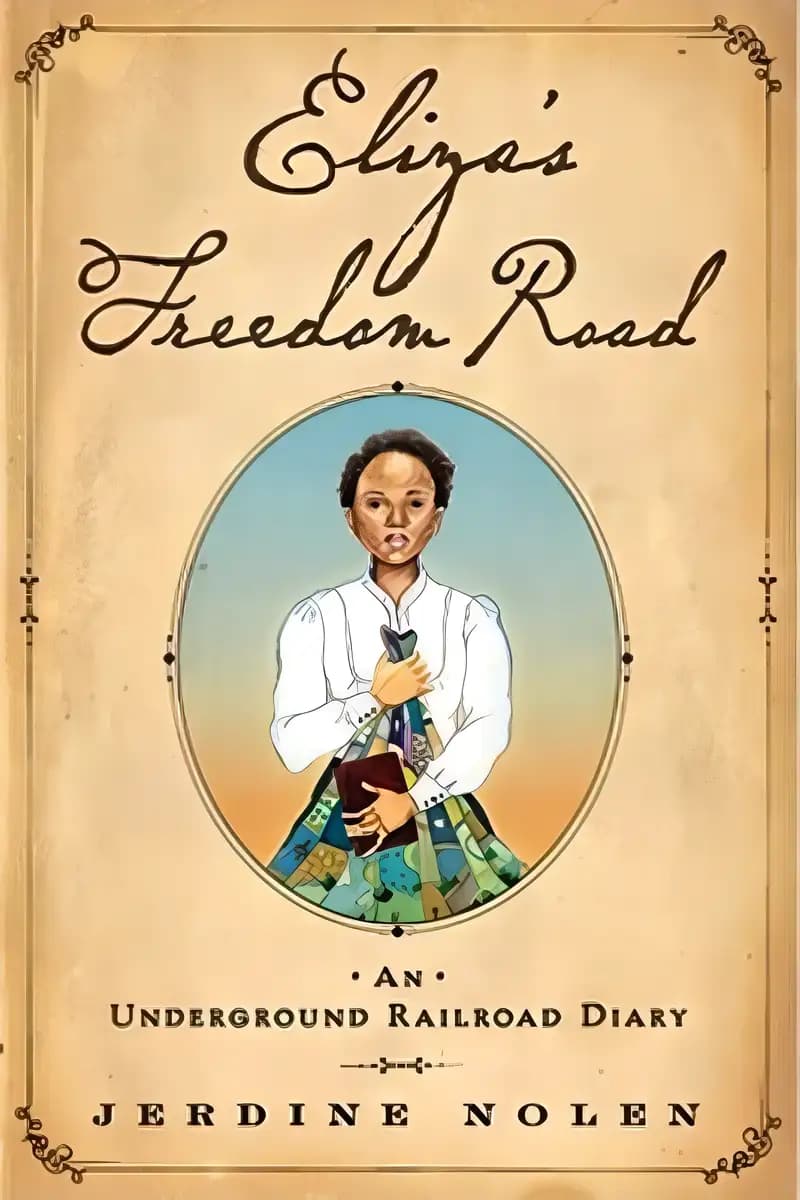
Eliza's Freedom Road: An Underground Railroad Diary
What’s inside...
In 1854, a twelve-year-old slave girl named Eliza embarks on a harrowing journey through the Underground Railroad from Alexandria, Virginia, towards freedom in St. Catharines, Canada. Guided by the wisdom of her mother's stories and the instructions of a helpful farmhand, Eliza navigates the perils of her escape, pressing eastward, and seeking refuge in safe houses along the way. As she travels towards freedom, she holds onto the hope of a new life where she not only gains her liberty but discovers unexpected fulfillment. Jerdine Nolen's novel, an ALA/YALSA Best Fiction for Young Adults nominee, intimately portrays Eliza’s courageous journey from enslavement to liberation.
Age
8-12
Length
160 pages
Text complexity
Character compass
Eliza
Harriet Tubman
Missus Russell
Discussion points
How do you think Eliza felt on her journey to freedom, and what would you have done in her place?
Why do you think the Underground Railroad was called a 'railroad' even though it wasn't a real train track?
What does freedom mean to you, and why is it important?
How can we help others who are in difficult situations like Eliza?
What did you learn about courage and determination from Eliza's story?
Tip: Role play these questions
Encourage empathy by asking your child to imagine themselves in Eliza’s shoes, discussing the choices she made and the emotions she might have felt.
Explain the historical context of the Underground Railroad and slavery in an age-appropriate way to help your child understand the significance of Eliza's journey.
Discuss the importance of freedom and human rights, highlighting how essential these values are in everyone's lives.
Encourage your child to think about modern-day issues related to freedom and justice, promoting a sense of social responsibility and activism.
Ask open-ended questions to foster critical thinking and deeper understanding of the book’s themes.
Key lessons
Example Lesson: Resilience in adversity
Explanation: Eliza demonstrates resilience as she navigates the difficulties and dangers of the Underground Railroad to pursue her freedom.
Real-World Application: Children can learn the importance of perseverance and determination when facing their own challenges, whether they are academic, social, or personal.
Example Lesson: Empathy and understanding
Explanation: Through Eliza’s interactions with other characters, readers are taught the value of understanding and empathizing with people from different backgrounds and circumstances.
Real-World Application: This encourages children to be considerate and compassionate towards others in their community, fostering a more inclusive environment.
Example Lesson: The significance of history
Explanation: Eliza's journey provides a personal perspective on the historical context of the Underground Railroad, enhancing the learning experience about this critical period.
Real-World Application: Children are inspired to explore and appreciate history, understanding its impacts on the present and recognizing the stories of people who fought for freedom and rights.
Example Lesson: Courage to make difficult decisions
Explanation: Eliza faces several tough decisions during her journey, each requiring courage and foresight.
Real-World Application: Kids learn the importance of thoughtful decision-making and the bravery required to sometimes make unpopular choices for greater good.
Example Lesson: Hope and optimism
Explanation: Despite the challenges, Eliza remains hopeful and optimistic about her future, which is a powerful message throughout the book.
Real-World Application: This teaches children the power of positivity and hope, even in the face of difficulties, encouraging them to remain hopeful in their own lives.