
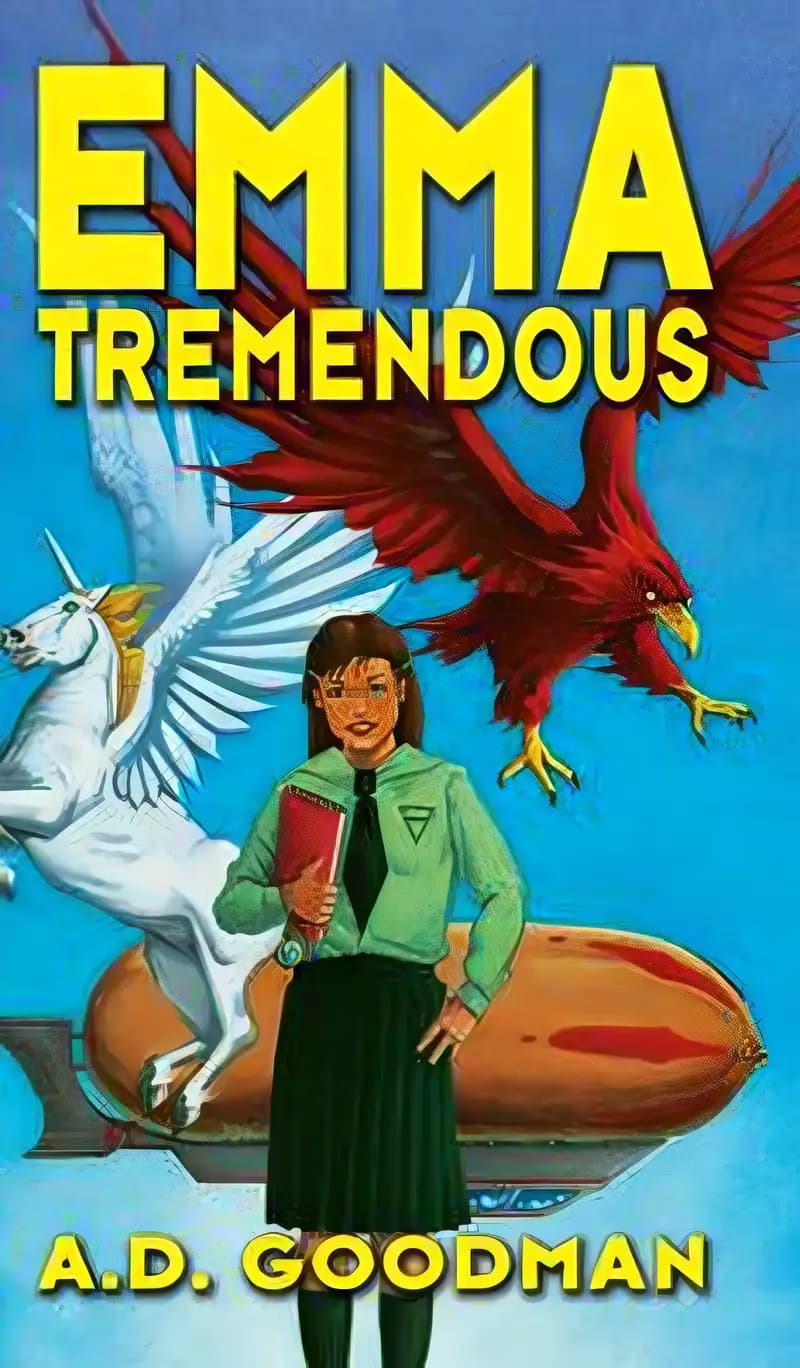
Emma Tremendous
on Goodreads (8)
What’s inside...
Facing adolescence is difficult enough, but compound it by discovering your true identity is not merely the freckle-faced girl you thought you were, but that of shapeshifter. Emma Quinne has been enrolled in Volegrim Academy (a school for were-creatures) by her mother in hopes the instructors can get her 'unstuck' from her human form. Here Emma meets Jack Hedge, a boy whose 'other' is a traditional werewolf, and Aveline Fortescue—a French were-bat—who know many of the institution's secrets. Primarily, the sinister agenda of headmistress Dr. Long and her relationship with a secret society of hunters who prey on shapeshifters. But before dealing with new friends, new classes, and new threats, Emma must deal with unleashing the tremendous force that sleeps beneath her skin.
Age
8-12
Length
318 pages
Text complexity
Discussion points
What do you think makes Emma 'tremendous'? Can you think of ways you are tremendous too?
Emma faces challenges in the story. How do you think she felt, and what would you do if you were in her place?
What lesson did Emma learn by the end of the book? Have you learned similar lessons in your own experiences?
How do Emma's friends and family help her throughout the story? Why is it important to have support from others?
Tip: Role play these questions
Encourage your child to express their thoughts and feelings about Emma and her adventures, validating their responses to foster confidence.
Draw parallels between Emma’s experiences and your child’s everyday life, which can help them relate more deeply to the story and its characters.
Discuss the notion of 'being tremendous' in various contexts — at home, school, or in friendship, highlighting the diversity of strengths and talents.
Foster an atmosphere of curiosity by asking your child what they might do differently if they were in Emma’s shoes, promoting problem-solving and empathy.
Key lessons
Example Lesson: Empathy and Understanding
Explanation: Emma Tremendous uses the interactions between characters to show the importance of understanding and empathizing with others’ feelings.
Real-World Application: Children can apply this by recognizing and respecting the emotions of their peers and family members, fostering stronger relationships.
Example Lesson: Perseverance
Explanation: The protagonist faces various challenges throughout the book, yet continues to strive towards her goals, demonstrating the value of not giving up.
Real-World Application: This encourages children to keep trying in the face of difficulties, whether in their academic pursuits or personal endeavors.
Example Lesson: Responsibility
Explanation: Throughout the story, the main character learns to take responsibility for her actions, which leads to personal growth.
Real-World Application: Kids can learn to take ownership of their tasks and duties at home or school, understanding that their actions have consequences.
Example Lesson: Creativity and Imagination
Explanation: The book celebrates creativity through the imaginative adventures of the characters.
Real-World Application: This can inspire children to use their imagination more freely in creative tasks and problem-solving scenarios.
Example Lesson: Cooperation
Explanation: Characters in the book often work together to solve problems, displaying the power of teamwork.
Real-World Application: This lesson can be applied in group activities at school or play, teaching children the importance of working collaboratively.