
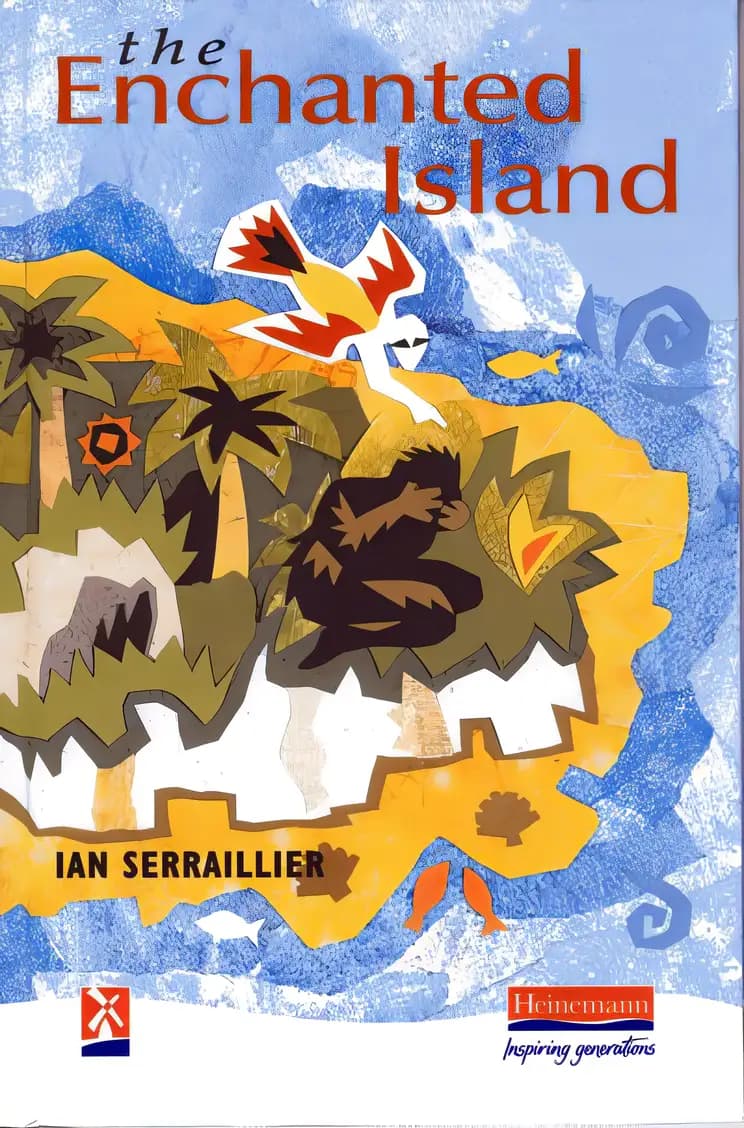
Enchanted Island
The New windmill series
on Goodreads (455)
What’s inside...
One of a series of top-quality fiction for schools. These retellings of Shakespeare stories focus on 'The Taming of the Shrew', 'A Midsummer Night's Dream', 'The Merchant of Venice', 'Henry IV Part 1', 'Henry V', 'Twelfth Night', 'Julius Caesar', 'Hamlet', 'King Lear', 'Macbeth' and 'The Tempest'.
Series reading
Non-Sequential
Age
10-14
Length
208 pages
Text complexity
Discussion points
What was your favorite part of the adventure on the Enchanted Island and why?
If you could have a magical power like one of the characters, which one would you choose and what would you do with it?
How did the characters work together to solve problems? Can you think of a time when you had to work with others to solve a problem?
What do you think makes the island enchanted? What kind of enchantment would you want to see or create?
How do you think the story would change if you were one of the characters on the island?
Tip: Role play these questions
While discussing the book, show genuine interest in your child's thoughts and opinions to encourage them to express themselves freely.
Ask your child to draw their favorite scene or character from the book. This can help them to connect visually and emotionally with the story.
Suggest role-playing a favorite scene from the book together, which can help deepen their understanding of the characters’ emotions and actions.
Encourage your child to predict what might happen next or how they would have ended the story differently to foster creativity and critical thinking.
After finishing the book, explore more about the themes or settings of the story through related activities like researching enchanting islands or magical creatures.
Key lessons
Example Lesson: Cooperation
Explanation: In 'Enchanted Island,' children work together to solve puzzles and overcome challenges.
Real-World Application: This encourages children to collaborate and value teamwork in school projects and family activities.
Example Lesson: Courage
Explanation: Characters in the story face their fears when exploring mysterious parts of the island.
Real-World Application: This teaches children to confront their own fears and try new experiences, whether it’s trying out for a school play or making a new friend.
Example Lesson: Respect for Nature
Explanation: The enchanting environment of the island is depicted as precious and worth protecting.
Real-World Application: This highlights the importance of environmental conservation and can encourage children to engage in activities like recycling or planting trees.
Example Lesson: Problem-Solving
Explanation: Throughout the book, characters encounter various obstacles that require creative solutions.
Real-World Application: This can inspire children to think critically and use their imagination to solve problems they encounter in everyday life.
Example Lesson: Kindness
Explanation: Characters often help each other and the island’s creatures out of kindness.
Real-World Application: This promotes the value of empathy and helping others, translating to more compassionate interactions at home and in school.