
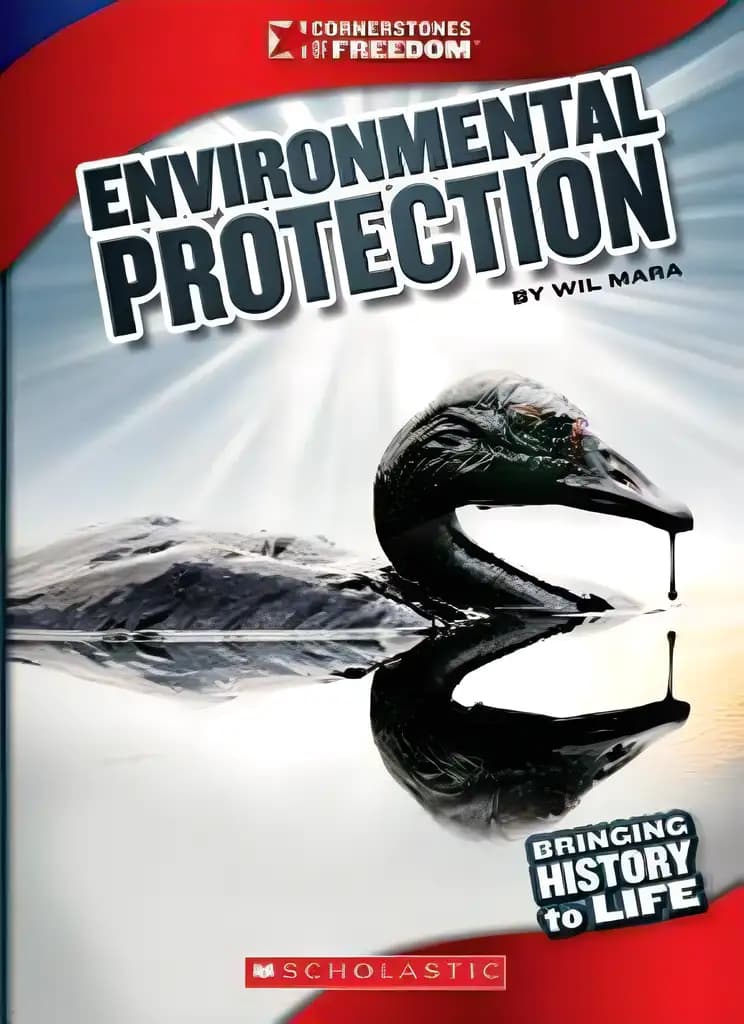
Environmental Protection
Cornerstones of freedom Series
on Goodreads (4)
What’s inside...
This book provides an in-depth look at the various aspects of environmental protection, discussing the importance of preserving natural resources and the different strategies employed by governments, organizations, and individuals to combat environmental degradation. Topics covered include pollution prevention, wildlife conservation, sustainable development, and the impact of climate change. The author, Wil Mara, emphasizes the urgency of addressing environmental issues and offers insights into how technology and policy can work together to ensure a healthier planet for future generations. The book also details the history of the environmental movement in the United States, tracing its development from the writings of Henry David Thoreau and George Perkins Marsh to recent debates over climate change and energy sources.
Series reading
Non-Sequential
Age
9-11
Length
64 pages
Text complexity
Discussion points
Why do you think it's important to protect the environment?
What are some ways we can help take care of our planet at home or school?
Can you think of a time when you noticed someone helping the environment? What were they doing?
How do you feel when you see places with lots of trash compared to clean, green areas?
What changes would you make in our daily habits to help the environment?
Tip: Role play these questions
Encourage your child's curiosity by asking them what they know about environmental protection before starting the book.
Relate the environmental themes of the book to your child’s everyday experiences, such as recycling at home or school.
Celebrate small steps your child suggests for helping the environment, showing them that their actions make a difference.
After reading, encourage your child to draw a picture of a clean and healthy environment or a project that helps the Earth.
Key lessons
Example Lesson: Understanding Environmental Impact
Explanation: Through vivid storytelling, 'Environmental Protection' illustrates the consequences of neglecting our natural surroundings. It helps children visualize how various ecosystems are interconnected and affected by human actions.
Real-World Application: Children can practice this lesson by engaging in recycling, learning about local flora and fauna, and participating in community clean-up events.
Example Lesson: Importance of Conservation
Explanation: Wil Mara uses engaging characters to teach the importance of preserving natural resources like water, forests, and wildlife. The story explains how conservation efforts can sustain the planet for future generations.
Real-World Application: Kids can apply these principles by turning off water when not in use, joining conservation clubs at school, or planting trees in their neighborhoods.
Example Lesson: Responsibility Towards Nature
Explanation: The book conveys that everyone, regardless of age, has a responsibility to care for the environment. It emphasizes that small, everyday actions contribute to larger environmental protection.
Real-World Application: Children can adopt simple habits such as not littering, using reusable bags, and learning about endangered species to foster a sense of responsibility towards the environment.
Example Lesson: Teamwork and Collaboration
Explanation: Characters in the book often come together to solve environmental issues, demonstrating the power of collaboration and teamwork in achieving common goals.
Real-World Application: This lesson can be applied in a child's life by encouraging participation in group activities that focus on environmental projects, such as school green clubs or community gardening.
Example Lesson: Developing Problem-Solving Skills
Explanation: Through the challenges faced by the characters in protecting their environment, children learn to think critically and develop solutions to real-world problems.
Real-World Application: Kids can engage in activities like building birdhouses, starting a compost bin, or setting up a rainwater collection system as practical applications of problem-solving.