
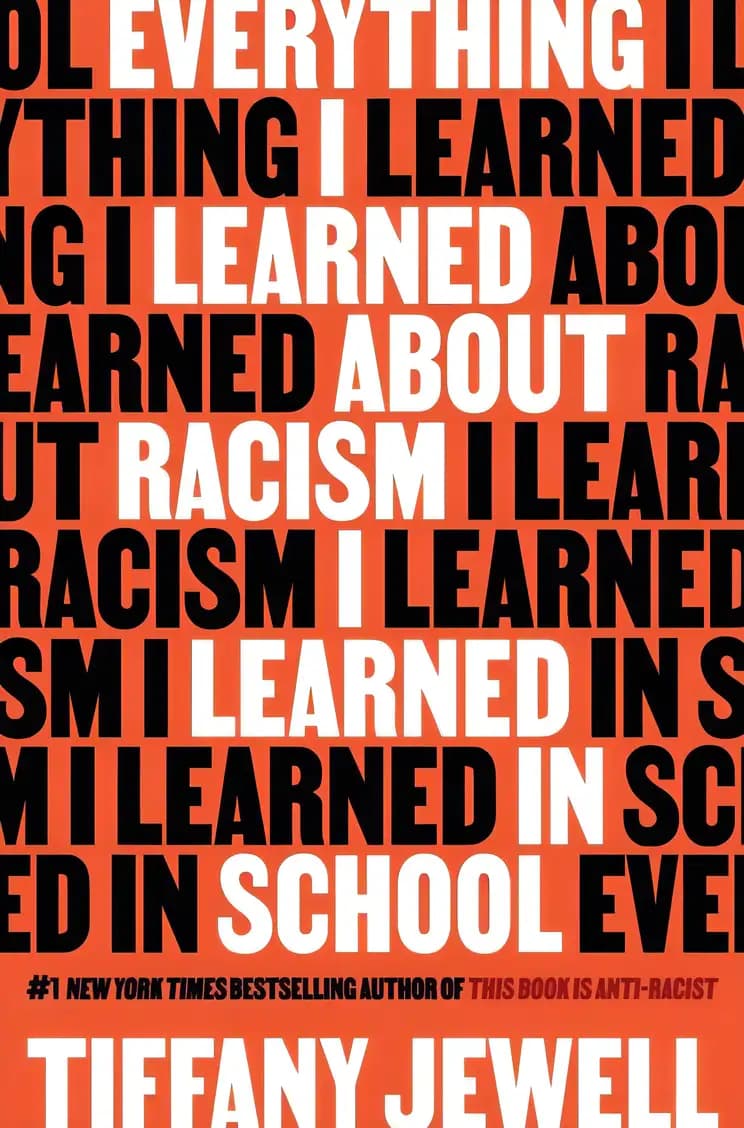
Everything I Learned About Racism I Learned in School
on Goodreads (519)
What’s inside...
From the #1 New York Times bestselling author Tiffany Jewell comes a powerful YA nonfiction book, 'Everything I Learned About Racism I Learned in School'. The book highlights the systemic racism faced by Black and Brown students from preschool through college in the United States. It includes personal narratives from various contributors, including award-winning authors and educators, providing a comprehensive overview and critical insight into the historical and ongoing racial inequities in American education. The nonfiction narrative follows Tiffany Jewell from early elementary through her college years, unpacking the history of systemic racism in the educational system and featuring contributions from other writers and educators.
Age
13-17
Length
272 pages
Text complexity
Discussion points
What are some ways people might be treated differently based on their skin color, as shown in the book?
How did reading about other children's experiences make you feel?
Why do you think it's important to learn about racism and discuss it openly?
Can you think of a time when you saw someone being treated unfairly? What did you do or what do you think you could do in a similar situation in the future?
How can we as a family help in making the world more fair and kind for everyone?
Tip: Role play these questions
Start by sharing your own feelings about racism and discrimination, setting a calm and open environment for the conversation.
Encourage your child to express their thoughts and feelings, even if they're still learning about the topic, reinforcing that it's a safe space for discussion.
Highlight stories from the book that demonstrate resilience and unity, helping the child understand the power of community and standing together.
Connect themes from the book to real-life events or news stories to help bridge understanding from the theoretical to the practical.
Ask your child how they think they could make a difference or improve situations depicted in the book, fostering a sense of personal responsibility and empowerment.
Key lessons
Example Lesson: Understanding Diversity
Explanation: The book explains the concept of diversity and the importance of acknowledging and respecting different cultures and backgrounds.
Real-World Application: Children can learn to appreciate and celebrate differences among their peers, leading to more inclusive behavior in school and other social settings.
Example Lesson: Recognizing Racism
Explanation: Through real-life examples and narratives, the book teaches children to identify racist actions and attitudes.
Real-World Application: Equipped with this knowledge, children can recognize and challenge racist remarks or behaviors, fostering a fair and just environment.
Example Lesson: Empathy Development
Explanation: The book provides perspectives from people of various races, helping children to understand and empathize with those who experience racism.
Real-World Application: This can encourage children to be considerate and supportive allies to their classmates who might be facing racial discrimination.
Example Lesson: Importance of Speaking Out
Explanation: The book highlights the significance of speaking out against racism and standing up for what is right, even when it's difficult.
Real-World Application: Children learn the value of using their voice to make a difference, potentially leading them to become advocates for equality in their communities.
Example Lesson: Understanding Systemic Racism
Explanation: The book tackles complex concepts like systemic racism, presented in a way that is accessible to young readers.
Real-World Application: Children gain an early understanding of how societal structures can perpetuate inequality, which is essential knowledge for fostering a more equitable society.