
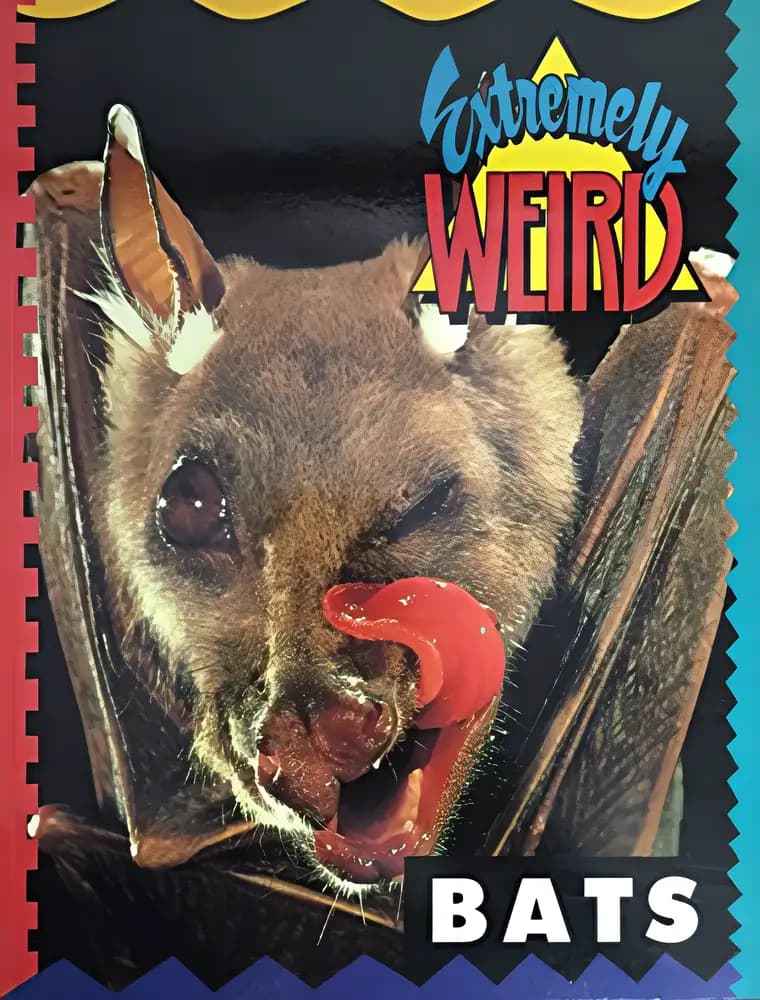
Extremely Weird Bats (Extremely Weird Series)
Extremely weird Series
on Goodreads (12)
What’s inside...
Describes and pictures twenty-one species of bats.
Series reading
Non-Sequential
Age
7-12
Length
48 pages
Text complexity
Discussion points
What do you think makes bats unique compared to other animals?
Can you think of any ways that bats are helpful to the environment?
Which fact about bats surprised you the most and why?
If you could be a bat for a day, what kind of bat would you choose to be, and what would you do?
How do you think bats feel about being called 'extremely weird'?
Tip: Role play these questions
While discussing the book, express curiosity and excitement about the weird and wonderful traits of bats to mirror positive engagement.
Encourage your child to relate the facts from the book to their everyday observations, perhaps recalling any encounters with bats or their habitats.
Use the illustrations in the book as a visual aid to help your child understand more about bat anatomy and behaviors discussed.
After reading, consider watching a short documentary or visiting a nature center to see bats in real life, reinforcing the facts learned.
Praise your child for any unique insights or connections they make, fostering their confidence in discussing and exploring new topics.
Key lessons
Example Lesson: Diversity and acceptance
Explanation: The book portrays a variety of bats, each with unique features and behaviors, demonstrating the beauty of biodiversity and the importance of accepting differences.
Real-World Application: Children can learn to appreciate and respect the differences in people they meet in their everyday interactions, understanding that everyone has unique traits that contribute to a diverse society.
Example Lesson: Importance of conservation
Explanation: By showcasing different species of bats and their roles in the ecosystem, the book educates children on the importance of these creatures and the need to protect their habitats.
Real-World Application: This lesson can help children develop a sense of responsibility towards the environment and encourage them to participate in or support conservation efforts in their communities.
Example Lesson: Curiosity and learning
Explanation: As the book delves into the intriguing world of bats, it fuels curiosity and encourages children to learn more about wildlife and science.
Real-World Application: This lesson can be applied in a child’s daily life by promoting continuous learning and exploration, motivating them to ask questions and seek answers about the world around them.
Example Lesson: Overcoming fear with knowledge
Explanation: The book addresses common misconceptions about bats, providing factual information that can help dispel fears associated with these animals.
Real-World Application: Children can apply this lesson by learning more about the things they fear and understanding that knowledge can replace fear with respect and appreciation.