
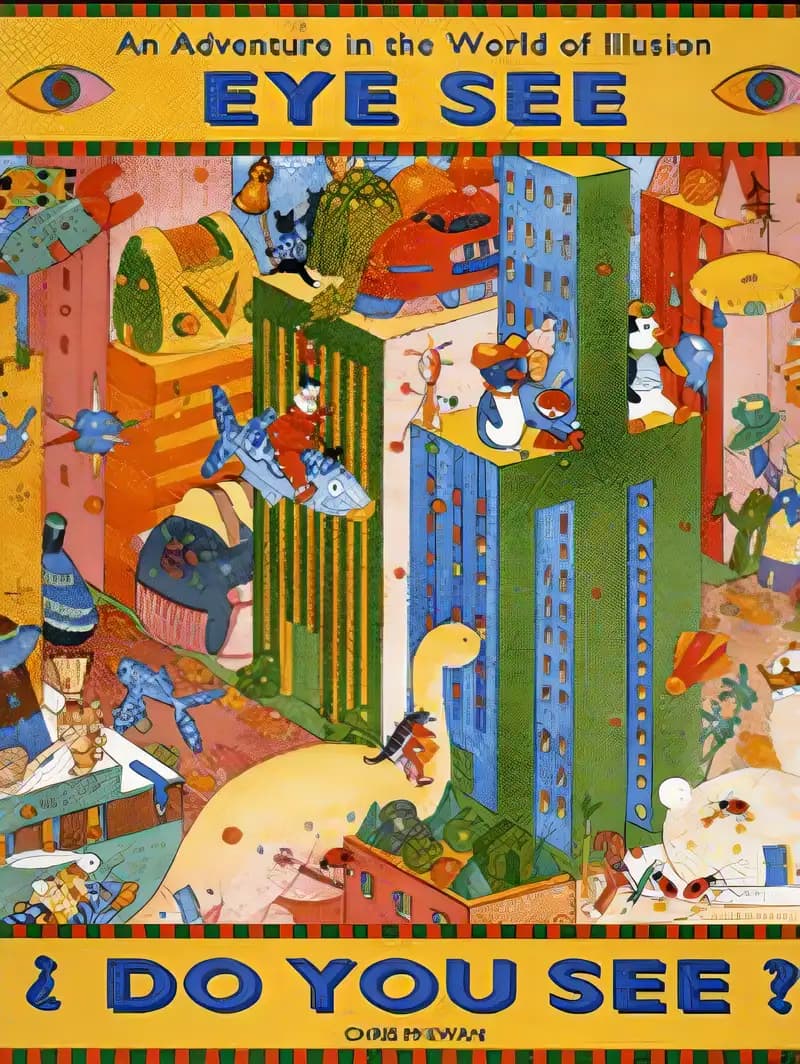
Eye See, Do You See?
on Goodreads (7)
What’s inside...
In this puzzle book, filled with optical illusions, the reader enters the incredible world of illusion with Mistry, a young magician, as he embarks on his quest to complete nine magical tasks.
Age
4-8
Length
32 pages
Text complexity
Discussion points
What do you think the characters felt when they discovered the hidden world?
How would you describe the place they found? What makes it special?
Which character would you like to be friends with and why?
What would you do if you were in the main character's shoes at the end of the story?
How do you think the story would change if it happened in our hometown?
Tip: Role play these questions
Use expressive intonation and voices for different characters to make the story more vivid and engaging.
Pause after dramatic moments or surprises in the book to give your child a moment to absorb and contemplate before discussing.
Relate aspects of the story to your child’s experiences, asking them how they would feel or react in similar situations.
Encourage your child to imagine beyond the book, like thinking about what other adventures the characters might go on.
Ask your child to draw their favorite scene or character from the book. This can lead to further discussion about why they made certain choices.
Key lessons
Example Lesson: The importance of observation
Explanation: Throughout 'Eye See, Do You See?', children are engaged in a whimsical journey that encourages them to observe details in the illustrations.
Real-World Application: This lesson helps children enhance their attention to detail and awareness of their surroundings in daily life.
Example Lesson: Recognition of patterns
Explanation: The book challenges young readers to identify patterns and sequences among the objects featured on each page.
Real-World Application: Understanding patterns aids children in recognizing order and logic in the real world, enhancing problem-solving skills.
Example Lesson: Value of curiosity
Explanation: Characters in the story ask questions and explore their environment, highlighting curiosity.
Real-World Application: Fostering curiosity encourages children to learn more about the world around them and drives academic and personal growth.
Example Lesson: Collaborative problem solving
Explanation: The story features characters working together to solve puzzles, demonstrating teamwork.
Real-World Application: This lesson underlines the importance of cooperative play and learning, helping children to work effectively with others in school and social settings.