
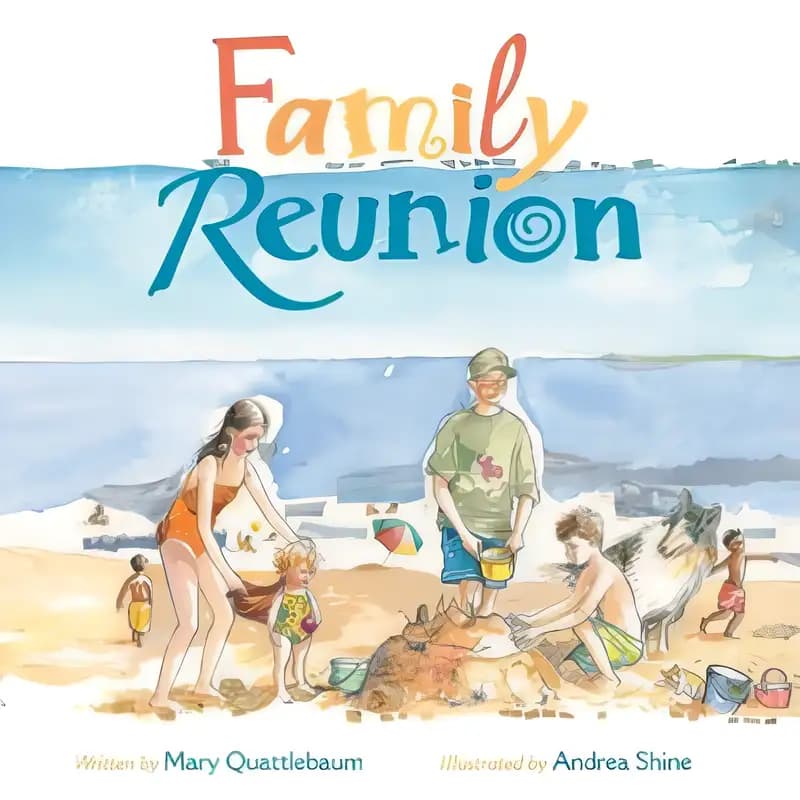
Family Reunion
What’s inside...
Fifteen poems tell chronologically of a young girl's experiences at her family's week-long reunion.
Age
9-12
Length
32 pages
Text complexity
Discussion points
How did the characters in 'Family Reunion' express their feelings about meeting relatives?
What activities during the family reunion seemed the most fun? What would you like to try at our next family gathering?
Why is spending time with family important as shown in the book?
What did you learn about the different family members in the story? How do they compare to our family?
How did the setting of the family reunion contribute to the story? Could the story happen somewhere else?
Tip: Role play these questions
Encourage your child to compare their own family gatherings to the ones in the book, highlighting any similarities or differences.
Ask your child about their favorite family memory, and share one of your own, fostering a personal connection to the book's theme.
Use the discussion about the book’s setting to plan a hypothetical family reunion with your child, discussing where it might be and what activities you would include.
After reading, create a family tree together. Discuss how everyone is related, just like in the book, to deepen their understanding of family relationships.
Key lessons
Example Lesson: The importance of family bonds
Explanation: In 'Family Reunion', the characters experience various fun and challenging activities that strengthen their connections and showcase the unique bond each family member shares.
Real-World Application: Children can apply this lesson by cherishing and nurturing relationships with their family members, appreciating the uniqueness of each family interaction.
Example Lesson: The value of heritage and traditions
Explanation: The story highlights how traditions such as family reunions serve as a bridge between generations, helping to pass down cultural values and stories.
Real-World Application: Kids can learn to appreciate and participate in their own family traditions, understanding the significance and stories behind them, which reinforces cultural identity and family history.
Example Lesson: Acceptance and diversity
Explanation: Throughout the reunion, the family members have various backgrounds and personalities. The story showcases how they learn to accept and love each other's differences.
Real-World Application: This can help children recognize the importance of inclusivity and acceptance of others in their daily interactions at school or in community settings.
Example Lesson: Conflict resolution
Explanation: The book demonstrates how family conflicts are resolved through communication and understanding, portraying a realistic view of family dynamics.
Real-World Application: Children can learn effective communication skills to address and resolve conflicts with peers or siblings, fostering healthier relationships.