
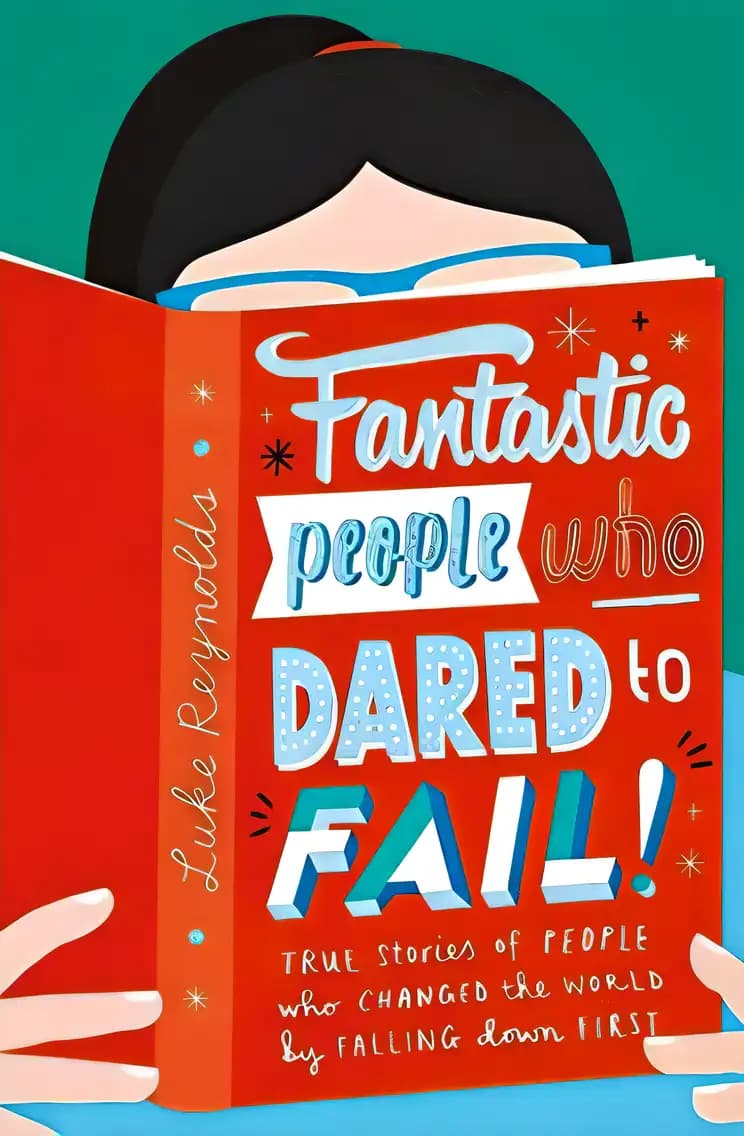
Fantastic People who Dared to Fail!
on Goodreads (156)
What’s inside...
This book tells the stories of 25 people who failed but did not give up, persevering until they achieved great success. It aims to inspire readers to view failure as a learning experience and to keep pursuing their dreams. The author, Luke Reynolds, shares stories from various fields including business, sports, and entertainment, showcasing individuals who faced setbacks but continued to work hard and maintained self-belief. The book also provides practical tips and strategies for overcoming failure and achieving success. Even the most well-known people have struggled to succeed! Find out what they learned and how they turned their failures into triumphs with this engaging and youthful guide on how to succeed long term. There is a lot of pressure in today’s society to succeed, but failing is a part of learning how to be a successful person. In his teaching career, Luke Reynolds saw the stress and anxiety his students suffered over grades, fitting in, and getting things right the first time. Fantastic Failures helps students learn that their mistakes and failures do not define their whole lives, but help them grow into their potential. Kids will love learning about some of the well-known people who failed before succeeding and will come to understand that failure is a large component of success. With stories from people like J. K. Rowling, Albert Einstein, Rosa Parks, Sonia Sotomayor, Vincent Van Gogh, Julia Child, Steven Spielberg, and Betsy Johnson, each profile proves that the greatest mistakes and flops can turn into something amazing. Intermixed throughout the fun profiles, Reynolds spotlights great inventors and scientists who discovered and created some of the most important medicines, devices, and concepts of all time, including lifesaving vaccines and medicines that were stumbled upon by mistake.
Age
8-12
Length
304 pages
Text complexity
Discussion points
What does failure teach us according to the stories in this book?
Can you think of a time when you tried something and it didn't work out the way you wanted? What did you learn from that experience?
How do the characters in the book handle their failures? Do they give up, or do they try a different approach?
Why do you think it’s important to keep trying even when things are difficult?
Who is your favorite person in the book, and what is their story of failure and success?
Tip: Role play these questions
Start by sharing your own experiences with failure and what you learned from them. This sets a comfortable atmosphere for open dialogue.
Encourage your child to express their feelings about failing and success, reassuring them that both are natural parts of learning and growing.
Highlight the persistence shown by the people in the book, discussing how resilience can lead to great achievements.
Ask your child to think about what they might have done in a similar situation as the characters in the book to foster critical thinking.
Discuss the importance of perseverance and trying new strategies when faced with setbacks, highlighting how this can be applied in their daily life.
Key lessons
Example Lesson: Embracing Failure as a Stepping Stone to Success
Explanation: The book shares stories of well-known figures who experienced failures but used them as catalysts for improvement, demonstrating that setbacks are part of achieving success.
Real-World Application: Children can learn to view their own mistakes and failures as opportunities for growth and not as definitive defeats, encouraging resilience.
Example Lesson: Perseverance in the Face of Adversity
Explanation: Through narratives of extraordinary individuals who persisted despite numerous challenges, the book showcases the power of determination and tenacity.
Real-World Application: This can inspire children to keep trying and working hard even when things get tough, instilling a strong work ethic and persistence.
Example Lesson: The Importance of Creative Thinking
Explanation: The book highlights how many successful people used creativity to overcome obstacles and achieve their goals, illustrating how thinking differently can lead to breakthroughs.
Real-World Application: Children can be encouraged to think outside the box in their day-to-day problems and understand that creativity is valuable in all aspects of life, not just the arts.
Example Lesson: Learning from Criticism
Explanation: Stories within the book reveal how feedback, even when harsh, was used by successful individuals to refine their skills and better their crafts.
Real-World Application: This lesson can help children understand the importance of constructive criticism in personal development and encourage them to accept feedback graciously.
Example Lesson: The Value of Humility
Explanation: The book portrays how many successful figures remained humble despite their achievements, emphasizing that true success also involves humility and gratitude.
Real-World Application: Kids can learn to stay humble and appreciate their successes as well as the contributions of others to their achievements, fostering a sense of gratitude and community.