
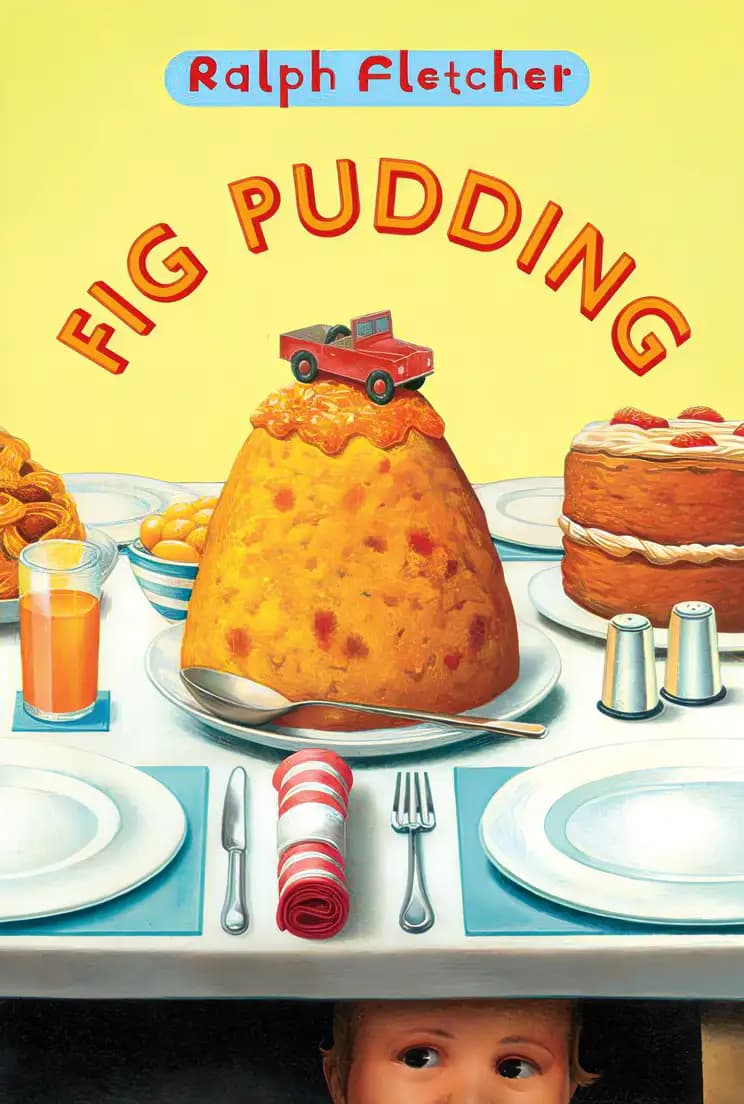
Fig Pudding
on Goodreads (1,144)
What’s inside...
Eleven-year-old Cliff Abernathy shares his family's trials and tribulations. Clifford Allyn Abernathy III (just Cliff, for short) is the oldest of six kids in a family that does everything—fighting, laughing, playing, eating, telling stories, and celebrating the holidays—in a big, often outlandish, and sometimes poignant way. Taking the family from Christmas to Christmas, the chapters of Fig Pudding, narrated by eleven-year-old Cliff, are complete short stories in themselves—full of quick-paced, hilarious action and the warmth and love of a close-knit family. This new edition includes an original story.
Age
8-11
Length
160 pages
Text complexity
Character compass
Cliff Abernathy
Joann Abernathy
Brad Abernathy
Teddy Abernathy
Nate Abernathy
Mrs. Abernathy
Mr. Abernathy
Discussion points
What do you think each sibling in the book teaches us about family dynamics?
How does the main character's perspective on life change throughout the story, and what causes those changes?
Why do you think the author chose the title 'Fig Pudding' for this story?
What moments in the book made you feel different emotions, and why?
If you could add another chapter to the book, what would happen next?
Tip: Role play these questions
Encourage your child to relate personal experiences to those of the characters in 'Fig Pudding'. This will help deepen their understanding of the book's themes.
Discuss the importance of family and how each member contributes to the family’s overall well-being, drawing parallels to the family in the book.
Prompt your child to think about how they would react in similar situations faced by the characters. This encourages empathy and critical thinking.
As you go through the questions, take turns sharing thoughts to model active listening and respectful conversation.
End your discussion by asking your child how the story could influence their actions or decisions in real life, reinforcing the connection between literature and personal growth.
Key lessons
Example Lesson: Family Resilience in the Face of Adversity
Explanation: In 'Fig Pudding', the sudden loss of a family member tests the family's strength and resilience. The narrative showcases how they cope with grief and support each other.
Real-World Application: Children can learn the importance of supporting family members during tough times and understanding that it's okay to lean on each other for emotional strength.
Example Lesson: Importance of Communication
Explanation: Throughout the book, the characters encounter situations that require open and honest communication. The family’s ability to express their feelings plays a crucial role in their healing process.
Real-World Application: This lesson can teach children to express their emotions and communicate openly with their family and friends, fostering better relationships and mutual understanding.
Example Lesson: Value of Shared Family Experiences
Explanation: The book highlights various family traditions and everyday moments that the characters share, emphasizing the joy and bond these experiences create.
Real-World Application: Children can be encouraged to participate in or even initiate family activities, valuing the time spent with loved ones and creating long-lasting memories.
Example Lesson: Empathy and Understanding
Explanation: Characters in 'Fig Pudding' often show empathy towards each other, which helps them navigate their personal and collective challenges more effectively.
Real-World Application: This can help children understand the importance of empathy in real life, encouraging them to be considerate and supportive of others' feelings and experiences.
Example Lesson: Growth Through Personal Challenges
Explanation: The book reflects on personal growth through the characters' individual challenges and how they emerge stronger after facing them.
Real-World Application: This teaches children that challenges are opportunities for growth, and overcoming them can lead to personal development and resilience.