
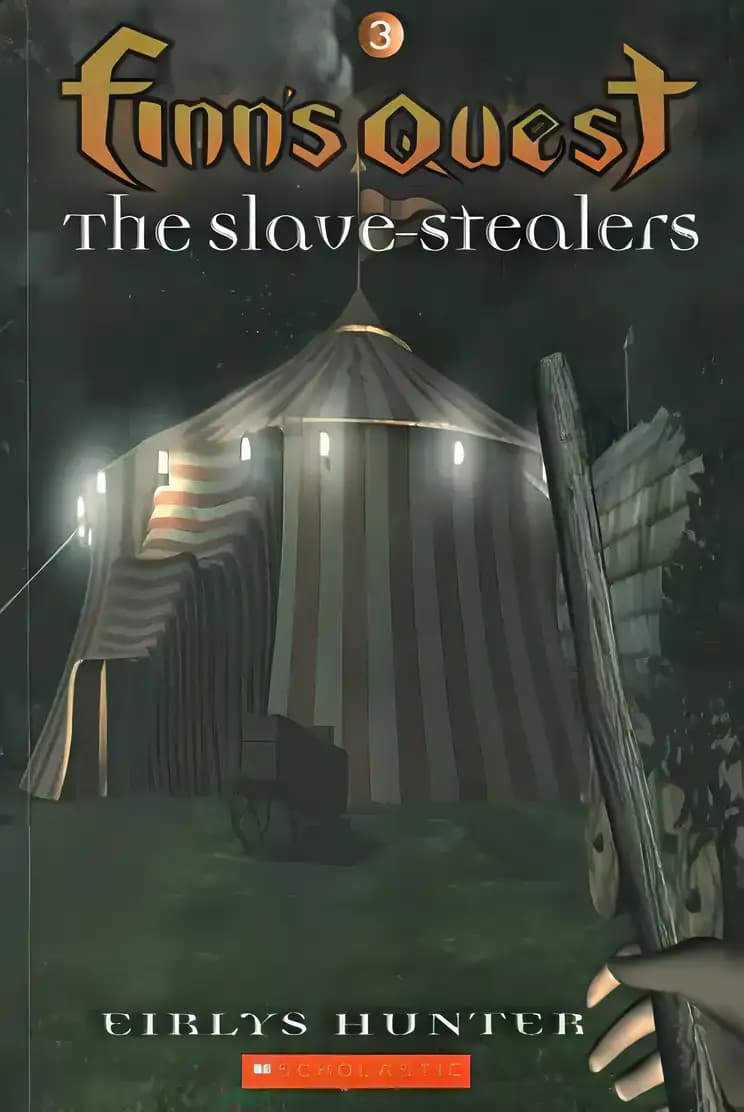
Finn's Quest: Slave Stealers
#3 of 124 in Finn's Adventures Series
on Goodreads (23)
What’s inside...
In the final book of the trilogy, Finn longs to return to the imaginary world of Coralia, causing his school work to suffer and his parents to worry. When the Ultimate Adventure reappears on his computer, Finn is transported back to Coralia, four years after the events of The Queen-Seekers. Although Celeste is now queen, the kingdom faces grave danger as most able-bodied Coralians have been enslaved by neighboring Pellis. Coralia is on the brink of a war it cannot win. Finn reunites with Gala, and together they journey to Pellis to rescue the slaves and prevent a devastating war. Along the way, Finn discovers he and Gala have become cult figures in Coralia and uncovers surprising connections among his friends. The rescue mission leads to a fierce battle, resulting in the deaths of some close to Finn, ultimately forcing him to choose between staying in Coralia or returning home for good.
Discussion points
What did you think about Finn's bravery in the story? How would you react in a similar situation?
The characters encountered many challenges. Which challenge do you think was the hardest, and why?
Finn and his friends work together to overcome obstacles. Can you think of a time when teamwork helped you solve a problem?
The story talks about the importance of freedom. What does freedom mean to you?
How do you think the story would change if it happened in today's world?
Tip: Role play these questions
Start the conversation by sharing your own thoughts on the book's themes like bravery and teamwork. Listen attentively to your child’s opinions and feelings about the story. Encourage them to draw parallels between the events in the book and real-life scenarios. Ask follow-up questions based on their responses to delve deeper into their understanding. Revisit the book’s key moments to help them grasp the complexities of the characters’ journeys.
Key lessons
Example Lesson: Empathy and understanding
Explanation: Through the story's depiction of diverse characters with different backgrounds, children learn the importance of understanding others’ feelings and situations.
Real-World Application: Children can apply empathy in their daily interactions, learning to appreciate the perspectives and experiences of their peers and people around them.
Example Lesson: Courage and bravery
Explanation: The main character's journey showcases acts of bravery in the face of difficult situations, inspiring children to be courageous.
Real-World Application: This lesson encourages children to face their fears, whether it's standing up to a bully, trying out for a team, or speaking in front of a class.
Example Lesson: The importance of history
Explanation: The historical context of the story helps children understand the significance of learning from the past to improve the future.
Real-World Application: By understanding history, children can become more informed and thoughtful regarding current events and societal issues.
Example Lesson: Teamwork and cooperation
Explanation: Characters in the book often work together to overcome challenges, emphasizing the power of teamwork.
Real-World Application: Children learn the value of cooperating with others in group projects at school, in sports teams, or during playtime to achieve common goals.
Example Lesson: Justice and fairness
Explanation: The theme of fighting against slavery in the story teaches about the importance of justice and advocating for what is right.
Real-World Application: Children are encouraged to stand up against unfair treatment in their communities and to seek justice in small ways, such as being fair while playing games or sharing with siblings.