
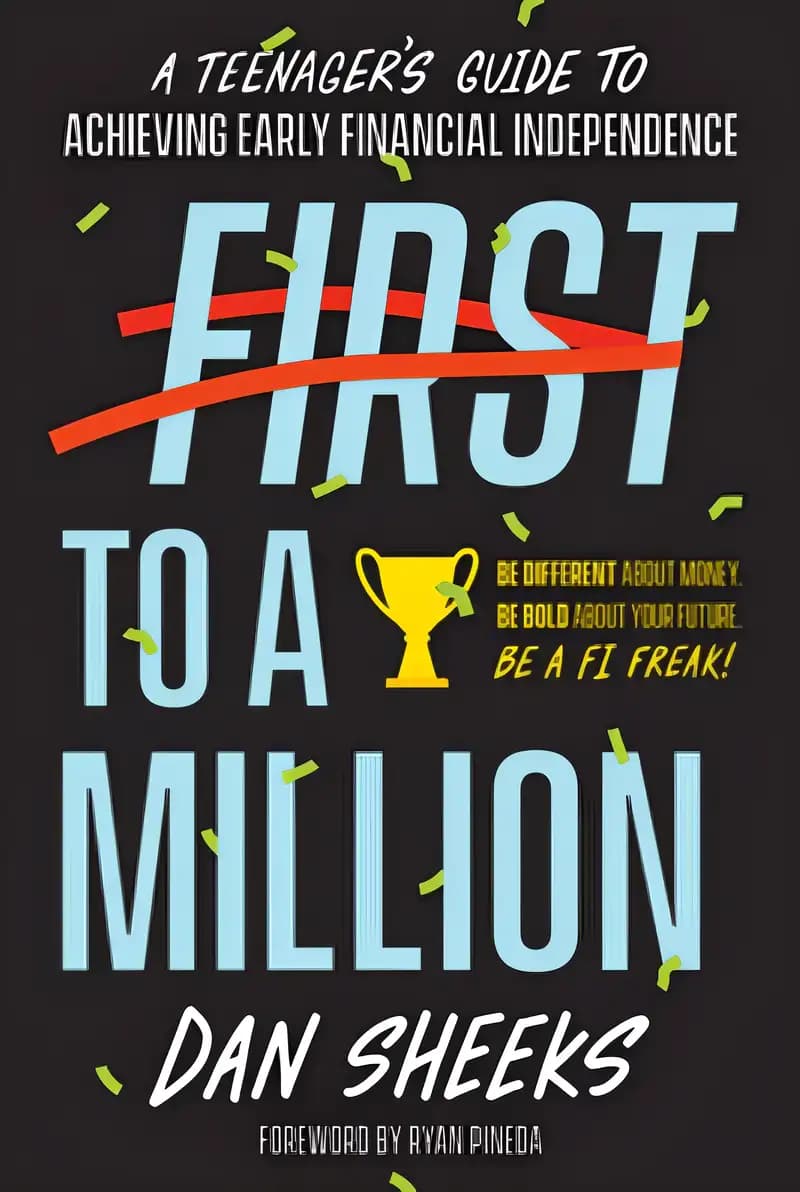
First to a Million: A Teenager’s Guide to Achieving Early Financial Independence
What’s inside...
Change the way you look at money before you turn 20 and become a Financial Independence (FI) Freak! 'First to a Million' teaches teenagers that there is an alternative to the traditional path of working until old age and then retiring. It explores the advantages of achieving financial independence early by saving more, spending less, and investing wisely. The book provides insights on the secrets of investing, living frugally, and maintaining an entrepreneurial mindset. Readers will learn how to differentiate between income and wealth, real and false assets, and good and bad debt, as well as the basics of personal finance and investing. By adopting these strategies early, teenagers can gain the freedom to define their own futures and enjoy life on their own terms.
Age
12-13
Length
240 pages
Text complexity
Discussion points
What are your thoughts on achieving financial independence at a young age?
How do you think managing money wisely now can impact your future?
What steps from the book do you think you could start applying today?
What did you learn about investments and savings that surprised you?
How can setting financial goals now help you achieve your dreams later in life?
Tip: Role play these questions
Start the conversation by sharing your own experiences with money management to make the discussion more relatable.
Encourage your child to express their feelings and thoughts about money openly, without judgment.
Discuss the concept of financial independence in the context of personal goals and ambitions to make it more tangible for your child.
Break down complex financial terms and concepts into simpler explanations suitable for their age and understanding.
Highlight the importance of patience and consistency when talking about financial strategies outlined in the book.
Key lessons
Example Lesson: Financial Responsibility
Explanation: The book educates teenagers on the importance of managing money responsibly, illustrating practical steps through relatable scenarios.
Real-World Application: Teens can apply these principles by creating their own budgets, tracking their spending, and setting savings goals.
Example Lesson: Importance of Investment
Explanation: Sheeks conveys various investment avenues and teaches how to assess risks and rewards through the story's characters.
Real-World Application: Young readers can start exploring simple investments such as savings bonds or stock market simulations designed for beginners.
Example Lesson: Goal Setting
Explanation: The narrative underscores the significance of setting financial goals early, with characters achieving milestones through disciplined strategies.
Real-World Application: Teens can set short-term and long-term financial goals, learning to prioritize and work toward accomplishing them systematically.
Example Lesson: Entrepreneurial Thinking
Explanation: The book introduces concepts of entrepreneurship and creating opportunities, inspiring innovation and self-initiative.
Real-World Application: Readers can brainstorm and initiate small-scale entrepreneurial projects, such as lawn mowing or online ventures, applying learned concepts practically.
Example Lesson: The Value of Compound Interest
Explanation: Through accessible explanations and examples, the book teaches the concept of compound interest and its long-term benefits.
Real-World Application: Teens can start saving in accounts that earn compound interest, understanding how their savings grow over time.