
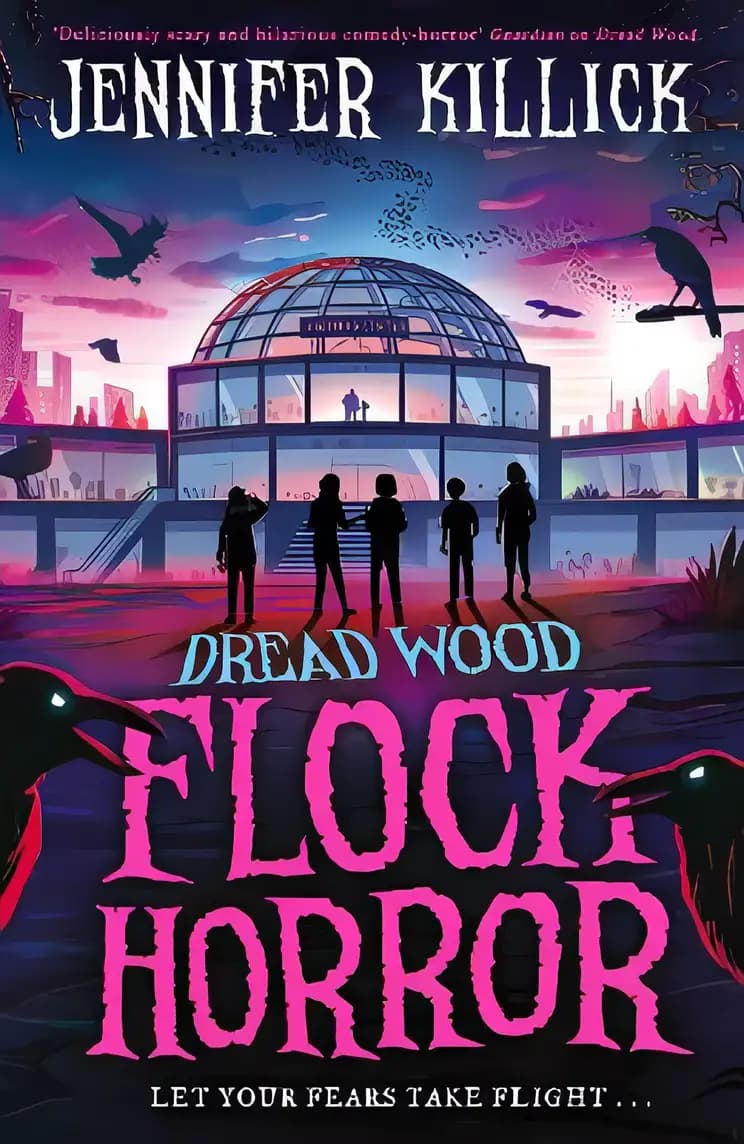
Flock Horror (Dread Wood, Book 3)
#3 of 6 in Dread Wood Series
What’s inside...
The brand new must-read middle-grade novel from the author of super-spookyCrater Lake. Perfect for 9+ fans of R.L.Stine's Goosebumps. Angelo and his friends know that together they can handle any pretty much anything - including giant mutant spiders.
Character compass
Angelo
Gustav
Hallie
Naira
Discussion points
What feelings did you experience when the characters faced challenges?
How do you think teamwork helped the characters in the book?
If you were in the story, how would you handle the scary situations?
What did you learn about handling fear from the characters?
Which character did you relate to the most and why?
Tip: Role play these questions
Encourage your child to express their thoughts and emotions about the story. Listen intently and validate their feelings. Relate the book’s challenges to real-life situations to enhance understanding. Use examples from the book to discuss the importance of courage and teamwork. End conversations on a positive note, emphasizing personal growth and learning.
Key lessons
Example Lesson: Courage in adversity
Explanation: In 'Flock Horror,' the characters face terrifying supernatural challenges, demonstrating bravery as they confront their fears.
Real-World Application: Children can learn to handle their own fears and challenges more confidently, knowing that courage can lead to overcoming obstacles.
Example Lesson: Importance of teamwork
Explanation: The characters must work together to solve problems and overcome the horrors they face, highlighting the value of cooperation and collaboration.
Real-World Application: Kids can apply this understanding of teamwork in their interactions at school or in sports, realizing that combined efforts often lead to success.
Example Lesson: Resilience
Explanation: Throughout the story, characters experience setbacks yet continue to persevere, illustrating the importance of resilience.
Real-World Application: Children learn to persist in the face of difficulties, whether it be in their academic endeavors or personal challenges.
Example Lesson: Empathy towards others
Explanation: The protagonists learn about the fears and backgrounds of other characters, fostering a sense of empathy.
Real-World Application: This can help children to better understand and connect with the feelings and experiences of their peers, promoting a more inclusive environment.
Example Lesson: Problem-solving skills
Explanation: The book showcases how characters use their wit and resources to tackle unexpected problems, emphasizing strategic thinking.
Real-World Application: Children can improve their problem-solving abilities, learning to think critically and creatively in various situations at home or school.