
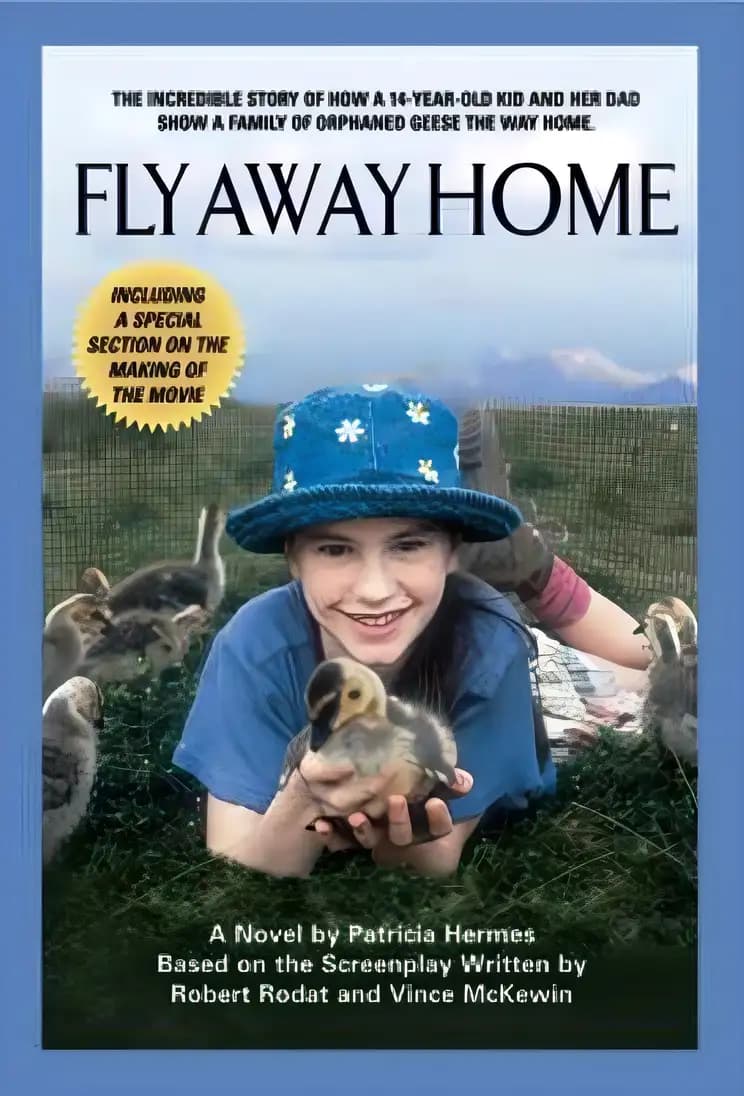
Fly Away Home
Penguin Joint Venture Readers S. Series
What’s inside...
Amy Alden finds an abandoned nest of goose eggs and brings them home. The baby geese think that she is their mother and follow her wherever she goes. Amy and her dad know that the geese must fly south for the winter, but first they will have to teach them to fly away home. 'Penguin Readers' is a series of simplified novels, film novelizations and original titles that introduce students at all levels to the pleasures of reading in English. Originally designed for teaching English as a foreign language, the series' combination of high interest level and low reading age makes it suitable for both English-speaking teenagers with limited reading skills and students of English as a second language. Many titles in the series also provide access to the pre-20th century literature strands of the National Curriculum English Orders. 'Penguin Readers' are graded at seven levels of difficulty, from 'Easystarts' with a 200-word vocabulary, to Level 6 (Advanced) with a 3000-word vocabulary. In addition, titles fall into one of three sub-categories: 'Contemporary', 'Classics' or 'Originals'. At the end of each book there is a section of enjoyable exercises focusing on vocabulary building, comprehension, discussion and writing. Some titles in the series are available with an accompanying audio cassette, or in a book and cassette pack. Additionally, selected titles have free accompanying 'Penguin Readers Factsheets' which provide stimulating exercise material for students, as well as suggestions for teachers on how to exploit the Readers in class.
Series reading
Non-Sequential
Age
9-12
Length
160 pages
Text complexity
Character compass
Amy Alden
David Alden
Susan Barnes
Thomas Alden
Glen Seifert
Discussion points
How do you think Andrew felt when he found the duckling? Can you think of a time you felt the same way?
What does the story teach us about caring for others, even if they are very different from us?
Why is it important to help animals and people who are lost or in trouble?
How do you think the story would change if Andrew didn't help the duckling? What do you think this change would teach us?
What are some ways we can help animals in our community?
Tip: Role play these questions
Highlight the emotions Andrew might be feeling throughout the book to help your child connect with the character.
Ask your child to guess what might happen next at various points in the story to build predictive skills.
Discuss the significance of responsibility and empathy as depicted in the story, relating them to real-life situations your child might encounter.
Encourage your child to think of ways they can help animals or people in need, turning the discussion into a brainstorming session for practical compassion.
Use different voices for different characters to make the reading session more dynamic and engaging.
Key lessons
Example Lesson: Empathy
Explanation: In 'Fly Away Home', Andrew's compassionate understanding towards his father's struggle with post-war adjustments teaches empathy.
Real-World Application: Children can learn to recognize and share the feelings of others, encouraging them to be supportive friends and family members.
Example Lesson: Resilience
Explanation: Andrew faces significant challenges with his father's erratic behavior and his own emotions, showcasing the power of resilience.
Real-World Application: Kids can apply this lesson by understanding that facing and overcoming personal challenges is a part of life and an opportunity for growth.
Example Lesson: Family Bonding
Explanation: The story highlights the strengthening bond between Andrew and his father as they navigate post-war life together.
Real-World Application: This can teach children the importance of family support and togetherness in overcoming adversities.
Example Lesson: Adaptability
Explanation: Andrew learns to adapt to his constantly changing life circumstances, which is pivotal in the story.
Real-World Application: Children can learn to be flexible and adapt to changes, whether they're moving to a new city or adjusting to a new school environment.
Example Lesson: Understanding Mental Health
Explanation: The book subtly introduces the concept of mental health through the father’s struggles, making it accessible to young readers.
Real-World Application: This encourages children to recognize mental health issues and seek help or offer support where possible.