
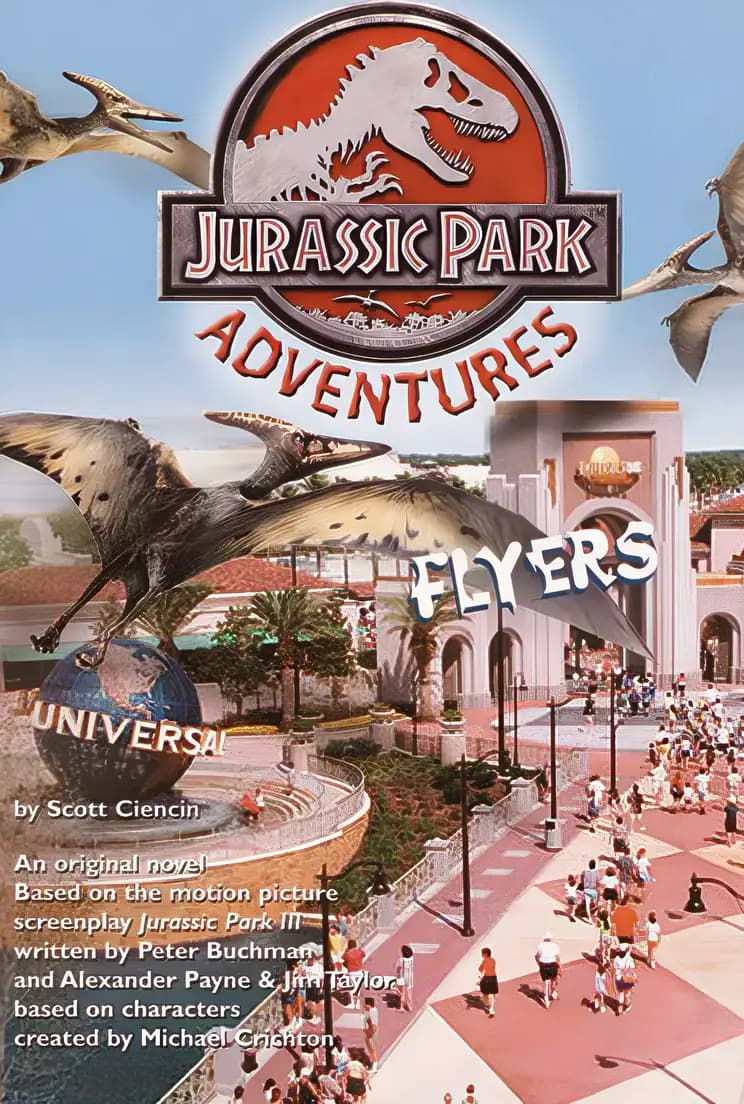
Flyers-Jurassic Park(TM) Adventures #3 (Jurassic Park Adventures)
#3 in Jurassic Park Adventures Series
on Goodreads (31)
What’s inside...
In the third book of the Jurassic Park series by Michael Crichton, Pteranodons escape from Jurassic Park and wreak havoc across the United States. Dr. Alan Grant and 13-year-old Eric Kirby must find a way to safely return the creatures to their home without causing harm to them or the public. As Americans are stunned by the escape, the creatures terrorize the country and nest in one of the world's biggest tourist attractions. The challenge is to lead these winged creatures home without destroying them, maintaining public safety and the awe they inspire.
Character compass
Eric Kirby
Tim Delgado
Discussion points
What do you think it would be like to visit a place like Jurassic Park? How would you feel seeing dinosaurs up close?
Which character in the story did you relate to the most and why?
How do you think the characters felt when they encountered the dinosaurs? What would you have done in their place?
What lessons did the characters learn by the end of their adventure?
If you could create an adventure in Jurassic Park, what would it look like? What kind of dinosaurs and challenges would you include?
Tip: Role play these questions
Active listening is key. Show genuine interest by asking follow-up questions based on your child's responses to encourage deeper thinking and connection.
Relate the story to your child's experiences. For instance, compare the characters' adventures in the book to a day out at a zoo or a theme park that you've visited together.
Encourage creativity by asking your child to imagine their own adventure story. This not only makes the discussion more engaging but also stimulates their creative thinking abilities.
Highlight the moral and ethical questions presented in the story, like the implications of bringing dinosaurs back to life. This opens up discussion on responsibility and consequences.
Emphasize empathy by discussing the characters’ feelings and reactions throughout the book. This helps your child develop emotional intelligence.
Key lessons
Example Lesson: Teamwork and Collaboration
Explanation: In 'Flyers-Jurassic Park(TM) Adventures #3,' characters must work together to navigate the challenges posed by the presence of dinosaurs. The story highlights how combining skills and cooperation leads to better problem-solving.
Real-World Application: Children learn the importance of working with others to achieve common goals, a skill that is essential in school projects and team sports.
Example Lesson: Respect for Nature
Explanation: The narrative emphasizes the consequences of human interference in natural habitats. It illustrates the importance of respecting wildlife and preserving ecosystems.
Real-World Application: This teaches children to be mindful of their environment, promoting activities like recycling and conservation efforts in their communities.
Example Lesson: Courage in the Face of Adversity
Explanation: The protagonists often face dangerous situations but demonstrate bravery and resilience. Their courage helps them to navigate difficult circumstances and make tough decisions.
Real-World Application: This lesson encourages children to face their own fears and challenges, whether it’s trying out for a new sport or standing up against bullying.
Example Lesson: Critical Thinking
Explanation: Characters frequently use logic and reasoning to solve problems created by the chaos surrounding the dinosaurs. Their ability to think critically under pressure is a key element of the story.
Real-World Application: This can inspire children to apply reasoning and analytical skills in their academics and everyday decision-making.