
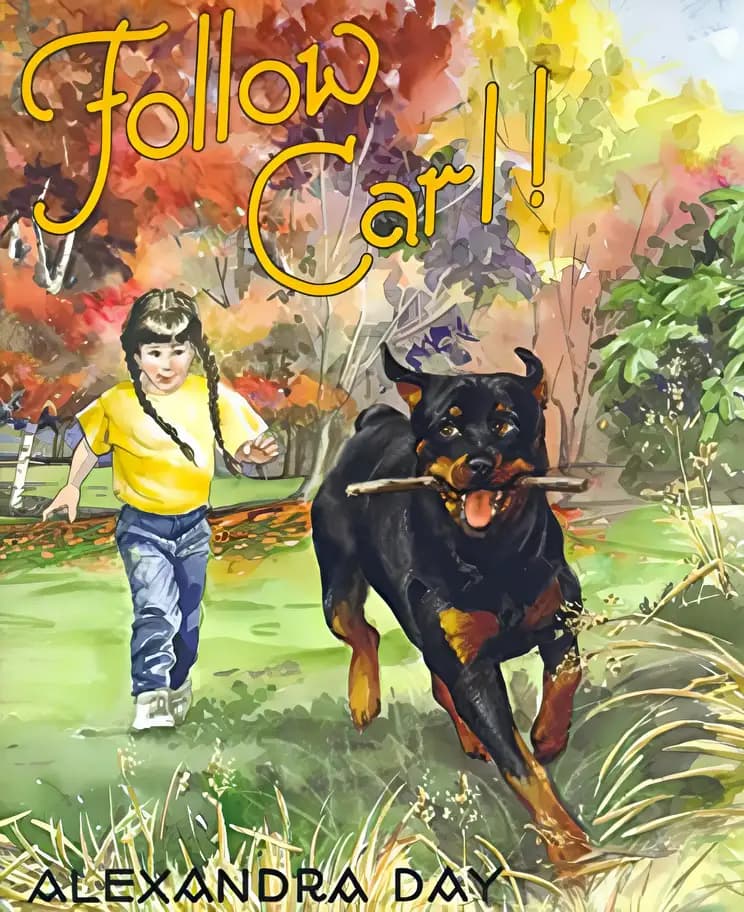
Follow Carl!
#9 of 16 in Good Dog, Carl Series
on Goodreads (269)
What’s inside...
Carl, the dog, is back in his ninth adventure where he leads a group of neighborhood children in a lively game of Follow the Leader. Known for his playful antics, Carl is responsible for the children imitating silly behaviors like barking at squirrels, carrying sticks, and begging for food. As they follow Carl through town and country, readers are treated to Alexandra Day's lush autumnal landscapes, providing the perfect backdrop for the funny shenanigans.
Character compass
Carl
Baby
Discussion points
How do you think Carl feels when he goes on his adventures? What makes you think that?
What would you do if you were part of Carl's adventures? Which part would be your favorite?
Why is it important to have friends like Carl has in the story? Can you think of a time when a friend helped you?
How do you think the story would change if you were in it? What would you do differently?
What lessons did you learn from Carl’s adventures? How can you apply these lessons in your own life?
Tip: Role play these questions
Encourage your child to express their thoughts and feelings about the story, relating it to their own experiences.
Use facial expressions and voice modulation to make the storytelling more dynamic and engaging. This helps in retaining the child's attention.
Ask follow-up questions based on your child's responses to encourage deeper thinking and understanding.
Relate the themes from the book to real-life situations or family events to help your child connect with the story on a personal level.
Celebrate your child's responses and insights, reinforcing their interest and confidence in expressing their ideas.
Key lessons
Example Lesson: Responsibility
Explanation: In 'Follow Carl!', the protagonist dog, Carl, is entrusted with looking after the baby while the parents are away. This demonstrates the importance of being responsible.
Real-World Application: Children can apply this lesson by taking on small duties at home, like tidying up their toys or helping to take care of a pet, learning the value of responsibility.
Example Lesson: Independence
Explanation: Throughout the story, Carl explores different places with the baby, showing initiative and independence.
Real-World Application: Children are encouraged to explore new activities or make decisions in safe environments, fostering their sense of independence.
Example Lesson: Problem-solving
Explanation: Carl encounters various challenges that he has to navigate, such as fetching a ball or finding a hidden toy, which showcases problem-solving skills.
Real-World Application: This can inspire children to think critically and creatively when faced with obstacles, enhancing their problem-solving capabilities.
Example Lesson: Empathy
Explanation: Carl consistently ensures the baby's safety and happiness, demonstrating empathy and care.
Real-World Application: Children learn to consider the feelings of others and respond kindly, vital for emotional development and relationships.
Example Lesson: Adventure and Exploration
Explanation: The book takes readers through various exciting settings, promoting a spirit of adventure.
Real-World Application: Encourages children to be curious and adventurous in learning about the world around them, whether in nature or through reading other books.