
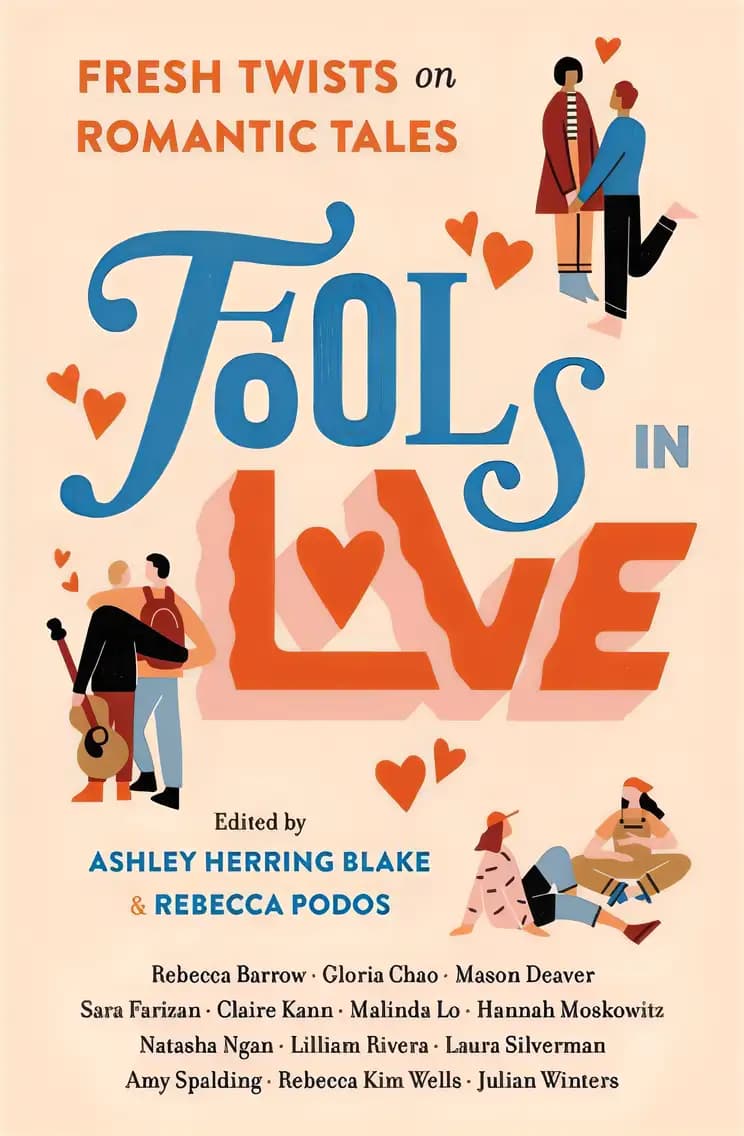
Fools In Love: Fresh Twists on Romantic Tales
What’s inside...
Familiar tropes, unique twists, all the feels. Grab a snack, some tissues, and try not to fall in love with this playful anthology that explores or reimagines a well-known trope about love from some of the most talented and captivating voices in the YA space today. Each trope acts as a prompt and inspiration for a different story, as well as serves as the main thread throughout the collection, while also allowing each author to put their own spin on these classic favorites that are sure to steal your heart including: 'Enemies-to-Lovers', 'Fake Dating', and 'Kissing Under the Influence'. Join fifteen bestselling, award-winning, and up-and-coming authors as they reimagine some of the most popular tropes in the romance genre. Fake relationships. Enemies to lovers. Love triangles and best friends, mistaken identities and missed connections. This collection of genre-bending and original stories celebrates how love always finds a way, featuring powerful flora, a superhero and his nemesis, a fantastical sled race through snow-capped mountains, a golf tournament, the wrong ride-share, and even the end of the world. With stories written by Rebecca Barrow, Ashley Herring Blake, Gloria Chao, Mason Deaver, Sara Farizan, Claire Kann, Malinda Lo, Hannah Moskowitz, Natasha Ngan, Rebecca Podos, Lilliam Rivera, Laura Silverman, Amy Spalding, Rebecca Kim Wells, and Julian Winters this collection is sure to sweep you off your feet.
Age
12-13
Length
288 pages
Text complexity
Discussion points
What do you think each character learned about love by the end of their story?
How did the characters' views on romance change from the beginning to the end of the tale?
Which romantic tale did you like the most, and why?
Can you think of a way one of the stories could have ended differently? What would you change?
How do you think true love should be expressed after reading these tales?
Tip: Role play these questions
Encourage your child to compare the relationships in the book with those they see in movies or other books. Discuss the similarities and differences.
Ask your child to describe their favorite character and explain why they liked them. This can lead to deeper discussions about personality traits and relationships.
Create a warm, open environment where your child feels comfortable expressing their thoughts and opinions about the stories.
Prompt your child to think about how they would resolve conflicts they observed in the tales, enhancing their problem-solving and empathy skills.
Key lessons
Example Lesson: Understanding diversity in relationships
Explanation: The anthology features a variety of relationships from a wide spectrum of cultures and orientations, showcasing inclusivity.
Real-World Application: This lesson helps children appreciate and respect diverse relationships in their communities, fostering a more inclusive mindset from a young age.
Example Lesson: The importance of communication
Explanation: Many stories in 'Fools In Love' underline the mishaps and resolutions that come from communication or the lack thereof.
Real-World Application: Children learn the value of expressing their feelings and thoughts clearly in their interactions with friends and family.
Example Lesson: Empathy and understanding
Explanation: Characters in the stories often navigate their own and others' emotions, teaching readers about perspective-taking.
Real-World Application: This lesson encourages children to consider others' feelings and viewpoints, enhancing their social interactions and emotional intelligence.
Example Lesson: Resilience in adversity
Explanation: The characters face various challenges in their romantic journeys, showing determination and resilience.
Real-World Application: Children are reminded of the importance of perseverance in difficult times, which is applicable in their personal challenges and in overcoming obstacles.
Example Lesson: The impact of personal growth on relationships
Explanation: In the book, characters often evolve personally which in turn affects their romantic relationships positively.
Real-World Application: This teaches children that self-improvement and personal development can lead to healthier and more fulfilling relationships.