
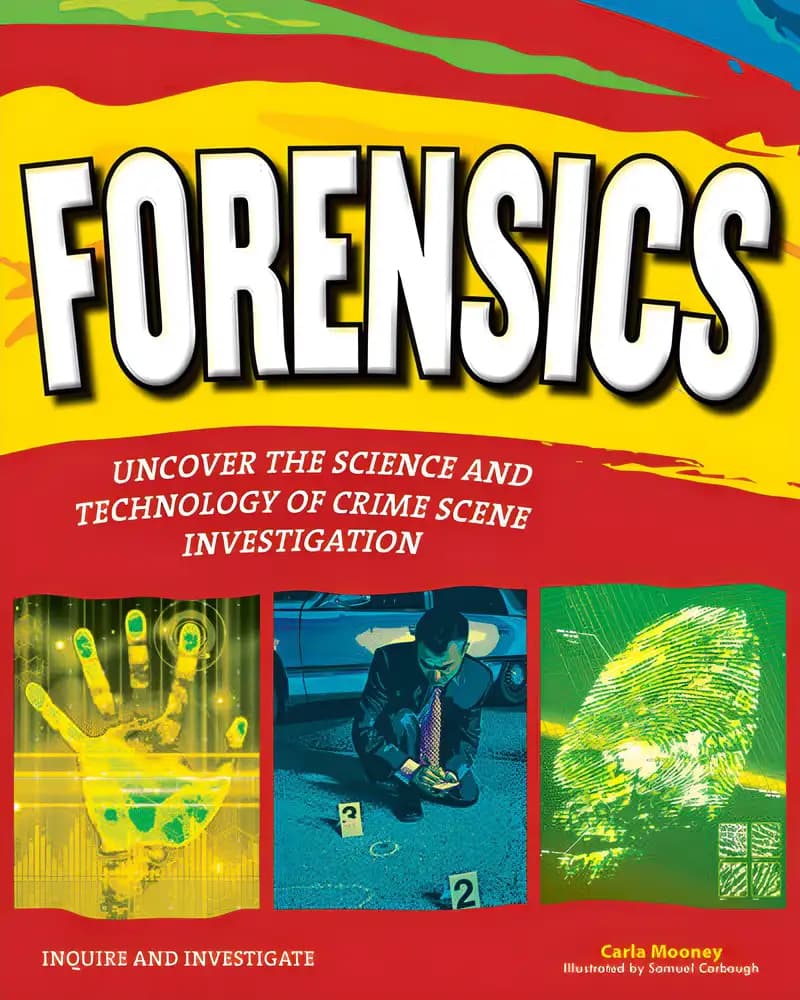
Forensics: Uncover the Science and Technology of Crime Scene Investigation (Inquire and Investigate)
#2 in Inquire And Investigate Series
on Goodreads (17)
What’s inside...
Forensics: Uncover the Science and Technology of Crime Scene Investigation introduces students to the fascinating world of forensic science and shows them how to find clues, analyze evidence, and crack the case. Combining hands-on activities with forensic science, kids will have fun learning about the world of forensics, evidence collection, and crime lab analysis. Entertaining illustrations and fascinating sidebars illuminate the topic and bring it to life, reinforcing new vocabulary. Projects include documenting a crime scene, identifying fingerprints, analyzing blood spatter, and extracting DNA. Additional materials include a glossary and a list of current reference works, websites, museums, and science centers.
Discussion points
What did you find most interesting about how scientists collect and analyze evidence at a crime scene?
How do you think the technology used in forensics helps find the truth?
If you were a forensic scientist, what part of the investigation would you be most excited to work on?
Why do you think it's important to have accurate and careful crime scene investigation?
How can the skills used by forensic scientists be applied to other areas outside of crime scene investigation?
Tip: Role play these questions
Encourage your child to think critically by asking them how they would solve a mystery using forensic science.
Discuss the ethical implications of forensic science and its impact on privacy and personal rights.
Connect the book’s content to popular forensic TV shows or movies they may know to make the concepts more relatable.
Utilize the images and diagrams in the book to help explain complex processes in a visual way which can be easier to understand.
Praise your child’s responses to encourage deeper thinking and continuous curiosity about forensic science.
Key lessons
Example Lesson: Critical Thinking
Explanation: The book guides children through complex crime scene investigations, encouraging them to weigh evidence and think logically.
Real-World Application: Children learn to analyze situations and make informed decisions, essential skills in problem-solving and daily challenges.
Example Lesson: Attention to Detail
Explanation: Exploring various forensic techniques teaches children the importance of observing fine details that can be crucial in solving cases.
Real-World Application: This skill helps in improving concentration and focus in academic tasks and personal projects.
Example Lesson: Scientific Inquiry
Explanation: Children are introduced to scientific methods and technologies used in forensics, sparking curiosity about how science can be applied in real-world situations.
Real-World Application: Inspires a passion for science and exploration, encouraging further education and possibly a career in scientific fields.
Example Lesson: Ethical Reasoning
Explanation: The book discusses the moral implications and responsibilities involved in handling evidence and solving crimes.
Real-World Application: Children learn the importance of honesty and ethics in all areas of life, from schoolwork to personal relationships.
Example Lesson: Teamwork
Explanation: Crime scene investigation often involves collaboration between various professionals, highlighting the value of working together to achieve common goals.
Real-World Application: Encourages cooperative skills and shows the importance of teamwork in accomplishing complex tasks or projects.