
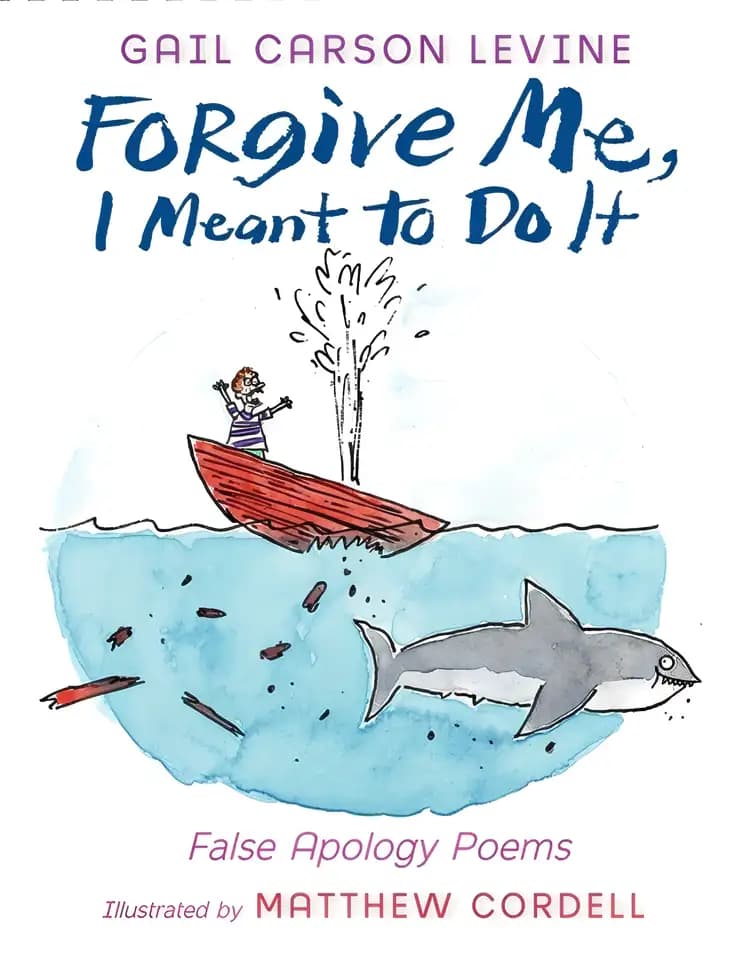
Forgive Me, I Meant to Do It: False Apology Poems
What’s inside...
Inspired by William Carlos Williams's poem 'This Is Just to Say,' author Gail Carson Levine creates a collection of false apology poems that explore the feelings of tricksters about their mischief. Accompanied by Matthew Cordell's playful illustrations, this book humorously captures the spirit of insincere apologies and is perfect for anyone who has ever apologized without truly meaning it.
Age
8-12
Length
80 pages
Text complexity
Discussion points
What do you think the characters in the poems are feeling? Can you relate to any of their emotions?
Why do you think the author chose to write false apology poems? How do they differ from true apologies?
Which poem was your favorite and why?
How do you think the situations in the poems could be resolved with a genuine apology?
What did you learn about the importance of sincerity in apologies?
Tip: Role play these questions
Encourage your child to express their thoughts and feelings about each poem, fostering a deeper understanding of the emotions involved.
Discuss the moral implications of the poems, guiding your child to differentiate between false and genuine apologies.
Relate the poems to real-life scenarios your child might encounter, helping them apply the book’s lessons practically.
Use the book as a tool to discuss the impact of one's actions on others and the importance of integrity.
Praise your child for sharing their insights and thoughts, reinforcing positive engagement and confidence in expressing opinions.
Key lessons
Example Lesson: Understanding the concept of sincerity
Explanation: Through playful, false apology poems, children can discern the difference between genuine and insincere apologies.
Real-World Application: This lesson helps children develop a sense of emotional intelligence and honesty, enhancing their interactions and relationships.
Example Lesson: Recognizing consequences of actions
Explanation: The poems highlight exaggerated consequences of mischievous acts, teaching children about accountability.
Real-World Application: Children learn to think about the outcomes of their actions, promoting responsible behavior in school and at home.
Example Lesson: Enhancing creative expression
Explanation: The unique format of false apology poems encourages children to explore creative storytelling and poetic structure.
Real-World Application: This skill fosters imaginative thinking and can be applied in writing assignments or personal expressions through art.
Example Lesson: Developing a sense of humor
Explanation: The humorous and whimsical tone of the poems allows children to enjoy language play and the fun aspect of reading.
Real-World Application: Understanding humor aids in social interactions and personal enjoyment, making reading a delightful experience.