
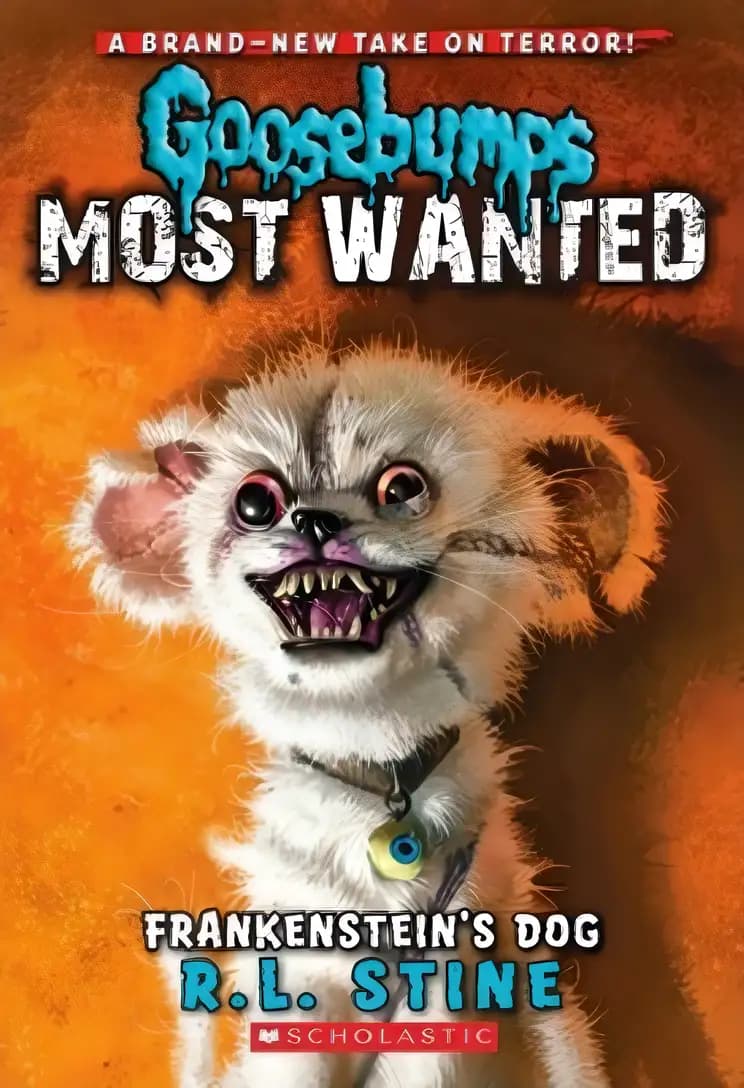
Frankenstein's Dog (Goosebumps Most Wanted #4) (4)
#4 of 14 in Goosebumps Most Wanted Series
on Goodreads (832)
What’s inside...
Kat is reluctant to visit her Uncle Vic Frankenstein because of rumors about him being a mad scientist like his ancestor, Victor Frankenstein. Despite her fears, she discovers that Uncle Vic is a quiet, gentle man who builds AI robots. Kat enjoys spending time with Vic's dog, Poochie, but after an accident in the lab, mysterious events unfold. Goosebumps available soon on Disney+!
Character compass
Kat Parker
Daniel Parker
Frenzy
Uncle Vic Frankenstein
Discussion points
What do you think motivated the characters to create Frankenstein's dog?
How did the characters react to their creation? How would you react in their situation?
What lessons can we learn about responsibility and consequences from the story?
How does the story show the importance of understanding science and its limits?
If you could change one thing about the story, what would it be and why?
Tip: Role play these questions
Before reading, discuss any previous knowledge of the Frankenstein story to provide context. As you read, pause at pivotal moments to predict what might happen next. After reading, connect themes from the book to real-world scenarios, such as the responsibilities one might face when caring for a pet or creating something new. Use examples from the book to underline the importance of thinking through decisions and considering their outcomes.
Key lessons
Example Lesson: Responsibility
Explanation: In 'Frankenstein's Dog', the protagonist learns the importance of being responsible when handling scientific experiments. The book portrays the consequences of not taking proper precautions.
Real-World Application: Children can learn the importance of being responsible in their own lives, such as doing their homework diligently, taking care of their belongings, and being accountable for their actions.
Example Lesson: Empathy and Understanding
Explanation: Throughout the story, characters are put in positions where they need to understand and empathize with others, including the misunderstood creations. This highlights the importance of looking beyond appearances and assumptions.
Real-World Application: This lesson can help children develop empathy by encouraging them to consider the feelings and perspectives of others, whether dealing with classmates or family members.
Example Lesson: Courage and Bravery
Explanation: The characters in the book often face scary and unknown situations but learn to confront their fears. This demonstrates the value of courage and bravery.
Real-World Application: Children can apply this lesson by learning to face their own fears, whether it’s trying out for a school play, speaking up about their ideas, or standing up against bullying.
Example Lesson: The Power of Curiosity and Learning
Explanation: The story's plot advances through the characters' curiosity and desire to learn more about the mysterious events around them. It illustrates how curiosity can lead to new knowledge and solutions.
Real-World Application: Encouraging children to be curious can motivate them to learn and explore more in their studies and daily interactions, fostering a lifelong love for learning.
Example Lesson: Consequences of Actions
Explanation: Characters in the book deal with the repercussions of their actions, showing that choices have consequences, whether good or bad. This teaches about accountability.
Real-World Application: This lesson is vital for children as it helps them understand that their choices impact themselves and others around them, promoting thoughtful decision-making.