
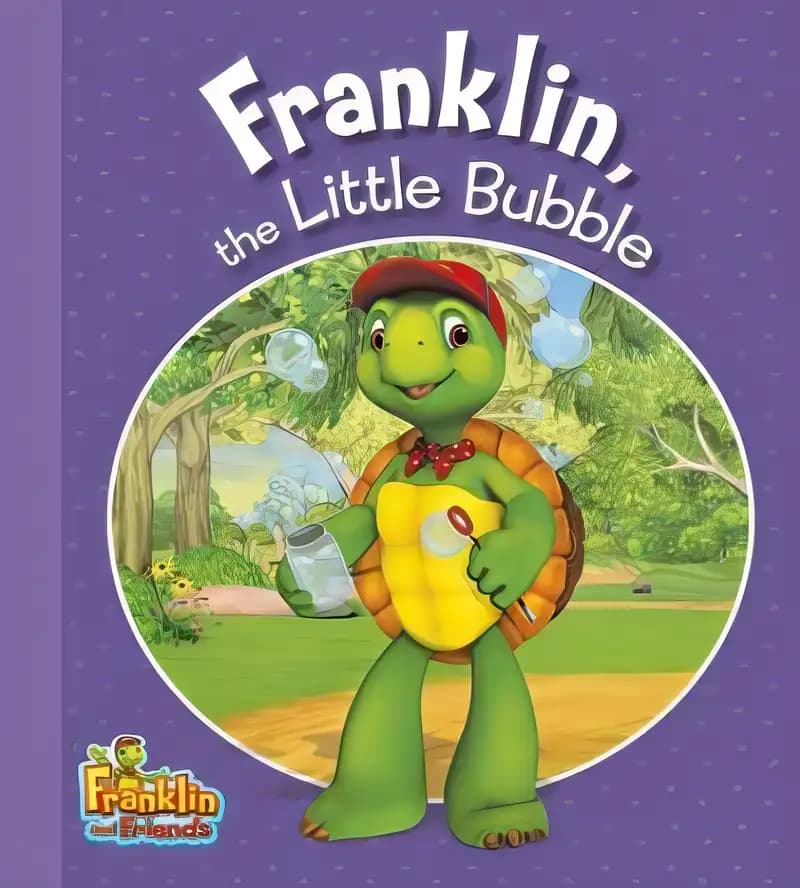
Franklin, the Little Bubble (Franklin and Friends)
#5 of 12 in Franklin And Friends Series
on Goodreads (7)
What’s inside...
Franklin the turtle is embarrassed by the nicknames his Aunt T gives him, like Little Bubble. He worries she'll use the nickname at her party, so he tries to ensure no one attends. But when his friend Bear shares that his mom calls him Honey Pot and it shows she cares, Franklin realizes Aunt T's nicknames are a sign of love. This story from the Franklin and Friends series helps young children understand that growing up in a loving environment is valuable, and serves as a tool for lessons on caring and integrity.
Discussion points
How do you think Franklin felt when he couldn't burst his own bubble? Can you share a time when you felt the same?
What did Franklin's friends do to help him? Why is it important to have friends who support us?
How did Franklin solve his problem in the end? What does this teach us about problem-solving and trying new ideas?
Can you think of other ways Franklin might have solved his bubble problem? Let's be creative and think of some fun alternatives!
Tip: Role play these questions
Encourage your child to express their feelings about the story by relating to Franklin’s experiences. This helps them connect personally with the story and enhances empathy.
Highlight the importance of friendship as demonstrated in the book. Discuss with your child how they can be a good friend in similar situations.
Praise creative thinking and problem-solving. After discussing the story's resolution, ask your child about different ways they might approach challenges they face.
Ask follow-up questions based on your child's responses to keep the conversation flowing and to deepen their understanding of the story’s themes.
Key lessons
Example Lesson: Teamwork
Explanation: In the story, Franklin learns the value of working together with his friends to help solve problems.
Real-World Application: Children can apply this lesson by participating in group activities at school or during play, learning to cooperate and value each other’s input.
Example Lesson: Responsibility
Explanation: Franklin is tasked with taking care of his little bubble and faces challenges that teach him the importance of being responsible.
Real-World Application: This can help children understand the significance of taking care of their belongings or pets, and the consequences if they do not.
Example Lesson: Resilience
Explanation: Throughout the book, Franklin encounters various obstacles but learns to overcome them through persistence and courage.
Real-World Application: Kids can learn to face their own challenges without giving up, whether it’s in learning a new skill or dealing with day-to-day problems.
Example Lesson: Problem-Solving
Explanation: The story shows how Franklin creatively thinks through problems to find solutions when things don’t go as planned.
Real-World Application: This teaches children to think critically and innovatively in difficult situations, a skill useful in academic and social settings.
Example Lesson: Friendship
Explanation: Franklin’s experiences with his friends highlight the joys and trials of friendship, teaching him about empathy and support.
Real-World Application: This lesson can help children understand the importance of building and maintaining positive relationships with their peers.