
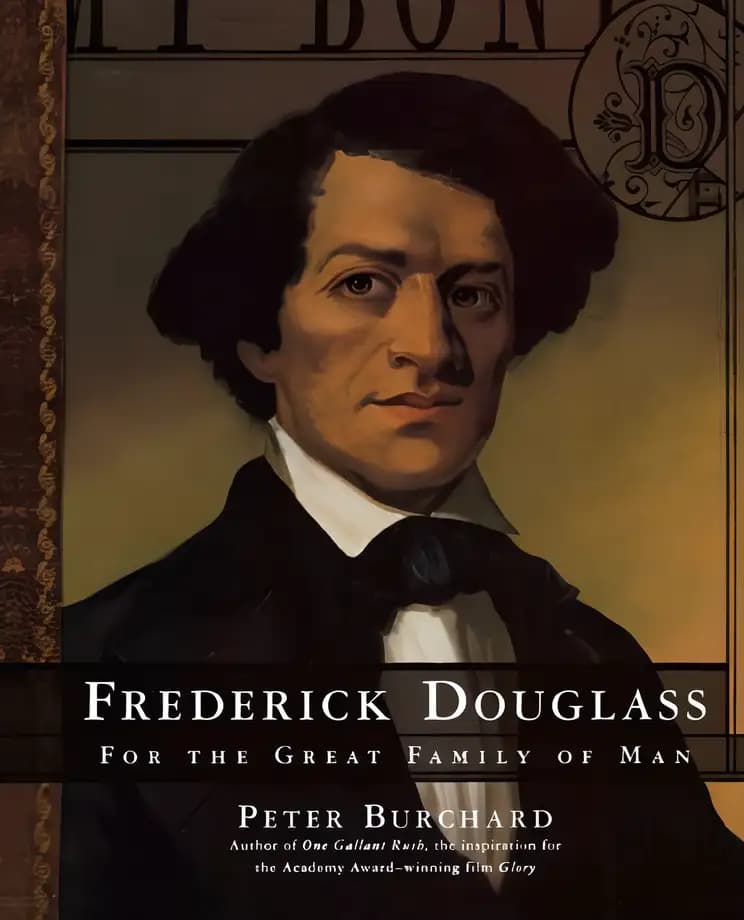
Frederick Douglass: For the Great Family of Man
on Goodreads (10)
What’s inside...
A biography of the runaway slave who became an abolitionist, a crusader for women's rights, and an advisor to Abraham Lincoln. The narrative, by Peter Burchard, details the life of Frederick Douglass, a slave who rose above his circumstances due to his intelligence, charm, and resilience. He became a forceful speaker and writer, advocating for the abolition of slavery and civil rights for all. Douglass saw himself as a soldier fighting for dignity, and despite experiencing misery, tragedy, and heartbreak, he continued his mission. He lectured against slavery in Great Britain and recruited young black men to fight in the Civil War. He became an influential advisor to presidents, senators, and governors, leaving a significant legacy as a passionate and strong American leader.
Age
11-12
Length
240 pages
Text complexity
Character compass
Frederick Douglass
William Lloyd Garrison
Sophia Auld
Edward Covey
Thomas Auld
Discussion points
How did Frederick Douglass work to change society and what do you think motivated him?
What challenges do you think Douglass faced during his life and how did he overcome them?
Why is it important to fight for the rights and dignity of all people?
How can we apply Douglass' principles in our everyday lives to help our community?
Tip: Role play these questions
Encourage your child to think deeply about the struggles and achievements of Frederick Douglass by relating his experiences to current events. Ask them how they would feel in similar situations and what choices they might make. Highlight the importance of perseverance and moral courage in achieving justice. Use examples from the book to illustrate these points and ask your child to draw parallels to their own experiences or challenges. This promotes empathy and a deeper understanding of the book's themes.
Key lessons
Example Lesson: Empathy and understanding diverse perspectives
Explanation: Douglass's writings emphasize understanding and empathizing with the struggles of others, especially those different from oneself.
Real-World Application: Children can learn to appreciate and respect people from different backgrounds in their daily interactions at school or in the community.
Example Lesson: Importance of education and self-improvement
Explanation: The narrative showcases Douglass's journey of self-education and the transformative power it had in his life.
Real-World Application: This lesson can inspire children to value their education and continuously seek knowledge to better themselves and their circumstances.
Example Lesson: Resilience in the face of adversity
Explanation: Douglass’s life story is a testament to overcoming immense challenges through perseverance and resilience.
Real-World Application: Children can apply this lesson by developing a resilient mindset when facing challenges in academics, sports, or personal relationships.
Example Lesson: The power of voice and advocacy
Explanation: Douglass used his voice and literary skills to advocate for abolition and civil rights, demonstrating the impact of articulate self-expression.
Real-World Application: This encourages children to use their voice to stand up for what they believe in and make a difference in their community.