
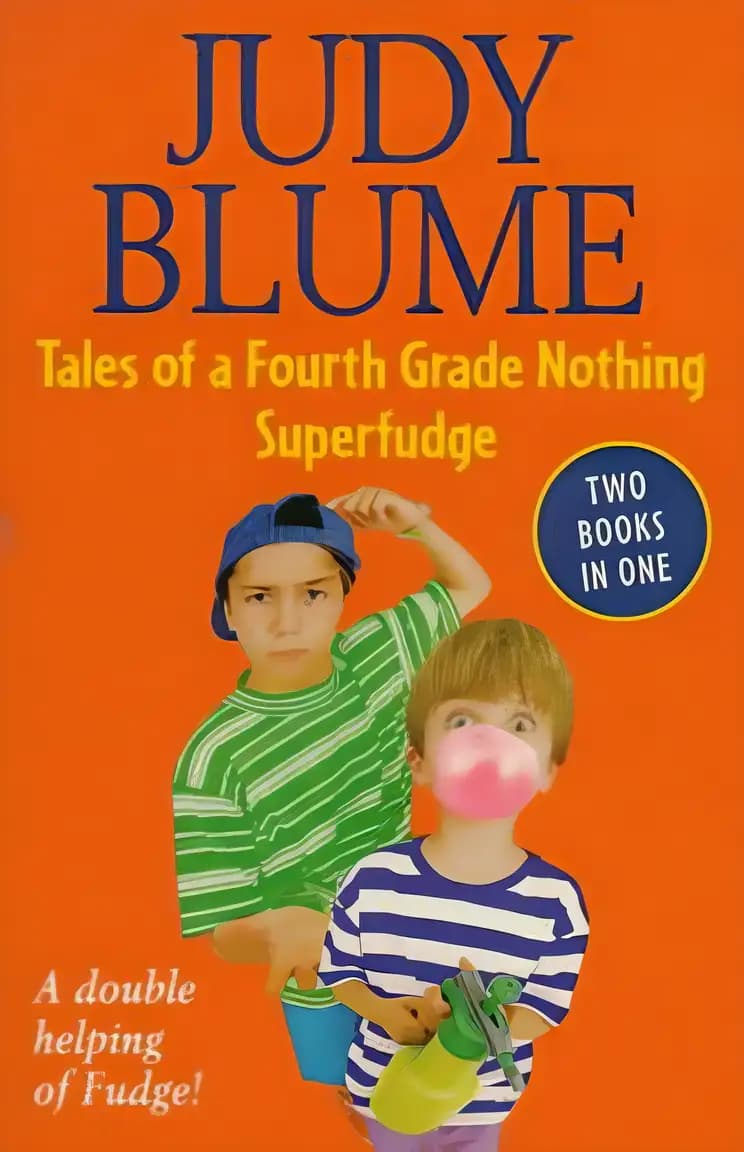
Fudge Bind-up
Fudge Series
on Goodreads (1,384)
What’s inside...
This is the default conversion keynote text and should be changed. Peter finds his demanding two-year-old brother an ever increasing problem.
Series reading
Non-Sequential
Age
8-12
Length
123 pages
Text complexity
Character compass
Peter Hatcher
Sheila Tubman
Jimmy Fargo
Tamara Roxanne Hatcher
Farley Drexel 'Fudge' Hatcher
Anne Hatcher
Warren Hatcher
Discussion points
What do you think Fudge will do next after each of his mischievous acts, and why?
How do you feel about the way Peter handles Fudge's antics? Would you have done anything differently?
What are some of the lessons that Fudge and Peter learn from their adventures?
If you could give Fudge one piece of advice, what would it be and why?
How do family dynamics play out in the book? Can you relate to any of the family interactions?
Tip: Role play these questions
Encourage your child to put themselves in the shoes of Peter or Fudge, exploring what they would do in similar situations.
Discuss the consequences of Fudge’s actions to emphasize the learning aspect in each event.
Highlight elements of humor in Fudge’s antics to make your reading experience enjoyable and open up a natural conversation.
Use questions that prompt your child to think about sibling relationships and family responses to encourage deep thinking about interpersonal dynamics.
End your discussion by asking your child how the story could influence their personal actions or decisions, making the book's themes relevant to their life.
Key lessons
Example Lesson: The importance of honesty
Explanation: Throughout the 'Fudge' series, Judy Blume incorporates situations where characters must face the consequences of their actions, especially when they are dishonest. For example, when Fudge pretends to be a bird and ultimately ends up in the hospital, it opens up discussions about truthfulness and accountability.
Real-World Application: Children can learn to value honesty in their daily interactions and understand that being truthful helps build trust and credibility with friends and family.
Example Lesson: Understanding and managing emotions
Explanation: The books frequently explore Fudge’s tantrums and his older brother Peter’s reactions to them, showcasing different ways of dealing with emotions. These moments teach readers about emotional regulation and empathy.
Real-World Application: Children are encouraged to recognize their feelings and those of others. This can lead to better emotional intelligence and help them navigate social situations more effectively.
Example Lesson: The significance of family and sibling relationships
Explanation: The dynamics between Peter and Fudge highlight the ups and downs of sibling relationships, stressing the importance of family support and love despite occasional conflicts.
Real-World Application: Young readers can learn to appreciate and nurture their relationships with their siblings and other family members, understanding that while conflicts happen, familial bonds are resilient and valuable.
Example Lesson: Responsibility and consequences
Explanation: In various instances, like when Fudge swallows a turtle, the characters have to take responsibility for their actions. Such incidents underscore the concept of personal accountability and its consequences.
Real-World Application: Children can relate this to their responsibilities, like doing homework or chores, teaching them that their actions, whether good or bad, have consequences.